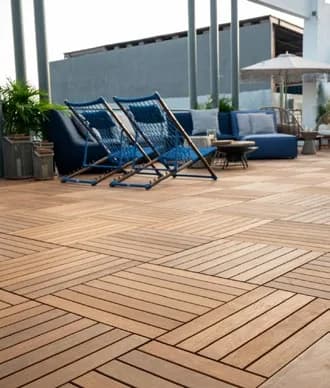
Understanding Deck Tile Specifications
Deck tiles are available in a range of species and sizes, each influencing the aesthetic and practical aspects of your project. The primary species offered include Ipe, Garapa, and Cumaru, each presenting distinct visual characteristics.
Ipe is known for its deep chocolate tones and is often chosen for a classic, robust hardwood appearance. Garapa features warm golden tones, suitable for brighter outdoor spaces. Cumaru offers rich reddish-brown grain, providing a distinct character. Understanding these differences helps in selecting the right species for your design vision.
Standard tile sizes generally include 12 x 12 inches (1 square foot per tile) and 24 x 24 inches (4 square feet per tile). The 12 x 12 inch format is often preferred for smaller areas or layouts with more intricate edges and transitions, while the 24 x 24 inch size is suited for larger, open surfaces where fewer tile seams are desired. The choice of tile size directly impacts the number of individual modules you will need and can influence the overall visual rhythm of your terrace or balcony.
Always confirm the exact dimensions and area coverage of the specific tiles you plan to order, as these details are fundamental to accurate quantity calculations.
Calculating Tile Quantities: A Worked Example
Accurately calculating the number of deck tiles required involves more than just dividing the total area by the tile's square footage. You must account for cuts, waste, and the specific layout. Let's consider a hypothetical project: a rectangular terrace measuring 10 feet by 15 feet, where you plan to use 24 x 24 inch deck tiles.
First, convert the terrace dimensions to inches for consistency with tile dimensions: 10 feet = 120 inches, 15 feet = 180 inches. The 24 x 24 inch tile has sides of 24 inches.
For the 120-inch side: 120 inches / 24 inches/tile = 5 tiles. This dimension aligns perfectly with the tile size.
For the 180-inch side: 180 inches / 24 inches/tile = 7.5 tiles. This means you will need 8 tiles along this dimension, with a portion of the last tile needing to be cut. The offcut from one tile (0.5 x 24 inches = 12 inches) may or may not be reusable depending on other cuts required.
Total tiles for a perfect grid without waste: 5 tiles * 7.5 tiles = 37.5 tiles. However, since you must purchase full tiles, you will need 5 tiles * 8 tiles = 40 tiles to cover the area. This accounts for the partial tiles needed along one edge.
For projects with complex shapes, multiple obstacles, or where diagonal cuts are planned, it is prudent to add an additional 5-10% for waste and unforeseen cuts. In this example, 40 tiles would be the base quantity. If we add 10% for waste, we would order 44 tiles (40 * 1.10). Always draw out your layout to visualize cuts and optimize material use.
Selecting the Right Support System
The support system beneath your deck tiles is as crucial as the tiles themselves. Common options include pedestal systems or simple sleepers. Pedestal systems typically consist of adjustable bases that elevate the tiles, allowing for drainage and often accommodating slight variations in the substrate. These are particularly useful on rooftops or areas requiring precise leveling.
When planning for a pedestal system, you need to determine the required quantity based on the tile size and the manufacturer's recommendations for support points.
Always consult the specific pedestal system's installation guide for exact spacing and corner/edge support requirements, as some systems may require additional perimeter supports.
Alternatively, for lower-profile installations on solid, level surfaces, treated wood sleepers might be used. These require careful planning to ensure proper drainage and ventilation, and their quantity depends on the spacing required to support the tiles adequately, typically running perpendicular to the tile direction.
Considering Edge Treatments and Accessories
Beyond the main tiles and support structure, a complete procurement schedule includes various accessories and edge treatments. These elements provide a finished look, improve safety, and extend the lifespan of your deck tile installation.
Edge trim pieces, such as fascia boards or specialized tile edge profiles, are often used to cover the exposed sides of the tiles and support system, especially on raised decks or balconies. The quantity of these pieces is determined by the perimeter length of your installation. For our 10-foot by 15-foot terrace, the perimeter is (10 + 15) * 2 = 50 linear feet. You would then convert this to the length of individual trim pieces.
Other accessories might include: shims for fine-tuning leveling, fasteners (if applicable to your system), and any specialized tools recommended by the manufacturer. If your project includes planters or other heavy elements, ensure the underlying structure is reviewed for load capacity before placing such items. Do not rely on the tiles themselves for structural support.
Planning for Maintenance and Future Needs
While not strictly part of the initial installation, planning for maintenance and potential future needs is a practical aspect of procurement. Consider ordering a small quantity of extra tiles to keep as spares. This allows for easy replacement of any damaged modules in the future without needing to match dye lots or wait for special orders. A typical recommendation is to order an additional 5-10% beyond your calculated quantity for this purpose.
For hardwood deck tiles, ongoing care will involve cleaning and, periodically, the application of a suitable wood finish or sealant to help maintain their appearance. While not part of the initial tile order, understanding these future needs helps in budgeting and planning for the long-term enjoyment of your outdoor space.
Before you order
- Confirm exact terrace/balcony dimensions (length, width, any irregular shapes).
- Select deck tile species (Ipe, Garapa, Cumaru) based on desired aesthetic.
- Choose deck tile size (12x12 or 24x24) considering project scale and layout complexity.
- Calculate base tile quantity, accounting for cuts and waste factor (add 5-10%).
- Identify the chosen support system (pedestals, sleepers, etc.).
- Calculate the quantity of support system components based on manufacturer guidelines.
- Measure perimeter for edge treatments and select appropriate fascia or trim pieces.
- List any additional accessories (shims, fasteners, specialized tools).
- Consider ordering extra tiles for future replacements (5-10% recommended).
- Review drainage requirements and ensure support system allows for proper water flow.
- Confirm any specific requirements for local building approvals, especially for rooftop or elevated projects.
Confirm installation details, approved uses and warranty terms in the current instructions for the exact product and profile. Your installer should verify the substrate, structure and applicable project requirements.
Questions to help you decide
What is the difference between Ipe, Garapa, and Cumaru deck tiles?
Ipe deck tiles feature deep chocolate tones and exceptional hardness. Garapa offers warm golden tones, providing a brighter look. Cumaru presents a rich reddish-brown grain. Each species provides a distinct aesthetic and character for your outdoor space.
How do I account for waste when ordering deck tiles?
It is recommended to add an additional 5-10% to your calculated tile quantity to account for cuts, waste, and potential future replacements. For complex layouts or irregular shapes, a higher waste factor may be appropriate. Drawing a detailed layout plan can help optimize material use and minimize waste.
Do I need special tools to install deck tiles?
The specific tools required depend on the chosen deck tile system. Basic installations may only need measuring tools and a saw for cuts. Pedestal systems might require shims for fine leveling. Always consult the manufacturer's installation instructions for a comprehensive list of recommended tools and techniques.
Ready to Plan Your Deck Tile Project?
Request a material quote today. Provide your project dimensions, desired tile profile, and ZIP code to confirm current availability and service options for your location. Our team can help you finalize your procurement schedule.
Request a material quote →