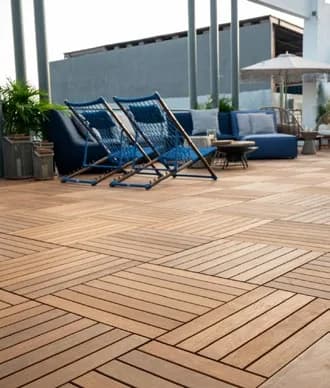
The Illusion of Color and Finish
Online images, especially those from professional photoshoots, are often optimized for visual appeal. This means colors can appear different on various screens due to display settings, lighting conditions during photography, and post-processing. A rich reddish-brown Cumaru tile might look more muted or vibrant depending on your monitor.
Similarly, the finish of a deck tile – whether it's smooth, brushed, or has a visible grain – can be difficult to discern accurately. A glossy appearance in a photo might be due to lighting or a wet surface, not the inherent finish of the wood. Always consider that the actual product's color and texture may have subtle variations from what you perceive digitally. We offer Ipe with deep chocolate tones, Garapa with warm golden tones, and Cumaru with rich reddish-brown grain. Each species has a distinct natural appearance.
To mitigate this, look for images that show the product in various lighting conditions and angles, if available. Prioritize photos that clearly state they are of the product itself, not a styled project. However, the most reliable method remains requesting a physical sample.
Understanding Scale and Dimensions from a Distance
Project photos can be misleading regarding the actual size and scale of deck tiles. A 12 x 12 inch tile might appear larger or smaller depending on the perspective and the overall size of the depicted space. Without a clear reference object in the image, it's challenging to gauge how the tiles will visually impact your specific project area.
We offer deck tiles in two primary sizes: 12 x 12 inches and 24 x 24 inches. The 12 x 12 inch format is a compact square suitable for smaller areas or layouts requiring more cuts and transitions. The 24 x 24 inch format is a larger square, often preferred for more expansive terraces and open surfaces where fewer seams are desired.
Always cross-reference the visual impression with the stated dimensions in the product specifications. Envisioning a 24 x 24 inch tile on a small balcony versus a sprawling rooftop terrace will yield very different visual results, regardless of what a photo suggests. Consider drawing out your space with grid lines to visualize the tile size.
Texture and Grain: The Unseen Details
Photographs, especially smaller web images, often struggle to convey the fine details of wood grain and surface texture. The tactile experience of walking on a deck tile, feeling its inherent smoothness or subtle roughness, is entirely absent from a picture. This is particularly important for hardwood deck tiles, where the natural grain patterns are a significant part of their aesthetic.
Each hardwood species has unique grain characteristics. For example, Ipe is known for its dense grain, while Cumaru offers a distinct character. These nuances are best appreciated in person. A photograph might flatten these details, making different species appear more similar than they are in reality. This can affect how the surface feels underfoot and how it interacts with light, impacting the overall ambiance of your outdoor space.
Installation Details and Substructure
Most inspiring project photos focus on the finished surface, not the underlying installation. They don't reveal critical details such as the type of support system (e.g., pedestals, joists, or direct placement), the spacing between tiles, or how edges are finished. These aspects are vital for the functionality, durability, and appearance of your deck.
The method of installation impacts drainage, ventilation, and the overall height of your finished deck. Photos rarely show the critical clearance needed for door thresholds or the integration with drainage systems. Without this context, you might assume a simple installation that doesn't align with your project's specific requirements or local building practices.
Worked Example: The "Golden Glow" Garapa Tile
Imagine you're browsing images for a small, shaded balcony. You come across a stunning photograph featuring a deck tile described as "Garapa with a warm golden glow." The image shows a spacious, sun-drenched terrace, and the tiles appear uniformly bright and expansive. You decide this is the look for your 6-foot by 10-foot balcony.
However, what the photo doesn't convey is that the "golden glow" is heavily influenced by direct sunlight, which your shaded balcony rarely receives. The image likely uses 24 x 24 inch tiles to create a seamless, open look, but your 6-foot width means only three full tiles fit across, leaving awkward cuts if you opt for that size. Furthermore, the photo might be of freshly installed, unsealed Garapa, while over time, Garapa naturally weathers to a silvery-gray if not regularly maintained with a UV-inhibiting oil. The texture, which looked smooth in the picture, might have a subtle grain that feels different than expected.
This example highlights how lighting, scale, and maintenance considerations (which photos rarely show) can drastically alter the perceived aesthetic from the actual product. Always verify species-specific characteristics and consider your unique project conditions beyond what a single image portrays.
What to Look For and What to Ask
When evaluating deck tiles from photos, look for consistency across multiple images, especially those labeled as product shots rather than lifestyle or project photos. Pay attention to any disclaimers about color accuracy. Identify photos that include a scale reference, such as a common object or person.
Crucially, prepare a list of questions: What are the exact dimensions? What is the species (e.g., Ipe, Garapa, Cumaru)? What is the recommended finish or maintenance? What type of substructure is required? How do the tiles weather over time? Requesting a material quote with your project dimensions, exact profile, and ZIP code can help confirm current availability and service options. The most reliable way to confirm your choice is to request a physical sample of the exact deck tile profile you are considering. This allows you to see the true color, feel the texture, and assess the scale in your own project environment and lighting conditions.
Before you order
- Have I seen multiple photos of the specific product, not just inspirational project images?
- Do I understand the exact dimensions of the deck tiles (e.g., 12x12 or 24x24 inches)?
- Have I considered how my project's lighting conditions will affect the tile's perceived color?
- Have I reviewed the specified wood species (Ipe, Garapa, Cumaru) and its natural characteristics?
- Have I inquired about the recommended maintenance and how the tiles weather over time?
- Am I aware of the required installation method and substructure for these tiles?
- Have I requested a physical sample to confirm color, texture, and scale in person?
Confirm installation details, approved uses and warranty terms in the current instructions for the exact product and profile. Your installer should verify the substrate, structure and applicable project requirements.
Questions to help you decide
Why do deck tile colors look different online than in person?
Digital images are affected by screen calibration, lighting conditions during photography, and post-processing. Your monitor's settings can also alter how colors are displayed. The most accurate representation of a deck tile's color is always a physical sample viewed in your project's actual lighting.
Can I trust lifestyle photos to show the true scale of deck tiles?
Lifestyle photos often use wide-angle lenses or specific perspectives that can distort the perceived scale of objects. It's best to rely on the stated dimensions (e.g., 12x12 or 24x24 inches) and compare them to your project's measurements, rather than judging scale solely from a picture.
How can I assess the texture of a deck tile from a photo?
It's very difficult to accurately assess texture from a photo, especially for wood grain. Photographs flatten visual information. To truly understand the surface feel and grain pattern, requesting a physical sample is essential. This allows you to physically touch and examine the tile.
Ready to Select Your Deck Tiles?
For an accurate assessment, we recommend requesting a physical sample of your chosen deck tile species and size. Contact us with your project dimensions, desired deck tile profile, and ZIP code to request a material quote and confirm current availability and service options.
Request a material quote →