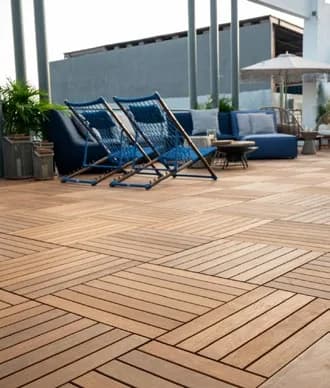
Dimensions: 12x12 vs. 24x24 Deck Tiles
Deck tiles are available in standard square formats, commonly 12 inches by 12 inches or 24 inches by 24 inches. While both are square, their differing sizes impact the visual scale of your installation and the number of tiles required.
The 12-inch by 12-inch tile offers a compact format, often preferred for smaller areas, balconies, or layouts that involve more edges, cuts, or transitions. Its smaller size can create a more intricate pattern and may be easier to handle during installation in confined spaces. Each 12-inch by 12-inch tile covers 1 square foot.
The 24-inch by 24-inch tile provides a larger square format, suitable for more expansive terraces and open surfaces. This size results in fewer tile seams across the installation, which can contribute to a more contemporary and streamlined appearance. Each 24-inch by 24-inch tile covers 4 square feet. The choice between these sizes should consider the overall dimensions of your project area, the desired visual effect, and the complexity of the layout.
Consider an 8-foot by 10-foot balcony. This area is 80 square feet. If using 12-inch by 12-inch tiles (1 square foot each), you would need 80 tiles for full coverage, not accounting for cuts or waste. If using 24-inch by 24-inch tiles (4 square feet each), you would need 20 tiles for full coverage. However, a straight 24-inch grid on an 8-foot by 10-foot area means that the 10-foot dimension (120 inches) would perfectly fit five 24-inch tiles. The 8-foot dimension (96 inches) would fit four 24-inch tiles. This ideal scenario means 20 tiles (5x4) would cover the area with minimal waste from full modules. Any dimension that is not a multiple of 12 or 24 inches will require cuts and potentially more purchased tiles than the exact area calculation.
Material Types: Hardwood Deck Tiles
Lumber Plus offers deck tiles in various hardwood species, each with distinct characteristics that contribute to both aesthetics and performance. Understanding these material specifications is key to selecting the right tile for your project's environment and desired look.
Ipe deck tiles are characterized by deep chocolate tones. This tropical hardwood is known for its density and durability, making it a choice for a classic, robust outdoor surface. Ipe's natural properties contribute to its resistance to decay and insects, suitable for various outdoor conditions.
Garapa deck tiles offer warm golden tones that can brighten terraces, balconies, and other outdoor rooms. Garapa is a lighter-colored hardwood compared to Ipe or Cumaru, providing a distinct aesthetic. It offers a balance of appearance and practical performance for outdoor use.
Cumaru deck tiles feature rich reddish-brown grain. This species provides the strength and character of tropical hardwood, often chosen for its visual warmth and inherent durability. Cumaru's color profile can complement a range of architectural styles.
The choice of hardwood species influences the color, grain pattern, and overall character of your deck tile installation. Reviewing samples in your project's lighting conditions can help confirm the desired aesthetic.
Appearance and Profile
Beyond dimensions and material, the profile and surface appearance of deck tiles are important specifications. Deck tiles typically feature multiple wood slats fastened to a base, creating a modular unit. The spacing between these slats and the overall height of the tile contribute to its visual texture and drainage capabilities.
The specific arrangement of the slats, often parallel or in a parquet-like pattern, defines the tile's profile. This profile impacts how light interacts with the surface and how water drains. Confirming the exact profile ensures consistency if you are matching existing elements or have a specific design vision.
Surface texture, whether smooth or subtly grooved, also plays a role in the tile's final appearance and feel. These details, while sometimes subtle, collectively contribute to the overall aesthetic and functional performance of the deck tile system.
Application Suitability and Limitations
Deck tiles are designed for specific outdoor applications, often installed over existing hard, level surfaces such as concrete patios, balconies, or rooftop terraces. It is important to confirm that the chosen deck tile system is suitable for your project's foundation.
While deck tiles can transform outdoor spaces, they are not structural components themselves. They require a stable, adequately supported substrate. For rooftop applications, verifying the roof's load-bearing capacity and waterproofing system is essential. Similarly, for balconies, the existing structure must be able to support the additional weight of the tiles and any planned furnishings or planters.
Consider the environmental conditions of your project location. For coastal areas, materials with inherent resistance to salt air may be preferred. In regions with harsh winters, consider how snow and ice management will impact the tiles. Always ensure the chosen product is appropriate for the anticipated exposure and use.
Installation Considerations for Deck Tiles
The specifications also extend to how the tiles are intended to be installed. Some deck tiles feature an interlocking mechanism for a simple, floating installation, while others are designed for use with a pedestal system. The installation method directly impacts the required sub-structure, clearance, and overall stability of the finished surface.
Interlocking tiles often snap together, creating a continuous surface without the need for fasteners or adhesives to the substrate. This method is generally suitable for relatively flat and stable surfaces. Pedestal systems, on the other hand, elevate the deck tiles, providing a level surface over sloped or uneven substrates, and allowing for drainage and access to the area beneath.
Before ordering, understand the specific installation requirements for the deck tiles you are considering. This includes verifying any minimum clearance needed for drainage, the type of base material required, and any specific tools or accessories recommended by the manufacturer. This planning ensures a smooth installation process and a durable, functional outdoor space.
Before you order
- Confirm the exact dimensions of your project area.
- Decide between 12x12 or 24x24 tiles based on visual preference and project scale.
- Select a hardwood species (Ipe, Garapa, Cumaru) based on desired color and characteristics.
- Verify the tile's profile and surface texture for aesthetic and drainage needs.
- Ensure your project's substrate is suitable for deck tile installation (level, stable, load-bearing).
- Determine the appropriate installation method (interlocking or pedestal system).
- Account for any specific environmental conditions (e.g., coastal, winter) that might affect material choice.
- Plan for edge treatments and transitions if your layout requires them.
Confirm installation details, approved uses and warranty terms in the current instructions for the exact product and profile. Your installer should verify the substrate, structure and applicable project requirements.
Questions to help you decide
What is the difference between Ipe, Garapa, and Cumaru deck tiles?
The primary difference lies in their appearance and some natural characteristics. Ipe offers deep chocolate tones, Garapa provides warm golden hues, and Cumaru features rich reddish-brown grain. All are tropical hardwoods known for their density and suitability for outdoor use, but their distinct colors create different aesthetic outcomes. You can explore more about Ipe deck tiles, Garapa deck tiles, and Cumaru deck tiles on our product pages.
Can I use deck tiles on an uneven surface?
Deck tiles generally require a stable and relatively level surface. While interlocking tiles need a flat base, a pedestal system can be used to create a level surface over a sloped or slightly uneven substrate. For significantly uneven surfaces, sub-base preparation or a professional consultation is recommended to ensure stability and proper drainage.
How do I calculate the number of deck tiles I need?
First, measure the total square footage of your project area. For 12x12 tiles (1 square foot each), divide your total square footage by 1. For 24x24 tiles (4 square feet each), divide your total square footage by 4. Always add an additional 5-10% for cuts, waste, and potential future replacements. It is also beneficial to sketch out your layout on a grid to optimize cuts and confirm the exact number of full tiles needed.
Request a Quote for Your Deck Tile Project
Ready to enhance your outdoor space? Provide your project dimensions, desired deck tile profile, and ZIP code to request a material quote. We will help you confirm current availability and service options for your selected deck tiles.
Request a material quote →