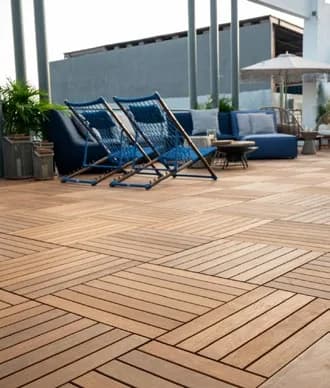
Defining Your Seasonal Needs
Before selecting deck tiles, clarify what "seasonal" means for your project. Do you plan to fully remove and store the tiles during off-seasons, or do you need a system that can withstand varied weather conditions year-round but still allow for easy access when necessary? The frequency of removal and the storage conditions will influence your material choice and preferred installation method.
Consider the local climate. If your region experiences heavy snowfall or prolonged periods of extreme cold, you might opt for a system that can be easily disassembled to prevent potential damage or to facilitate snow removal. Conversely, if your "seasonal" is more about aesthetic changes or occasional maintenance access, a more robust, yet still removable, system might be appropriate.
Choosing the Right Deck Tile Material
Deck tiles are available in various materials, each with distinct properties that affect their suitability for seasonal use. Hardwood deck tiles, such as Ipe, Garapa, and Cumaru, offer natural beauty and durability. Ipe is known for its deep chocolate tones and exceptional hardness, while Garapa provides warm golden tones, and Cumaru features rich reddish-brown grain.
When considering hardwood for a seasonal terrace, think about its weight and how that impacts handling during installation and removal. Hardwood tiles generally require periodic cleaning and maintenance to preserve their appearance. For seasonal removal, consider how the tiles will be stored to prevent warping or damage. Each of these species offers a distinct aesthetic, from the classic look of Ipe to the brighter appearance of Garapa, allowing for design flexibility.
For projects requiring a lighter material or different maintenance profile, other options exist. However, for the natural aesthetic and durability often desired in outdoor spaces, tropical hardwoods are a frequent choice.
Refer to product pages for specific material characteristics:
Ipe Deck Tiles: [product_url]/ipe
Garapa Deck Tiles: [product_url]/garapa
Cumaru Deck Tiles: [product_url]/cumaru
Selecting the Appropriate Tile Size
Deck tiles typically come in standard sizes like 12 x 12 inches and 24 x 24 inches. The choice of size affects both the installation process and the visual outcome. Smaller 12 x 12 inch tiles are compact and can be advantageous for smaller areas or layouts with many edges and transitions. They can be easier to handle individually, which might be a benefit for frequent seasonal removal.
Larger 24 x 24 inch tiles cover more area per tile, resulting in fewer seams and a more expansive look. While they can speed up installation for large, open surfaces, their increased weight might make them more cumbersome for regular seasonal removal and storage. Consider the trade-off between installation speed, handling ease, and the visual impact of the tile size.
For a seasonal terrace where ease of handling is a priority, 12 x 12 inch tiles might be more practical. If the terrace is large and removal is less frequent, 24 x 24 inch tiles could be considered. Each 12 x 12 inch tile covers 1 square foot, while each 24 x 24 inch tile covers 4 square feet.
Explore deck tile sizes: [product_url]
Installation and Removal System Compatibility
The method by which deck tiles are installed is critical for a seasonal terrace. Look for systems designed for easy assembly and disassembly. Many deck tile systems use interlocking bases or simple clip mechanisms that do not require permanent fasteners to the substrate.
For seasonal applications, ensure the chosen system allows for straightforward removal without damaging the tiles or the underlying surface. Some systems may require specific tools for removal, while others are designed for tool-free disassembly. Verify how the tiles connect to each other and whether this connection is robust enough for temporary use but also easily reversible.
If you are installing over a membrane or a surface that requires protection, ensure the tile system's base provides adequate separation and drainage. Pedestal systems, while offering excellent drainage and leveling capabilities, might involve more components and a more involved setup than simple interlocking tiles, which could impact the speed of seasonal removal.
Planning for Storage and Maintenance
A seasonal terrace implies periods when the tiles are not in use. Plan for adequate, protected storage space. Tiles should be stored flat, in a dry, well-ventilated area, away from direct sunlight and extreme temperature fluctuations, to prevent warping, fading, or mildew.
Maintenance requirements also play a role. Hardwood deck tiles benefit from regular cleaning and, if desired, periodic application of a UV-inhibiting oil to maintain their color. If you plan to remove and store tiles, consider cleaning them thoroughly before storage to prevent dirt and grime from setting in. This pre-storage maintenance can simplify reinstallation.
The ease of cleaning and maintenance should be factored into your decision. A system that is easy to clean while installed will also be easier to prepare for storage. Consider how any gaps between tiles will affect debris accumulation and cleaning.
Worked Example: A 10' x 12' Seasonal Terrace
Imagine you are planning a 10-foot by 12-foot seasonal terrace on a rooftop. The terrace needs to be installed in spring and removed in late fall. You prioritize ease of handling and a classic hardwood aesthetic.
**Step 1: Determine Total Area.** The terrace is 10 ft * 12 ft = 120 square feet.
**Step 2: Choose Tile Size.** Given the need for easy handling and removal, you opt for 12 x 12 inch (1 sq ft) Ipe deck tiles. These are compact and easier to manage individually.
**Step 3: Calculate Base Quantity.** For a 120 sq ft area, you would need 120 tiles if there were no cuts or waste. However, a realistic project will require some additional tiles for cuts.
**Step 4: Plan for Cuts.** Along the 10-foot dimension, you'll need 10 full tiles (10 ft / 1 ft per tile). Along the 12-foot dimension, you'll need 12 full tiles (12 ft / 1 ft per tile). This perfectly aligns with the tile dimensions, minimizing cuts. However, it is always prudent to order an additional 5-10% for cuts, breakage, or future replacements. For 120 tiles, an extra 10% would be 12 tiles.
**Step 5: Total Order Quantity.** You would plan to order 120 + 12 = 132 Ipe 12 x 12 inch deck tiles. The interlocking system of these tiles allows for quick assembly and disassembly.
**Step 6: Storage Plan.** After removal, the 132 tiles will be stacked flat on pallets or sturdy shelving in a covered storage area, ensuring good air circulation and protection from moisture and direct sunlight. This ensures they are ready for reinstallation the following season.
Before you order
- What is the exact size of your terrace in length and width?
- How frequently will the deck tiles need to be removed and reinstalled?
- What are the typical weather conditions during the off-season?
- Do you have suitable, protected storage space for removed tiles?
- What aesthetic do you prefer (e.g., warm golden tones, deep chocolate, reddish-brown)?
- Is ease of individual tile handling important for your project?
- What type of surface will the deck tiles be installed over?
- Do you need to access the underlying surface periodically for maintenance?
- Are there any obstacles (e.g., columns, drains) that will require custom cuts?
- What is your budget for both initial purchase and ongoing maintenance?
- Are there any local building codes or landlord restrictions regarding temporary outdoor flooring?
Confirm installation details, approved uses and warranty terms in the current instructions for the exact product and profile. Your installer should verify the substrate, structure and applicable project requirements.
Questions to help you decide
Can deck tiles be left out year-round in all climates?
While many hardwood deck tiles are durable, prolonged exposure to extreme conditions like heavy snow, ice, or continuous standing water can impact their longevity and appearance. For seasonal terraces, removing and storing tiles during harsh weather can help preserve them. Always check manufacturer guidelines for specific product recommendations in your climate.
How do I clean deck tiles before storing them?
Before storing deck tiles, clean them thoroughly to remove dirt, debris, and mildew. A stiff brush and a mild soap-and-water solution are usually effective. Rinse them well and allow them to dry completely before stacking and storing to prevent mold or mildew growth in storage. For hardwood, a periodic application of a wood brightener or cleaner can help restore their appearance.
What is the best way to store deck tiles seasonally?
The best way to store deck tiles is to stack them flat on a level surface, such as pallets or sturdy shelving, in a dry, well-ventilated area. Avoid storing them directly on the ground. Protect them from direct sunlight, rain, and extreme temperature fluctuations. Covering them with a breathable tarp can offer additional protection while allowing air circulation.
Ready to Plan Your Seasonal Terrace?
Request a material quote with your project dimensions, desired deck tile profile, and ZIP code to confirm current availability and service options. Our team can help you select the right deck tiles for your seasonal outdoor space.
Request a material quote →