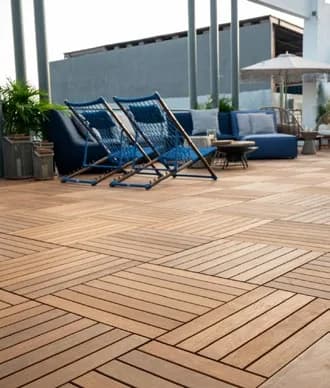
Assess Structural Capacity for Planter Loads
Before placing any planters, especially large ones, it is essential to understand the load-bearing capacity of your deck tile terrace and the structure beneath it. Planters filled with soil and water can be remarkably heavy. For rooftop terraces or balconies, this is a critical step that often requires review by a qualified structural engineer.
Consider the weight of the planter itself, the soil, and the maximum anticipated water content after irrigation or rain. Distribute heavier planters over structural supports where possible, rather than concentrating weight in a single area. This is particularly important for larger deck tile formats, such as the 24-inch by 24-inch size, where a single tile covers a wider area. Smaller 12-inch by 12-inch tiles might distribute load more evenly across a grid of supports, but the underlying structure remains the primary concern.
Manage Water Runoff and Drainage
Planters require drainage holes to prevent root rot, meaning water will exit the planter. This runoff needs to be managed to avoid staining deck tiles, pooling water, or compromising the waterproof membrane beneath the deck tiles. Consider using planter saucers or trays to collect excess water. Ensure these trays are adequately sized and regularly emptied.
Alternatively, integrate a drainage system beneath the planters that directs water away from the deck tile surface and towards existing terrace drains. For pedestal-supported deck tile systems, this might involve ensuring the runoff can freely flow between the pedestals to the underlying drainage layer without obstruction. Stagnant water can lead to algae growth and potential long-term issues for both the deck tiles and the sub-structure.
Select Appropriate Planter Materials and Sizes
The material of your planters can impact both aesthetics and practicality. Lightweight materials like fiberglass or composite can reduce the overall load, while heavier materials such as concrete or terra cotta contribute significantly to the total weight. Choose materials that complement your deck tile species, such as Ipe, Garapa, or Cumaru, which offer a range of natural wood tones from deep chocolate to warm golden to rich reddish-brown. The visual harmony between planters and deck tiles enhances the overall design.
The size of your planters should also be proportionate to your terrace and the deck tile layout. Overly large planters can overwhelm a small balcony, while too many small ones can make a large terrace feel cluttered. Consider the dimensions of your chosen deck tiles, whether 12-inch by 12-inch or 24-inch by 24-inch, when planning planter placement to maintain visual balance and functionality.
Ensure Access for Maintenance and Cleaning
Planters, especially those with plants, require ongoing care, including watering, pruning, and occasional repositioning. Your deck tile layout should allow for easy access around and, if necessary, underneath planters for cleaning and maintenance. If your deck tiles are designed to be removable, ensure that planters do not permanently block access to areas beneath the tiles that may require inspection or cleaning, such as roof drains or waterproofing membranes.
For very heavy planters, consider placing them on wheeled caddies or using a layout that allows for lifting or sliding if access beneath is anticipated. Regular cleaning around planters helps prevent dirt and organic matter buildup that could stain or compromise the deck tile surface over time.
Worked Example: Planters on a 10x12 Foot Deck Tile Terrace
Consider a hypothetical 10-foot by 12-foot terrace using 24-inch by 24-inch Ipe deck tiles. The terrace is planned for a total of 60 tiles (10 ft / 2 ft = 5 tiles; 12 ft / 2 ft = 6 tiles; 5 x 6 = 30 tiles, so 60 tiles for two layers if stacked, or simply 30 tiles for a single layer). We want to place two large rectangular planters, each measuring 36 inches long, 18 inches wide, and 24 inches high, in opposite corners.
Each planter will sit on approximately 1.5 deck tiles (36 inches = 1.5 x 24 inches; 18 inches is less than 24 inches). The weight of each planter filled with wet soil can easily exceed 200-300 pounds. This concentrated load needs to be checked against the terrace's structural capacity. We would select planter saucers that are at least 36 inches long and 18 inches wide to catch all runoff. These saucers should have a lip to contain water and be regularly checked and emptied.
To maintain access, we would place the planters so that at least one full side of the deck tile beneath each planter is exposed, allowing for easier removal of adjacent tiles if needed. For instance, if a planter sits across two tiles, ensure the remaining two sides of those tiles are clear for lifting tools. This ensures the Ipe deck tiles can breathe and any moisture can evaporate.
Before you order
- Verify the structural capacity of your terrace or balcony for the combined weight of planters, soil, and water.
- Plan for effective water runoff and drainage from planters to prevent pooling or staining on deck tiles.
- Select planter materials and sizes that are proportional to your terrace and complement your chosen deck tile species (Ipe, Garapa, Cumaru).
- Ensure planters allow for adequate access to the deck tile surface and any underlying systems for cleaning and maintenance.
- Consider using planter caddies or alternative placement strategies for very heavy planters if frequent access is required.
- Account for air circulation around planters to prevent moisture buildup on deck tile surfaces.
Confirm installation details, approved uses and warranty terms in the current instructions for the exact product and profile. Your installer should verify the substrate, structure and applicable project requirements.
Questions to help you decide
Can I place very heavy planters directly on my deck tiles?
Placing very heavy planters directly on deck tiles requires verifying the structural capacity of the underlying surface. Deck tiles themselves are a finish layer; the load is transferred to the sub-structure. For balconies and rooftops, a structural engineer's review is often necessary to ensure the combined weight of planters, soil, water, and the deck system is within safe limits. Concentrating heavy loads over structural beams or joists, rather than between them, is generally recommended.
How do I prevent water stains from planters on my deck tiles?
To prevent water stains, always use planter saucers or trays beneath your planters. These should be adequately sized to catch all runoff. Regularly empty the collected water. You can also elevate planters slightly within their saucers to allow for air circulation, which helps prevent moisture buildup and potential staining. For hardwood deck tiles like Ipe, Garapa, or Cumaru, consistent moisture can lead to discoloration or the growth of algae if not managed.
Do I need to leave space around planters for deck tile maintenance?
Yes, leaving adequate space around planters is important for maintenance. This allows you to clean the deck tiles underneath and around the planter, manage any runoff, and access the area if you have removable deck tiles or an underlying system that needs inspection. For very large or heavy planters, consider if they can be moved for deeper cleaning or access to the sub-structure.
Ready to Plan Your Deck Tile Terrace with Planters?
Request a material quote with your project dimensions, exact deck tile profile, and ZIP code. Confirm current availability and service options for your project.
Request a material quote →