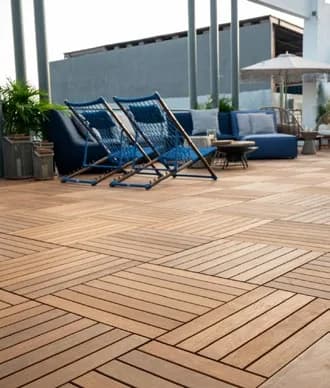
Evaluating Your Perimeter Conditions
Before selecting an edge solution, thoroughly assess the conditions around your deck tile area. Consider what the deck tiles will meet at each edge: is it a wall, a railing, another type of flooring, a garden bed, or an open drop-off? Each scenario presents different requirements for finishing.
For example, an edge against a building wall or a fixed railing might require only a simple cut tile to meet the obstruction. An open edge, such as on a balcony or a raised terrace, demands a more considered finish to conceal the tile's substructure and provide a clean visual line. Transitions to other surfaces, like grass or concrete patios, will need solutions that manage height differences and prevent tripping.
Trip Hazards and Safety at Edges
One of the most critical aspects of edge finishing is managing potential trip hazards. Any abrupt change in elevation or an exposed edge can create a safety risk. Deck tiles typically have a certain thickness, whether 12 x 12 or 24 x 24, and the transition from this height to an adjacent lower surface needs to be smooth and gradual.
Consider the expected foot traffic. In high-traffic areas, a ramped edge or a flush transition is often preferred. Where deck tiles meet a lawn or gravel, a border material can help contain the loose material and create a stable walkway. Always aim to minimize ledges or uneven steps at the perimeter, especially if the area will be used by children, the elderly, or those with mobility challenges.
Aesthetic Considerations for Edges
The aesthetic impact of your deck tile edges can significantly influence the overall look of your outdoor space. A clean, deliberate edge finish contributes to a professional and polished appearance. Conversely, unfinished or poorly integrated edges can detract from even the most beautiful deck tile installation.
Options range from exposed cut edges, which might be acceptable if the substructure is hidden and the cut is precise, to using dedicated edge pieces, trim, or contrasting border materials. The choice often depends on the desired visual effect and the specific deck tile system. For instance, a continuous, seamless look might prioritize matching trim, while a more defined border could use a different material or color.
Transitioning to Adjacent Surfaces
Integrating deck tiles with different adjacent surfaces requires careful planning. When transitioning from deck tiles to concrete, asphalt, or pavers, the key is to manage the height difference. This might involve using a transition strip, a small ramp, or even adjusting the base beneath the adjacent surface to achieve a more flush connection. For example, if your deck tiles are installed over a pedestal system, the height can be substantial.
For transitions to soft landscaping like grass or garden beds, consider a durable border material such as natural stone, treated wood, or metal edging. This helps prevent soil and mulch from migrating onto the deck tiles and provides a stable edge. Ensure that any border material is installed securely to prevent shifting over time.
Worked Example: Finishing a Balcony Edge
Imagine a rectangular balcony measuring 10 feet by 8 feet, where 24 x 24 inch (2 ft x 2 ft) Ipe deck tiles are being installed. The balcony has a building wall on one 10-foot side and one 8-foot side, and open railings on the other two sides. We want to finish the open edges neatly and safely.
Along the walls, the deck tiles will meet the existing structure. We’ll plan for a precise cut to ensure a tight fit against the wall. For the two open sides, we need a solution to conceal the tile's base and provide a clean, finished appearance. A common approach is to use a matching Ipe fascia board or a trim piece that attaches to the edge of the deck tile system, extending downwards to cover the gap and the supporting structure.
This board would be secured to the outermost deck tile's frame or the underlying structure, ensuring it's flush with the top surface of the deck tiles. This creates a visually solid edge, prevents small items from falling through, and offers a finished look. We would need 10 linear feet plus 8 linear feet of fascia board, accounting for corner cuts and waste, likely requiring two 10-foot and two 8-foot boards.
This example assumes the railing provides sufficient clearance for the fascia and that the fascia height matches the deck tile assembly. Always verify these dimensions on your specific project. For corner details, mitered cuts provide the cleanest look.
Considerations for Maintenance and Future Access
When designing your deck tile edges, also think about long-term maintenance and potential future access. If the substructure beneath the deck tiles needs to be accessed for repairs or cleaning, a removable edge system might be beneficial.
Ensure that the chosen edge solution does not trap water or debris, which could lead to moisture issues or premature wear. Proper drainage at the perimeter is essential. If using wood trim, consider how it will weather and if it requires the same maintenance as the deck tiles, such as periodic cleaning or oiling. Matching the maintenance schedule can help ensure uniform appearance over time.
Before you order
- Identify all perimeter conditions (wall, railing, open, other surface).
- Assess potential tripping hazards and safety requirements.
- Determine the desired aesthetic for the edges (flush, contrasting, concealed).
- Measure height differences for transitions to adjacent materials.
- Consider the structural support for any edge trim or fascia.
- Plan for drainage and water runoff at the perimeter.
- Account for future access to the substructure if needed.
- Verify material compatibility and maintenance requirements for edge components.
Confirm installation details, approved uses and warranty terms in the current instructions for the exact product and profile. Your installer should verify the substrate, structure and applicable project requirements.
Questions to help you decide
Do I always need special edge pieces for deck tiles?
Not always, but it depends on your specific installation. If your deck tiles are installed against a wall or a very tight, enclosed space, simple cut tiles might suffice. For open edges, such as on a balcony or a raised terrace, edge pieces or fascia boards are usually recommended for safety, aesthetics, and to conceal the underlying support structure. Always review your project's specific needs.
How do I prevent tripping hazards at the edge of my deck tile area?
To prevent tripping hazards, ensure a smooth transition between the deck tiles and any adjacent surface. This might involve using a ramped transition strip, a flush border material, or carefully designing the edge so there isn't a significant step up or down. For open edges, a fascia board can visually complete the edge and prevent feet from slipping into the gap beneath the tiles. Consider the expected users of the space when making these decisions.
Can I use different materials for my deck tile edges?
Yes, you can use different materials for your deck tile edges, depending on your design goals and the specific installation. For instance, you might use stone pavers to create a border around hardwood deck tiles, or a metal edging strip for a contemporary look. When mixing materials, ensure they are compatible in terms of durability, weather resistance, and maintenance requirements. Always check for structural compatibility with your chosen deck tile system.
Request a Quote for Your Deck Tile Project
Ready to define the edges of your outdoor space? Provide your project dimensions, desired deck tile profile, and ZIP code to request a material quote. Our team can help confirm current availability and service options for your deck tile and edge finishing needs. Visit our deck tiles product page to explore options like Ipe, Garapa, and Cumaru in 12 x 12 or 24 x 24 sizes. We also offer complementary products like Ipe boards, Garapa boards, and Cumaru boards that could be used for fascia.
Request a material quote →