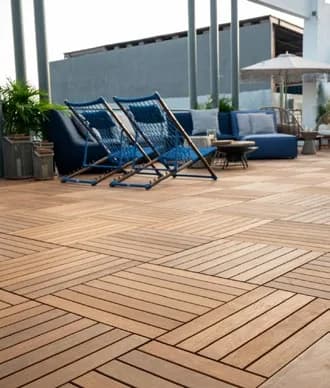
Visual Appeal: Color and Grain
The initial impression of any outdoor surface comes from its color and grain. Ipe deck tiles are known for their deep chocolate tones, often featuring a fine, dense grain that contributes to a sophisticated, classic hardwood appearance. This rich, dark hue can add a sense of luxury and permanence to a space.
In contrast, Garapa deck tiles present warm golden tones. Their lighter color can create a brighter, more open feel, making them a suitable choice for spaces where you want to maximize light or achieve a more contemporary, airy aesthetic. The grain of Garapa is also appealing, though typically less pronounced than Ipe, allowing its golden color to be the primary visual feature.
Consider how these colors will interact with your existing architecture, outdoor furniture, and landscaping. A physical sample of each species viewed in your project's natural light conditions can be invaluable for this decision.
Hardness and Durability: Janka Scale Comparison
Hardness is a key indicator of a wood's resistance to dents, scratches, and wear. The Janka hardness scale provides a standardized measurement for this property. This exceptional hardness makes Ipe highly resistant to heavy foot traffic, impacts, and general outdoor wear and tear.
This is a robust hardness level for most residential and light commercial outdoor applications, offering good resistance to daily use. However, for projects anticipating extremely heavy loads or frequent, high-impact activities, Ipe's superior hardness might be a deciding factor.
Both woods are naturally resistant to decay and insects, a crucial attribute for any outdoor material. The difference in hardness primarily relates to their ability to withstand physical damage from objects or concentrated pressure over time.
Project Suitability: When to Choose Which
Ipe deck tiles are often selected for high-traffic areas, commercial installations, or luxury residential projects where maximum durability and a deep, rich aesthetic are paramount. Their density also contributes to their stability in various climates, making them a reliable choice for long-term outdoor use.
Garapa deck tiles are an excellent choice for residential decks, balconies, and rooftop terraces where a warm, inviting atmosphere is desired. Its golden color can brighten shaded areas and its good hardness is sufficient for typical outdoor living. Garapa offers a balance of appealing aesthetics and practical durability for many common outdoor projects.
Consider the specific function of your outdoor space. Will it host large gatherings, heavy furniture, or be subject to frequent spills? Or is it a more relaxed, private retreat? These factors should guide your material selection.
Module Sizes: 12x12 vs. 24x24
Both Ipe and Garapa deck tiles are available in common square formats: 12 x 12 inches and 24 x 24 inches. The choice of module size affects the visual rhythm of your installation and can influence installation time and waste.
12 x 12 inch tiles (1 square foot per tile) are compact. They are often preferred for smaller areas, intricate layouts with more edges or transitions, or when creating a more detailed grid pattern. Their smaller size can also be easier to handle during installation.
24 x 24 inch tiles (4 square feet per tile) offer a larger format. These are typically chosen for expansive terraces and open surfaces where fewer tile seams are desired, creating a more continuous, grander appearance. Larger tiles can sometimes simplify installation over broad areas but may require more careful planning for cuts around obstacles.
Your project's dimensions, the presence of fixed elements like columns or drains, and your desired aesthetic will help determine the optimal tile size.
Worked Example: Selecting Tiles for a 10x12 Foot Balcony
Let's consider a hypothetical 10-foot by 12-foot residential balcony. The client desires a bright, inviting space for occasional entertaining and wants a durable material that is easy to maintain. They are weighing Ipe and Garapa 24 x 24 inch deck tiles.
**Ipe Option:** While Ipe's deep chocolate tones offer a classic, luxurious feel, the client's preference for a 'bright, inviting space' might lean away from its darker hue. However, its exceptional hardness would provide maximum reassurance against furniture movement and spills from entertaining.
The lighter color could also help the balcony feel more spacious.
**Decision:** For this specific scenario, Garapa deck tiles in the 24 x 24 inch format would likely be the preferred choice. The golden color directly addresses the aesthetic goal of brightness, and its durability is perfectly adequate for the planned use. The larger tile format would also create a less busy appearance on the 120 square foot balcony.
**Takeoff Estimate (Garapa 24x24 tiles for 10x12 ft balcony):** The balcony is 120 square feet. Each 24x24 inch tile covers 4 square feet. So, 120 sq ft / 4 sq ft/tile = 30 tiles. However, it's crucial to factor in cuts and waste. A 10 ft (120 inch) width would require 5 tiles (120/24). A 12 ft (144 inch) length would require 6 tiles (144/24). This perfectly aligns with the tile dimensions, requiring 5 x 6 = 30 tiles for full coverage with no cuts needed if the dimensions are exact. Always add 5-10% for waste and future repairs, bringing the purchase estimate to 32-33 tiles. This example assumes perfectly square dimensions and no obstacles. Real-world projects will require a detailed layout plan.
Before you order
- What is the primary aesthetic goal for your outdoor space (e.g., classic, bright, luxurious)?
- How much foot traffic and potential impact will the surface experience?
- What is your long-term maintenance preference for color retention versus natural weathering?
- Does your project require specific dimensions or a particular visual rhythm (12x12 vs. 24x24)?
- Have you viewed physical samples of Ipe and Garapa in your project's lighting conditions?
- Are there any specific building codes or project requirements that influence material choice (e.g., for rooftop applications)?
- What is the overall project budget, considering material costs, installation, and long-term care?
Confirm installation details, approved uses and warranty terms in the current instructions for the exact product and profile. Your installer should verify the substrate, structure and applicable project requirements.
Questions to help you decide
Do Ipe and Garapa deck tiles require the same maintenance?
Both Ipe and Garapa are hardwoods that benefit from regular cleaning to remove dirt and debris. If you wish to maintain their original color, periodic application of a UV-protective oil is recommended. Without oiling, both will naturally weather to a silver-gray patina over time. The specific frequency of oiling may vary slightly based on sun exposure and local climate, but the general maintenance approach is similar for both.
Can I use Ipe or Garapa deck tiles with a pedestal system?
Yes, both Ipe and Garapa deck tiles are commonly used with pedestal systems for elevated installations, such as rooftop terraces or over uneven concrete. When planning for a pedestal system, it's crucial to ensure compatibility between the specific deck tile product and the chosen pedestal brand. Verify the tile's structural integrity for point loading on pedestals and confirm any manufacturer-recommended spacing or support requirements.
Are Ipe and Garapa deck tiles suitable for coastal environments?
Both Ipe and Garapa are dense hardwoods that exhibit good natural resistance to the elements, making them suitable for many coastal applications. Their inherent density helps them withstand moisture and salt air exposure. However, in harsh coastal conditions, all outdoor materials benefit from enhanced maintenance. It is always wise to review specific exposure conditions and consider stainless steel fasteners for any coastal project to prevent corrosion.
Ready to Plan Your Deck Tile Project?
Request a material quote with your project dimensions, desired tile profile (Ipe or Garapa, 12x12 or 24x24), and your ZIP code. Our team can help confirm current availability and service options for your location. Visit our product pages for more details on specific Ipe and Garapa deck tile options: [Ipe Deck Tiles](/deck-tiles/ipe), [Garapa Deck Tiles](/deck-tiles/garapa), and [Cumaru Deck Tiles](/deck-tiles/cumaru).
Request a material quote →