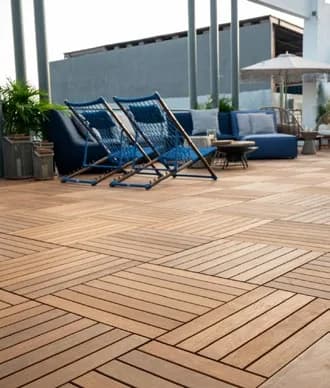
Visual Appeal and Aesthetic Preferences
The initial impression of your outdoor space is heavily influenced by the visual characteristics of your deck tiles. Hardwood deck tiles, such as those made from Ipe, Garapa, or Cumaru, offer a natural, rich aesthetic that evolves over time. Ipe is known for its deep chocolate tones, Garapa for warm golden hues, and Cumaru for a reddish-brown grain.
These tropical hardwoods display unique grain patterns and color variations inherent to natural wood. With exposure to sunlight and weather, hardwood tiles will gradually silver if left untreated, developing a patina that many find desirable. Regular oiling can help maintain their original color. The choice between these hardwoods often comes down to personal preference for color and grain.
Composite deck tiles are designed to mimic the appearance of wood but offer a more consistent color and texture from tile to tile. They are available in a range of pre-set colors and finishes, which typically remain stable over time with minimal fading. If a uniform, low-variation look is a priority, composite options might be preferred. However, they lack the unique natural imperfections and aging process that characterize real wood.
Durability and Longevity: Hardwood vs. Composite
Durability is a key factor, especially for outdoor applications subject to varying weather conditions and foot traffic. Hardwood deck tiles, particularly those from dense tropical species like Ipe and Cumaru, are celebrated for their natural strength and resistance to decay, insects, and rot. These woods have high Janka hardness ratings, indicating their resistance to indentation and wear.
Garapa, while also a hardwood, has a lower Janka rating than Ipe or Cumaru, making it suitable for many applications but potentially less resistant to heavy impact in very high-traffic areas. All hardwoods require some maintenance to preserve their longevity and appearance, such as cleaning and occasional re-oiling.
Composite deck tiles are engineered from a blend of wood fibers and plastic. This composition provides resistance to splintering, rot, and insect damage without the need for periodic oiling. Composites are formulated to withstand environmental stressors, often offering a consistent performance profile. However, some composite materials can be susceptible to scratching or staining, and extreme temperatures might affect their stability over time. Reviewing manufacturer specifications for specific performance claims is important.
Maintenance Requirements and Practicality
The level of maintenance you are willing to commit to will heavily influence your material choice. Hardwood deck tiles generally require more active maintenance to preserve their original color. This typically involves regular cleaning to remove dirt and debris, and periodic application of a UV-inhibiting oil to protect the wood and slow the natural silvering process.
If left untreated, hardwood tiles will naturally weather to a soft silver-gray. This is a purely aesthetic change and does not typically compromise the structural integrity of dense hardwoods. Annual or bi-annual re-oiling can help retain the wood's rich tones.
Composite deck tiles are often marketed as low-maintenance. They do not require oiling or staining to maintain their color. General maintenance usually involves routine cleaning with soap and water to remove dirt, pollen, and other surface grime. While composites resist rot and insects, they can still accumulate mold or mildew in damp, shaded areas, which requires cleaning. Check specific product guidelines for recommended cleaning agents and methods.
Installation Considerations and System Compatibility
Both hardwood and composite deck tiles are designed for relatively straightforward installation, often using interlocking systems or placed on pedestals. The specific installation method can vary by product. For instance, most hardwood deck tiles are available in 12 x 12 inch and 24 x 24 inch formats, designed for modular placement.
When planning, consider the existing surface beneath. Deck tiles require a stable, relatively level substrate that provides adequate drainage. If using a pedestal system, ensure the pedestals are compatible with your chosen tile size and material, and that they can accommodate any necessary slope for water runoff. The larger 24 x 24 inch tiles cover more area with fewer seams, while 12 x 12 inch tiles can be suitable for intricate layouts or smaller spaces.
Verify the specific assembly method for your chosen tiles. Some systems are designed for easy removal and reinstallation, which can be beneficial for accessing the substrate for maintenance or repairs. Always consult the manufacturer's installation guidelines for proper fitting, spacing, and support requirements.
Project Example: A 10x15 Foot Balcony
Consider a hypothetical 10-foot by 15-foot balcony, totaling 150 square feet. This project requires deck tiles that are durable, visually appealing, and manageable for installation.
Option 1: Hardwood Ipe Deck Tiles (24 x 24 inch). These tiles cover 4 square feet each. For 150 square feet, you would need 150 / 4 = 37.5 tiles. Given that tiles are purchased as full modules, and assuming no usable offcuts from edge cuts for this example, you would typically round up and account for cuts, so purchasing 38-40 tiles would be a reasonable starting estimate. The deep chocolate tones of Ipe would provide a sophisticated, natural look, requiring periodic oiling to maintain its rich color.
Option 2: Composite Deck Tiles (24 x 24 inch). Also covering 4 square feet per tile, the quantity needed would be similar to the Ipe example (38-40 tiles). A composite option would offer a consistent, pre-defined color that remains stable with minimal fading over time, requiring only basic cleaning. The decision here hinges on whether the project prioritizes the natural aging and unique character of hardwood or the consistent appearance and lower active maintenance of composite.
Before you order
- What is your primary aesthetic preference: natural wood grain and color variation, or uniform, consistent color?
- How much maintenance are you willing to perform (e.g., periodic oiling vs. routine cleaning)?
- What level of natural durability and resistance to rot/insects is critical for your climate and usage?
- Do you prefer a material that develops a natural patina or one that retains its manufactured color?
- What is the expected foot traffic and potential for heavy impact on the surface?
- Are there specific compatibility requirements with an existing pedestal system or substrate?
- What are the local fire and building code requirements for your specific installation (e.g., rooftop applications)?
- Have you reviewed samples of both hardwood and composite options in person under different lighting conditions?
Confirm installation details, approved uses and warranty terms in the current instructions for the exact product and profile. Your installer should verify the substrate, structure and applicable project requirements.
Questions to help you decide
Can I mix hardwood and composite deck tiles in one project?
While technically possible, it is generally not recommended to mix hardwood and composite deck tiles within the same continuous surface. The materials have different expansion/contraction rates, maintenance needs, and aesthetic characteristics, which can lead to an uneven appearance or practical issues over time. If you wish to incorporate both, consider using them in distinct, separate zones or for different design elements.
Do hardwood deck tiles splinter?
High-density tropical hardwoods like Ipe, Garapa, and Cumaru are naturally very resistant to splintering, especially when properly maintained. Unlike some softer woods, their tight grain structure contributes to their durability. However, like any wood product, extreme neglect or damage could potentially lead to splintering. Regular cleaning and occasional re-oiling help keep the surface smooth and well-preserved.
Are composite deck tiles truly maintenance-free?
Composite deck tiles are often described as low-maintenance, but not entirely maintenance-free. They do not require the same level of staining or oiling as hardwood. However, they still need regular cleaning to remove dirt, leaves, pollen, and other debris. In shaded or damp environments, mold or mildew can accumulate on composite surfaces and will require cleaning. Always follow the manufacturer's specific cleaning and care instructions for your chosen composite product.
Ready to Plan Your Deck Tile Project?
Request a material quote with your project dimensions, desired tile profile (e.g., Ipe 24x24), and ZIP code. We can confirm current availability and service options for your location.
Request a material quote →