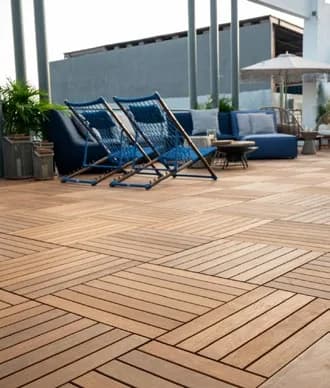
Confirming the Project Scope and Layout
The first step in any material order is a final confirmation of the project scope. This includes the exact area to be covered, any specific zones or patterns, and the location of fixed elements like columns, drains, or planters. Your contractor can help verify that the proposed layout accounts for these details and that the overall design is feasible for the chosen deck tile system.
For example, a layout might feature 24 x 24 deck tiles for a broad, open terrace, transitioning to 12 x 12 tiles in a narrower walkway or around intricate perimeter details. Confirming these transitions and tile orientations with your contractor ensures the aesthetic intent is preserved and the material quantities are accurately calculated for each zone.
Selecting the Right Deck Tile Species and Size
Lumber Plus offers deck tiles in various hardwood species and sizes, each with distinct characteristics. The choice of species impacts the aesthetic, while the tile size influences the visual scale and installation rhythm.
Ipe deck tiles offer deep chocolate tones and a classic hardwood appearance. Garapa deck tiles provide warm golden tones, suitable for brighter outdoor spaces. Cumaru deck tiles feature a rich reddish-brown grain. These species contribute to the overall character of your terrace or balcony.
Regarding size, 12 x 12 deck tiles are a compact format often chosen for smaller areas or layouts with many cuts and transitions. In contrast, 24 x 24 deck tiles offer a larger square format, suitable for more expansive terraces where fewer tile seams are desired, creating a more open visual effect. Discussing the visual impact and practical implications of each size with your contractor is crucial for finalizing your selection.
You can explore the available options here: [Deck Tiles](/deck-tiles), [Ipe Deck Tiles](/deck-tiles/ipe), [Garapa Deck Tiles](/deck-tiles/garapa), [Cumaru Deck Tiles](/deck-tiles/cumaru).
Detailed Measurement Verification and Cut Planning
Accurate measurements are fundamental to ordering the correct quantity of deck tiles. Your contractor should conduct a final site measurement to account for any discrepancies from initial plans. This step is particularly important for areas with irregular shapes, existing structures, or specific edge conditions. The goal is to minimize waste and ensure you have enough material for the project.
Consider a hypothetical rectangular terrace measuring 10 feet wide by 12 feet long. If you choose 24 x 24 (2-foot x 2-foot) deck tiles, the total area is 120 square feet. Dividing 120 by 4 square feet per tile (24" x 24" tile area) suggests 30 tiles. However, this simple calculation doesn't account for cuts.
For the 10-foot width, you would need 5 tiles (10 feet / 2 feet per tile). For the 12-foot length, you would need 6 tiles (12 feet / 2 feet per tile). This means a total of 5 rows by 6 columns, or 30 full tiles. If there were any non-standard dimensions, for example, a 10-foot by 13-foot area, the length would require 6.5 tiles. This would mean 7 tiles in length, leading to more cuts and potential waste. It’s essential to discuss the cut plan with your contractor to determine the actual number of full tiles needed and to estimate any necessary overage for cuts and potential future replacements. Always confirm the actual purchased module quantity, not just the area equivalent.
Considering Installation System Components
Deck tiles are typically installed using either an interlocking system or a pedestal system. The chosen system dictates additional components needed and influences the overall height and stability of the finished surface. Your contractor will confirm which system is appropriate for your project’s specific conditions, such as the underlying substrate and required drainage.
If using a pedestal system, discuss the type of pedestals (fixed or adjustable), shims for leveling, and any perimeter containment systems required. For interlocking tiles, confirm if any specific edge pieces or trim are needed for a finished appearance. These components must be ordered alongside the deck tiles to ensure a complete and coordinated delivery.
Logistics: Delivery, Storage, and Site Access
Before placing your order, review the logistics with your contractor. This includes confirming the delivery address, assessing site access for large material deliveries, and planning for on-site storage. Hardwood deck tiles should be stored in a manner that protects them from excessive moisture, direct sunlight, and extreme temperature fluctuations to prevent warping or damage.
Discuss the timing of the delivery to align with the project schedule. Coordinating this with your contractor ensures that materials are available when needed for installation, but not stored on site for extended periods, which could expose them to adverse conditions or obstruct other work.
Before you order
- Finalize project dimensions and layout with your contractor.
- Confirm deck tile species (Ipe, Garapa, Cumaru) and size (12x12, 24x24).
- Review detailed cut plan and calculate exact tile quantities, including waste factor.
- Identify and specify all required installation system components (pedestals, shims, edge trim).
- Verify site access for delivery and plan for secure, protected on-site material storage.
- Establish preferred delivery date and schedule with your contractor.
- Confirm any specific maintenance considerations for the chosen deck tile species.
- Obtain a final, itemized material list from your contractor for ordering.
Confirm installation details, approved uses and warranty terms in the current instructions for the exact product and profile. Your installer should verify the substrate, structure and applicable project requirements.
Questions to help you decide
What is the typical lead time for deck tile orders?
Lead times for deck tile orders can vary based on species, size, and current stock levels. It is best to confirm the estimated lead time at the time of your quote request to align with your project schedule.
Do I need to order extra deck tiles for cuts and waste?
Yes, it is generally recommended to order an overage, typically 5-10% beyond your calculated net quantity, to account for cuts, potential damage during installation, or future repairs. Your contractor can provide a more precise waste estimate based on the complexity of your layout.
How do I care for my deck tiles after installation?
Maintenance depends on the specific hardwood species chosen. Generally, hardwood deck tiles benefit from regular cleaning to remove dirt and debris. Depending on your preference, you may choose to allow the wood to weather naturally to a silver-gray patina or apply a suitable oil finish to help maintain its original color. Always consult specific manufacturer guidelines for recommended care.
Ready to Plan Your Deck Tile Project?
Request a material quote with your project dimensions, exact profile, and ZIP code. Confirm current availability and service options to get started.
Request a material quote →