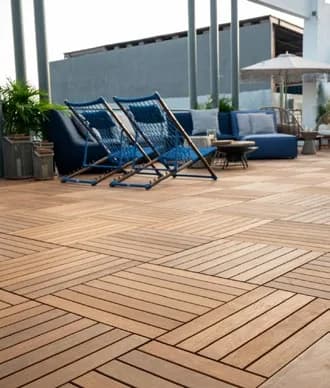
Understanding Coastal Exposure for Deck Tiles
Coastal exposure is more than just proximity to the ocean. It involves the prevailing winds carrying salt spray, the frequency of fog or mist, and the overall humidity levels. A deck tile installation on a sheltered courtyard in a coastal town will experience different conditions than an exposed rooftop terrace facing the open sea.
Consider the specific microclimate of your project site. Is it directly in the path of ocean spray? Is it frequently enveloped in marine fog? These factors determine the level of corrosion risk for metal components and the potential for salt buildup on wood surfaces. Identifying the true exposure level is the first step in selecting suitable materials.
Hardwood Deck Tiles for Coastal Climates
Many tropical hardwoods are often chosen for outdoor applications due to their natural density and resistance to decay and insects. For coastal environments, their inherent stability can be an advantage, provided the underlying structure and fasteners are also appropriate.
Ipe deck tiles, known for their deep chocolate tones and high density, are a popular choice for demanding outdoor settings. Garapa offers warm golden tones, suitable for brighter aesthetics, while Cumaru provides rich reddish-brown hues. All three are dense hardwoods that can tolerate outdoor conditions. However, even with durable wood, the performance of the overall system in a coastal area depends heavily on the non-wood components.
The appearance of hardwood deck tiles will change over time when exposed to the elements. Without regular application of a UV protective finish, hardwood will gradually weather to a silver-gray patina. This natural aging process does not necessarily diminish the wood's structural integrity but is an aesthetic consideration for coastal projects, where salt residue might alter the weathering pattern.
Fasteners and Sub-Structures: The Critical Coastal Link
For any deck tile system, the fasteners and the sub-structure are critical. In coastal areas, these elements are particularly vulnerable to corrosion. Standard galvanized steel fasteners may not offer sufficient protection against salt spray and high humidity.
This includes screws, clips, and any other metal hardware used to secure the deck tiles or the supporting joists. Even if the deck tiles themselves are naturally resistant to decay, corroded fasteners can lead to loosening, instability, and premature failure of the installation.
The sub-structure, whether it's a treated lumber frame, aluminum pedestals, or a concrete slab, also requires careful consideration. If using a wood sub-structure, ensure it is rated for ground contact or severe weather exposure, as coastal humidity can accelerate decay in less robust materials. For pedestal systems, verify that all components, including the adjustable bases and risers, are made from corrosion-resistant materials suitable for marine environments.
Worked Example: A Coastal Rooftop Terrace
Imagine a rooftop terrace on a three-story building, 200 feet from the ocean. The terrace measures 10 feet by 15 feet and is fully exposed to prevailing sea breezes. The project calls for 24 x 24 inch Ipe deck tiles. The existing roof membrane is in good condition, and a pedestal system will be used to create a level surface and allow for drainage.
For this scenario, the primary concern is the high exposure to salt spray and wind. The Ipe deck tiles (24" x 24" covering 4 square feet each) are a suitable choice for the wood itself due to their density. The terrace area is 150 square feet. To cover this, you would need 150 sq ft / 4 sq ft per tile = 37.5 tiles. Allowing for cuts and waste, a purchase of 40 tiles would be a reasonable starting point, assuming minimal complex cuts.
However, the critical decision here involves the pedestal system and its fasteners. If the design includes perimeter restraint bars or edge trim, these too must be of a corrosion-resistant alloy. The installation plan must explicitly specify marine-grade hardware to withstand the constant salt exposure and prevent premature deterioration of the support system.
Maintenance and Long-Term Performance in Coastal Areas
Regular maintenance is particularly important for deck tiles in coastal environments. Salt residue can build up on surfaces, potentially affecting the wood's appearance and accelerating corrosion of any exposed metal. Regular cleaning with fresh water can help remove salt deposits.
For hardwood deck tiles, deciding whether to let them weather naturally or apply a finish is an aesthetic choice. If a finish is desired to maintain the original wood color, select a product specifically formulated for exterior hardwoods and reapply it according to the manufacturer's recommendations. Be aware that coastal conditions, including intense UV and salt spray, may necessitate more frequent reapplication than in inland areas.
Periodically inspect all fasteners and sub-structure components for any signs of corrosion or wear. Address any issues promptly to ensure the long-term stability and safety of your deck tile installation. This vigilance is especially crucial in high-exposure coastal settings.
Before you order
- Assess specific coastal exposure: Direct ocean spray, frequent fog, or high humidity?
- Select deck tile material: Consider dense hardwoods like Ipe, Garapa, or Cumaru for durability.
- Verify sub-structure materials: Ensure pedestals, joists, and supports are corrosion-resistant or rated for severe exposure.
- Plan for drainage: Confirm the underlying surface slopes correctly and the deck tile system allows for efficient water runoff.
- Consider long-term maintenance: Factor in regular cleaning to remove salt residue and potential reapplication of finishes.
- Review warranty terms: Understand how coastal exposure might affect manufacturer warranties for all components.
Confirm installation details, approved uses and warranty terms in the current instructions for the exact product and profile. Your installer should verify the substrate, structure and applicable project requirements.
Questions to help you decide
Can I use standard deck tiles in a coastal area?
While the wood portion of many deck tiles, especially dense hardwoods like Ipe, Garapa, and Cumaru, can withstand outdoor conditions, the critical factor in coastal areas is the metal hardware. Standard fasteners and sub-structure components may corrode rapidly due to salt exposure. It is essential to specify marine-grade stainless steel fasteners and ensure the entire system is designed for corrosive environments.
What kind of fasteners should I use for coastal deck tile projects?
This applies to all screws, clips, and any other metal hardware used in the installation. These materials offer superior resistance to corrosion from salt spray and high humidity, which are prevalent in coastal environments.
How does salt exposure affect the appearance of hardwood deck tiles?
Salt exposure can contribute to a more rapid or uneven weathering process for hardwood deck tiles. While hardwoods naturally weather to a silver-gray patina over time, salt residue can sometimes alter this process or leave visible deposits. Regular cleaning with fresh water can help mitigate this. If you choose to apply a finish to maintain the original wood color, coastal conditions may require more frequent reapplication.
Request a Quote for Your Coastal Deck Tile Project
Planning a deck tile installation in a coastal area? Provide your project dimensions, desired deck tile profile (e.g., Ipe 24x24), and ZIP code to receive a material quote. We can help you confirm current availability and service options for your specific needs.
Request a material quote →