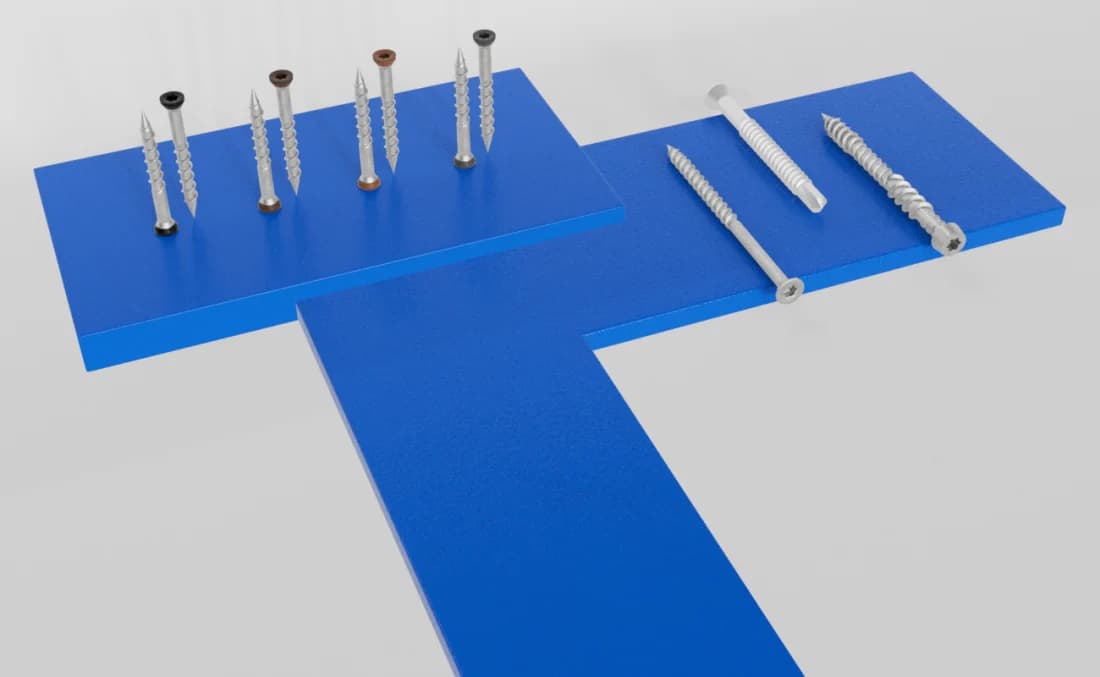
Understanding Deck Starter Clips
Deck starter clips are specialized fasteners designed to secure the first board of a deck, often without visible screws, creating a clean edge. Unlike traditional face screws, starter clips typically attach to the joist and grip the underside or edge of the deck board, allowing subsequent boards to be installed with hidden fasteners.
These clips are particularly important for decks where a smooth, uninterrupted surface is desired, as they eliminate the need for exposed fasteners on the most visible perimeter board. They are part of a broader category of deck fastening systems that aim for clean finished surfaces.
Types of Starter Clip Systems
Different deck board materials and profiles require specific starter clip systems. Some clips are designed for grooved-edge boards, sliding into a pre-milled channel. Others may be designed for square-edge boards, requiring a specific installation method or a compatible router bit to create a groove.
It is crucial to verify the compatibility between your chosen deck boards and the starter clips. Manufacturer specifications for both the deck boards and the clips should explicitly state their intended use together. This ensures a secure fit and proper spacing.
Planning Perimeter Boards and End Fastening
The perimeter boards of your deck, including the first and last rows, as well as any edge boards, require careful planning for fastening. While starter clips handle the initial board, the final board and any boards bordering open edges may need alternative fastening methods.
For final boards, or where a hidden clip system cannot be used, face screws may be necessary. If face screws are used, consider compatible plugs to conceal them, matching the deck board material. For a consistent look, ensure any visible fasteners or plugs align with the aesthetic of your deck.
Consider using fascia support hardware for any vertical fascia boards that will cover the rim joists. These accessories are designed to securely attach fascia while allowing for material expansion and contraction.
Material Compatibility and Durability
When selecting deck hardware, including starter clips, consider the material of the clips themselves and their compatibility with your deck boards and framing. For demanding assemblies, structural connectors and specific fastening solutions are available.
Many starter clips are made from stainless steel or coated metals for corrosion resistance. Ensure the chosen material is suitable for your local environment, especially in coastal areas where salt exposure can accelerate corrosion. Always check for mixed-metal compatibility to prevent galvanic corrosion when different metals are in contact.
Worked Example: Securing the First Row of a Deck
Let's consider a hypothetical 12-foot by 16-foot deck where the first row of deck boards will be installed along the 16-foot length. We are using 16-foot long, 5.5-inch wide grooved-edge composite deck boards and a compatible hidden starter clip system.
Therefore, you would need 12 starter clips for the first board.
If the starter clips are sold in boxes of 25, you would purchase one box of starter clips. This ensures you have enough for the first board and some spares. Remember to factor in any additional clips needed for the last board or any border sections where a similar hidden fastening approach is desired.
For the subsequent boards, a different hidden fastening system would typically be used, connecting board to board or board to joist. The starter clips are unique to the initial perimeter placement.
Before you order
- Verify the deck board profile (grooved, square-edge) and its compatibility with specific starter clips.
- Confirm the starter clip material is suitable for your deck board material and local environmental conditions.
- Calculate the number of starter clips needed based on your deck's perimeter and joist spacing.
- Consider how the final perimeter boards and any end boards will be fastened for a consistent look.
- Review manufacturer installation instructions for both deck boards and clips to understand spacing and installation methods.
- Plan for any necessary cutting or routing of boards to accommodate clips or create grooves.
- Identify if any specialized tools are required for installing the chosen starter clip system.
Confirm installation details, approved uses and warranty terms in the current instructions for the exact product and profile. Your installer should verify the substrate, structure and applicable project requirements.
Questions to help you decide
Can I use starter clips with any type of deck board?
No, starter clips are typically designed for specific deck board profiles, most commonly grooved-edge boards. If you have square-edge boards, you may need a system that requires routing a groove into the board or an alternative fastening method. Always check the manufacturer's compatibility recommendations for both your deck boards and the chosen clips.
Are starter clips truly hidden fasteners?
Yes, starter clips are designed to be hidden. They attach to the underside or side of the deck board and to the joist, meaning no screw heads are visible on the top surface of the first deck board. This contributes to a clean, uninterrupted deck surface.
What happens if my deck boards are not perfectly straight?
While starter clips help establish a straight first row, it's critical that your joists and the initial layout are as straight and square as possible. Starter clips do not correct significant board irregularities. If boards have slight bows, specific installation techniques or tools might be needed to straighten them during installation, but this is separate from the clip's function. Always follow manufacturer guidelines for board preparation and installation tolerances.
Request a Material Quote for Your Deck Project
Ready to plan your deck? Request a material quote for deck hardware, accessories, and all your decking needs. Provide your project dimensions, desired deck board profile, and ZIP code to confirm current availability and service options. Bring your material, application, and drawings to our team so the fastening system can be checked as one package.
Request a material quote →