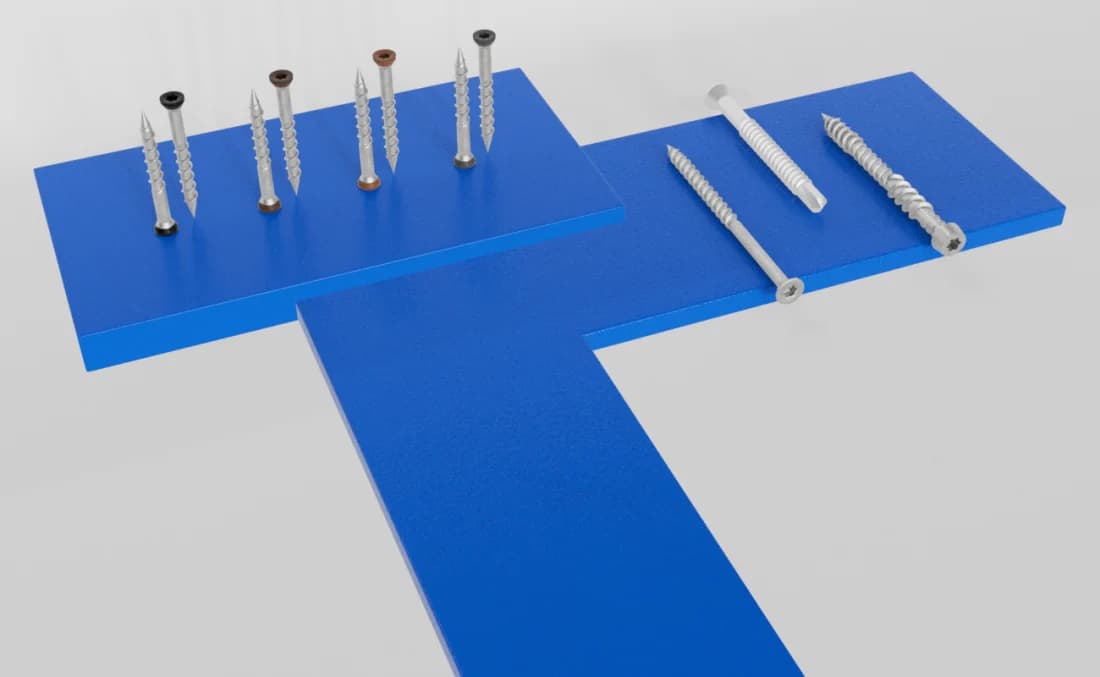
Start with the Visible Fasteners: Face-Screws and Hidden Clips
Begin your assessment with the most visible components: the fasteners holding your deck boards in place. Understanding which one your deck utilizes is fundamental.
For face-screw systems, examine the screw heads. Note the drive type (e.g., square, star, Phillips), head style (e.g., bugle, flat, trim), and any visible coating or material. Are the screws countersunk, flush, or slightly proud of the surface? Also, observe the spacing and pattern of the screws; this can indicate the original installation method.
If your deck features a clean, screw-free surface, it likely uses a hidden clip system. These clips are typically installed in the grooved edges of deck boards, securing them to the joists from underneath. While the clips themselves are not visible, look for small gaps between boards, which may indicate the clip type and spacing. Sometimes, starter or end clips might be visible along the perimeter or at transition points. Documenting the board profile is crucial here, as different clip systems are designed for specific groove dimensions.
Investigate Structural Connectors and Framing Hardware
Beyond the deck boards, the structural connections are paramount. These include joist hangers, post bases, beam connectors, and ledger board fasteners. Accessing these components may require inspecting the underside of the deck or carefully removing a few deck boards.
For metal connectors like joist hangers, note the manufacturer's stamp if visible, the gauge of the steel, and the type of finish (e.g., galvanized, stainless steel, or specialized coatings). Pay attention to the fasteners used with these connectors; are they nails, bolts, or screws? Their size, type, and material must also be recorded. The specific framing material (e.g., treated lumber, steel, aluminum) will also influence compatible connector types.
Understanding these structural elements is critical for safety and code compliance. Any replacement or repair must maintain or improve the original structural integrity. Do not assume that visually similar connectors will have the same load-bearing capacity or material compatibility.
Material Compatibility: Avoiding Galvanic Corrosion
One of the most overlooked aspects of hardware identification is material compatibility, especially concerning galvanic corrosion. When dissimilar metals come into contact in the presence of an electrolyte (like moisture), one metal can corrode rapidly. This is particularly relevant for outdoor structures.
Identify the material of your existing deck boards (e.g., hardwood, composite, PVC) and the framing material. Then, determine the material of your existing fasteners and connectors. Common materials include various grades of stainless steel, hot-dip galvanized steel, and specialized coated fasteners. When selecting replacement hardware, ensure its material is compatible with both the existing hardware it will interact with and the wood or composite materials it will fasten. For example, some treated lumber formulations contain copper, which can be corrosive to certain fastener types.
Always cross-reference the manufacturer's recommendations for both the deck board material and the hardware to ensure long-term performance and prevent premature failure due to corrosion.
Specialty Accessories: Spacers, Plugs, and Finishing Elements
Many decks incorporate specialty accessories that contribute to both aesthetics and function. These can include deck board spacers, screw plugs, fascia support hardware, and trim fasteners. While seemingly minor, matching these components is important for a cohesive appearance and proper installation.
If your deck uses screw plugs to conceal fasteners, identify the plug material, diameter, and method of installation. Some plugs are made from the same material as the deck boards for a seamless look, while others are a contrasting material. Similarly, if there are specialized clips or fasteners for fascia boards, carefully document their design, as these often differ from standard deck board fasteners.
These accessories often work as part of a specific system. For instance, a particular hidden clip system might require specific starter clips or spacers to achieve the correct board gap and alignment. Replacing one part of such a system without considering its integration with others can lead to an inconsistent finish or installation difficulties.
Worked Example: Replacing a Damaged Hidden Clip System Board
Consider a hypothetical scenario: a 12-foot by 16-foot deck with composite boards needs a single damaged board replaced. The deck was built five years ago, and the original builder is unavailable. The deck boards have a smooth, unblemished surface, indicating a hidden clip system.
To identify the hardware, you carefully remove the damaged board. This reveals the hidden clips attached to the joists. The clips engage a grooved edge on the side of the board. You measure the groove's dimensions: 1/4-inch wide and 1/2-inch deep.
The existing clips are spaced at each joist. You would also need to confirm that the new clips are compatible with the specific composite board manufacturer's groove profile, as these can vary slightly. Without this detailed identification, a replacement board might not seat correctly or maintain the intended spacing and aesthetic.
This example highlights the need to go beyond surface appearance and investigate the specific design and dimensions of the integrated components.
Before you order
- Identify visible fastener type: face-screws (drive, head, material, coating) or hidden clips (board groove, clip material, attachment).
- Inspect structural connectors: joist hangers, post bases, ledger fasteners (manufacturer, material, finish, accompanying fasteners).
- Determine existing hardware materials to ensure compatibility and prevent galvanic corrosion.
- Identify deck board material (hardwood, composite, PVC) and framing material (treated lumber, steel, aluminum).
- Note any specialty accessories: screw plugs (material, diameter), fascia clips, spacers.
- Measure critical dimensions: board gaps, screw lengths/diameters, groove dimensions for hidden clips.
- Document manufacturer names or product lines if visible on any components.
- Consider the age of the deck: older systems may have obsolete components requiring careful substitution.
- Consult original building plans or material lists if available for precise specifications.
- Photograph all identified hardware and connections for reference when sourcing replacements.
Confirm installation details, approved uses and warranty terms in the current instructions for the exact product and profile. Your installer should verify the substrate, structure and applicable project requirements.
Questions to help you decide
Why can't I just use any screw that looks similar?
Visual similarity can be misleading. Fasteners designed for decks have specific properties: material composition for corrosion resistance, thread design for different wood or composite materials, and head types for aesthetic finish or structural hold. Using an incompatible screw can lead to premature corrosion, stripped holes, poor holding power, or damage to the deck boards, potentially compromising the deck's safety and longevity. Always match the material system and intended application.
How do I identify the material of my existing fasteners?
Identifying fastener material without specialized tools can be challenging, but some clues exist. Stainless steel often has a duller, consistent silver appearance and is non-magnetic or only weakly magnetic. Hot-dip galvanized fasteners have a thick, often uneven zinc coating with a characteristic crystalline pattern. Coated fasteners may have a colored finish. If unsure, take a sample to a hardware professional for identification. Knowing your deck board and framing material can also help narrow down likely fastener types, as manufacturers recommend specific fasteners for their products.
What if I can't find an exact match for my old hardware?
If an exact match is unavailable, you'll need to find a compatible replacement. This means selecting hardware that meets or exceeds the specifications of the original in terms of material, strength, and installation method, and is approved for use with your deck's existing materials (boards and framing). Consult with a building professional or a reputable hardware supplier. In some cases, replacing a small section of an integrated system (like a few hidden clips) might require replacing a larger segment to ensure consistent performance and aesthetics, or even upgrading to a newer, compatible system if the original is obsolete.
Ready to Repair or Upgrade Your Deck Hardware?
Provide your project dimensions, exact profile requirements, and ZIP code to request a material quote. Confirm current availability and service options for all your deck hardware and accessory needs.
Request a material quote →