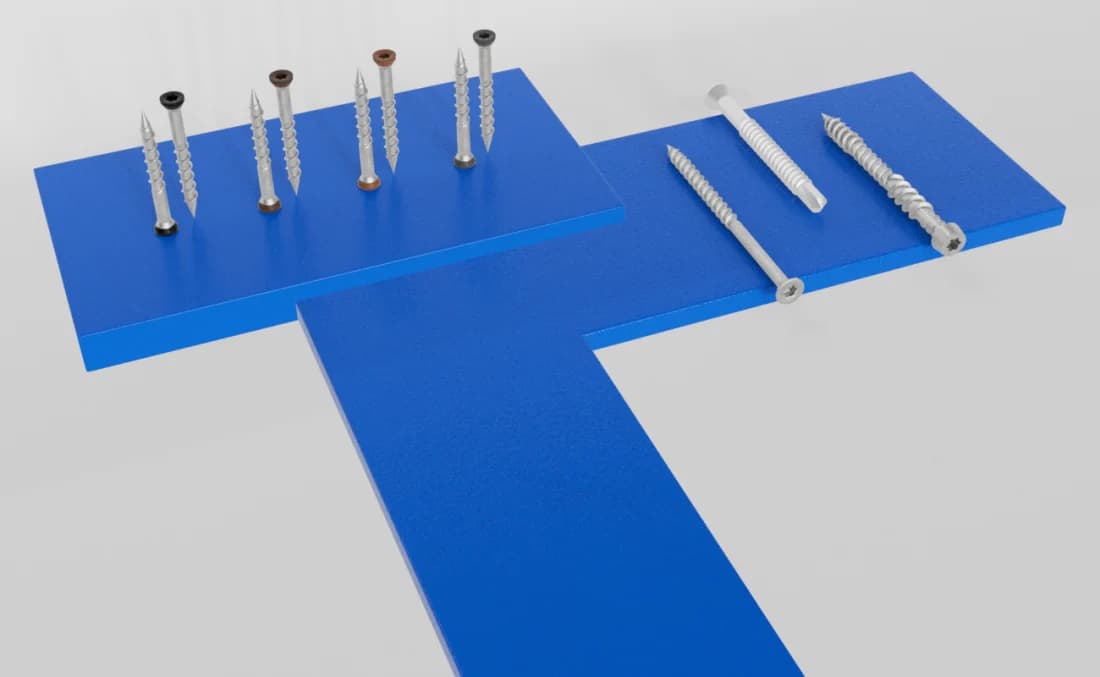
Understanding PVC Deck Board Characteristics and Hardware Needs
PVC (polyvinyl chloride) deck boards offer distinct advantages, such as resistance to moisture, insects, and rot. However, these properties also mean they expand and contract differently than wood or composite materials. This movement requires specific fastening solutions designed to accommodate it without compromising the deck's integrity or appearance.
Choosing the wrong hardware can lead to issues like board buckling, warping, or fastener pull-out over time. Therefore, it's essential to select hardware explicitly approved for use with PVC decking by the board manufacturer. This ensures the fasteners can manage the material's movement and provide a secure, lasting connection.
Types of Fastening Systems for PVC Decks
There are primarily two types of fastening systems for PVC deck boards: hidden fastening systems and face fastening systems.
Hidden fastening systems use clips or fasteners that are installed between the boards, leaving the deck surface free of visible screws. This creates a clean, uniform look. Many PVC deck boards are designed with grooved edges specifically to accommodate these hidden clips. Hidden clips typically allow for some thermal expansion and contraction, which is vital for PVC.
Face fastening involves screwing directly through the face of the deck board into the joist below. While often simpler to install, it leaves screw heads visible. If choosing face fastening, it is crucial to use color-matched screws and potentially plugs to conceal them. Some PVC boards may require pre-drilling and countersinking to ensure a flush finish and prevent damage to the board surface.
Consider the aesthetic you want to achieve and the manufacturer's recommendations when deciding between these two systems. Many manufacturers offer proprietary hidden clip systems that are specifically engineered for their PVC boards.
Key Hardware Components for PVC Decking
Beyond the primary fasteners, several other hardware components are critical for a complete PVC deck system:
Starter Clips: These specialized clips secure the first board of your deck to the joist, often along the house or a perimeter edge. They ensure a clean starting line and are typically hidden.
Edge Clips or Fasteners: For the outer edges of the deck, specific clips or face screws may be required to secure the perimeter boards. These are often designed to be less visible or to work with fascia boards.
Fascia Fasteners: Fascia boards are often installed around the perimeter of the deck frame to create a finished look. These require fasteners that can accommodate the expansion and contraction of PVC fascia without causing buckling. Stainless steel screws are often recommended for corrosion resistance.
Deck Screws: If face-fastening, or for securing fascia and other trim, specialized deck screws are needed. Look for screws made from stainless steel or with corrosion-resistant coatings, and ensure they are compatible with PVC. Some screws are designed with self-drilling tips and specific threads to prevent strip-out in PVC.
Plugs: For face-fastened systems, color-matched plugs can be used to conceal screw heads, creating a more finished appearance. These often require a specific counterbore tool for a clean, flush fit.
Worked Example: Calculating Hardware for a Hypothetical PVC Deck
1. Round up to 26 boards to account for cuts and waste, assuming 12-foot board lengths are available.)
2.
3. Hidden Clips: Each board, except the last, will need clips at every joist. Add extra for starter clips and potential waste (e.g., 10-15% extra).
4. Fascia: If a fascia board is used around the 12x16 perimeter, you'll need 12+12+16+16 = 56 linear feet of fascia. Assuming 12-foot fascia boards, this means 5 fascia boards.
This is a simplified example. Always refer to the manufacturer's specific installation guide for precise spacing and component counts for your chosen PVC deck board and hardware system. The actual purchase quantity will need to account for specific product packaging (e.g., clips sold in boxes of 100) and a waste factor for cuts.
Compatibility and Material Considerations
It is critical to ensure that all hardware components are compatible with PVC and any other materials in your deck structure. For instance, if your deck frame uses pressure-treated lumber, select fasteners that are approved for use with both PVC and treated wood. Pressure-treated lumber often contains chemicals that can corrode incompatible metals.
This is especially important in coastal environments or areas with high humidity. Always verify the grade of stainless steel or the type of corrosion-resistant coating on any fasteners you choose.
Mixing different metals can lead to galvanic corrosion, where one metal degrades prematurely. Consult product specifications to confirm compatibility between fasteners, clips, and any structural connectors.
Remember that Lumber Plus offers a range of professional deck hardware and installation accessories. We recommend bringing your material, application details, and drawings to our team so the fastening system can be checked as one complete package. This helps ensure all components work together seamlessly.
Installation Tools and Accessories
Having the right tools is essential for a successful PVC deck installation. While some tools are universal for deck building, others are specific to PVC and its fastening systems:
Driver Bits: Use the correct driver bit (e.g., Star, Square, Phillips) that matches your chosen screws to prevent cam-out and damage to screw heads.
Drill/Driver: A powerful drill/driver is necessary for driving screws, especially if pre-drilling is required.
Spacers: While hidden clips often set the board gap, dedicated spacers can be useful for maintaining consistent spacing during installation, particularly with face-fastened boards.
Measuring and Cutting Tools: A tape measure, square, and appropriate saw (e.g., miter saw, circular saw) with blades suitable for PVC are necessary for accurate cuts.
Counterbore Tools: If using plugs, a specific counterbore tool is needed to create a clean, uniform recess for the plug.
A well-equipped toolkit not only streamlines the installation process but also contributes to the quality and longevity of your deck.
Before you order
- Confirm PVC deck board manufacturer's specific hardware recommendations.
- Decide between a hidden fastening system and a face fastening system based on aesthetics and installation requirements.
- Verify that fasteners and clips are compatible with PVC, pressure-treated lumber (if applicable), and other structural materials.
- Calculate the required quantity of deck boards, hidden clips (including starter clips), fascia fasteners, and any face screws/plugs.
- Select corrosion-resistant fasteners, such as stainless steel, especially for outdoor and exposed applications.
- Gather all necessary installation tools, including specialized bits, counterbore tools, and cutting equipment suitable for PVC.
- Consider the aesthetic impact of visible versus hidden fasteners and choose accordingly.
Confirm installation details, approved uses and warranty terms in the current instructions for the exact product and profile. Your installer should verify the substrate, structure and applicable project requirements.
Questions to help you decide
Why can't I use standard wood screws for PVC deck boards?
PVC deck boards expand and contract more than wood. Standard wood screws are not designed to accommodate this movement, which can lead to boards buckling, screws stripping out, or even cracking the PVC. Dedicated PVC deck screws and hidden clips are engineered to allow for this movement while maintaining a secure connection.
Do I need to pre-drill PVC deck boards?
It depends on the specific PVC deck board and fastener. Some PVC boards and self-tapping screws are designed for direct installation without pre-drilling. However, many manufacturers recommend pre-drilling, especially for face fastening, to prevent splitting or mushrooming of the board surface and to ensure a cleaner finish. Always consult the manufacturer's installation guidelines for your specific products.
What is the best way to clean and maintain PVC deck hardware?
Most deck hardware, especially stainless steel components, requires minimal maintenance. Regularly sweep and wash your deck to remove debris that could trap moisture around fasteners. Inspect hardware periodically for any signs of corrosion or loosening, and address issues promptly. Avoid harsh chemicals that could damage the hardware's finish or the surrounding PVC. For specific cleaning recommendations, refer to the hardware manufacturer's care instructions.
Ready to Plan Your PVC Deck Hardware?
Request a material quote with your project dimensions, exact PVC deck board profile, and ZIP code. Our team can help confirm current availability and service options for all the hardware and accessories you need.
Request a material quote →