Understanding Hardwood Decking Characteristics
Hardwood decking, such as Ipe, Cumaru, or Tigerwood, is known for its density, durability, and natural resistance to rot and insects. These characteristics, while beneficial, also dictate specific requirements for hardware. Hardwoods are often denser than softwoods, requiring pre-drilling for fasteners and specialized tools to prevent damage during installation. Their natural oils and tannins can also react with certain metals, making material compatibility a critical consideration.
The density of hardwood means that traditional fasteners designed for softer woods may not perform adequately or could cause splitting if not installed correctly. This necessitates a careful selection of screws, clips, and even drill bits that are engineered to work with the material's inherent hardness. The aesthetic goal for hardwood decks often leans towards a clean, uninterrupted surface, which makes hidden fastening systems a popular choice.
Face Fastening vs. Hidden Fastening Systems
One of the primary decisions for hardwood deck hardware is whether to use face fastening or a hidden fastening system. Face fastening involves screwing directly through the deck board into the joist, providing a strong mechanical connection. While visible, modern face screws can be countersunk and plugged for a cleaner look. This method is generally robust and straightforward.
Hidden fastening systems, on the other hand, secure boards from the sides or underside, leaving the deck surface free of visible fasteners. These systems often utilize clips that fit into a groove on the side of the deck board, attaching to the joist below. Hidden clips are favored for their aesthetic appeal, creating a smooth, uninterrupted hardwood surface. However, they require specific grooved board profiles or the use of a biscuit jointer to create the necessary slots.
The choice between these systems depends on aesthetic preference, installation complexity, and the specific hardwood board profile. Some hardwood boards come pre-grooved for hidden clips, while others are designed for face fastening or require modification.
Selecting Compatible Fasteners
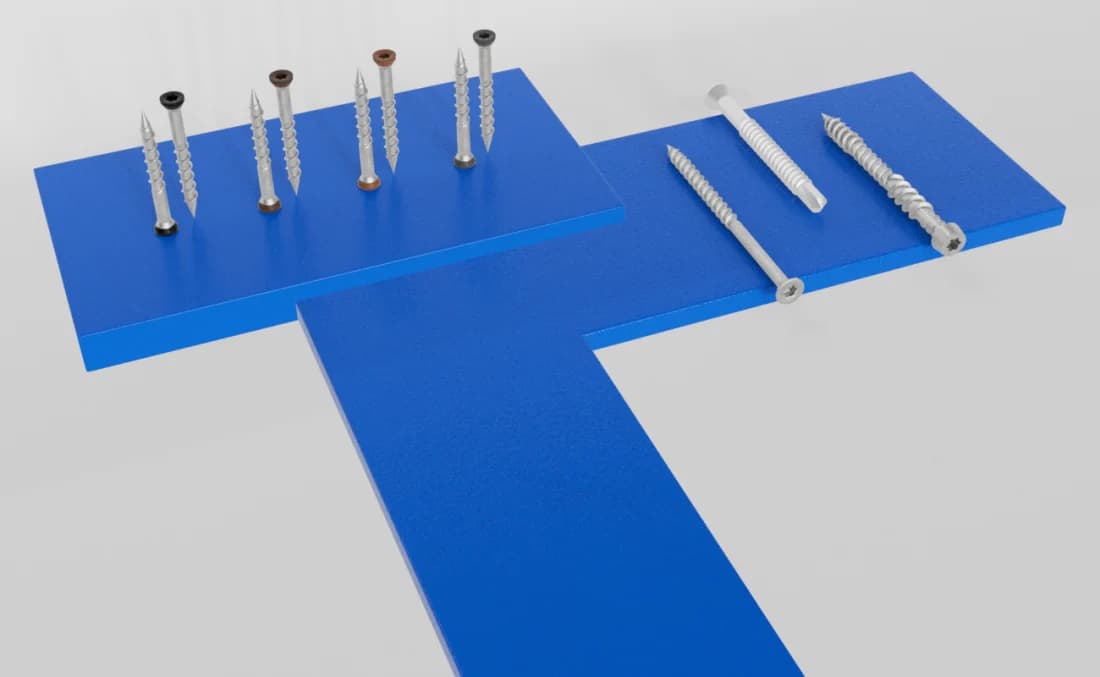
For face fastening, screws must be made of materials that resist corrosion and are compatible with the natural properties of hardwood. Stainless steel (e.g., 305 or 316 grade) is a common choice, offering excellent corrosion resistance and minimizing the risk of staining from tannin reactions. Screws designed for hardwood often feature specific thread patterns and self-tapping tips to reduce splitting and ease insertion, even with pre-drilling.
When using hidden fastening clips, ensure they are specifically designed for hardwood decking and the particular board profile you've selected. Many clips are made from durable plastics or stainless steel. The design of the clip should allow for proper board spacing and secure attachment to the substructure. It's essential to verify that the clip system is approved for your chosen hardwood species to ensure a reliable installation.
For both systems, the length of the fastener is critical. Always consult the manufacturer's recommendations for specific fastener lengths based on board thickness and joist material.
Essential Installation Tools and Accessories
Installing hardwood decking effectively requires specific tools and accessories. For face fastening, a powerful drill/driver is essential, along with appropriate drill bits for pre-drilling pilot holes. Countersink bits are also crucial for creating clean recesses for screw heads, especially if you plan to use plugs to conceal the fasteners. A specialized hardwood plugging system, which includes a counterbore bit and matching wood plugs, can create a nearly invisible finish.
For hidden fastening systems, a biscuit jointer may be needed if your boards are not pre-grooved. This tool allows you to create the necessary slots for the clips along the edge of the boards. Deck board spacers are also invaluable for maintaining consistent gaps between boards, which is important for drainage and wood expansion/contraction.
Other general accessories include measuring tapes, chalk lines, safety glasses, and potentially a specialized deck board straightening tool if working with warped boards. Investing in quality tools designed for hardwood will make the installation process smoother and yield better results.
Lumber Plus offers a range of professional deck hardware and installation accessories, including fastening systems and tools selected around specific material systems. These can be explored at our general hardware and accessories page: [/hardware-and-accessories].
Worked Example: Calculating Hardware for a Hardwood Deck
Let's consider a hypothetical 10-foot by 12-foot hardwood deck (120 square feet) using 5.5-inch wide (nominal) Ipe deck boards with a hidden fastening system.
First, calculate the number of board runs: A 10-foot (120-inch) deck width, divided by the 5.5-inch board width, gives approximately 21.8 boards. We'll round up to 22 boards to account for cuts and waste.
For simplicity in this example, we'll estimate 8 clips per board run for the main field, plus two for the ends of each board.
It's always advisable to add 10-15% for waste, cuts, and potential errors, bringing the total to approximately 242-253 clips.
For starter/end clips and fascia attachment, specific hardware may be needed. For a 12-foot long deck, you would need two 12-foot fascia boards. These calculations are illustrative and should be refined with actual product specifications and a detailed layout plan.
Before you order
- Verify compatibility of hardware material (e.g., stainless steel) with hardwood species to prevent staining or corrosion.
- Decide between face fastening for strength/simplicity or hidden fastening for a clean aesthetic.
- If choosing hidden fasteners, ensure deck boards are pre-grooved or plan for grooving with a biscuit jointer.
- Select fasteners (screws, clips) specifically rated for hardwood density and outdoor exposure.
- Confirm fastener length is sufficient for both board thickness and joist penetration.
- Acquire necessary installation tools: drill/driver, pre-drill bits, countersink bits, deck board spacers, and potentially a plugging system or biscuit jointer.
- Consider specialized hardware for stairs, fascia, and border boards if applicable.
Confirm installation details, approved uses and warranty terms in the current instructions for the exact product and profile. Your installer should verify the substrate, structure and applicable project requirements.
Questions to help you decide
Why can't I use standard deck screws for hardwood?
Hardwood is significantly denser than softwood or composite materials. Standard deck screws may struggle to penetrate without pre-drilling, potentially causing the wood to split or the screw head to strip. Specialized hardwood screws are designed with specific thread patterns and materials (like stainless steel) to handle the density and prevent premature corrosion or staining.
Do I always need to pre-drill for hardwood decking?
Yes, pre-drilling is almost always recommended for hardwood decking, especially when using face screws. Hardwoods are very dense, and driving a screw directly without a pilot hole can cause the wood to split, crack, or mushroom around the fastener. Pre-drilling creates a clear path for the screw, ensuring a cleaner installation and better hold.
How do I ensure consistent spacing between hardwood deck boards?
Consistent spacing is crucial for drainage and allowing the hardwood to expand and contract naturally. Deck board spacers are highly recommended. These small plastic or rubber tools are inserted between boards during installation to maintain uniform gaps. For hidden fastening systems, the clips themselves often provide the required spacing.
Ready to Plan Your Hardwood Deck Project?
Request a material quote with your project dimensions, exact board profile, and ZIP code to confirm current availability and service options for all your deck hardware and accessories. Our team can help ensure you have the right components for a successful hardwood deck installation.
Request a material quote →