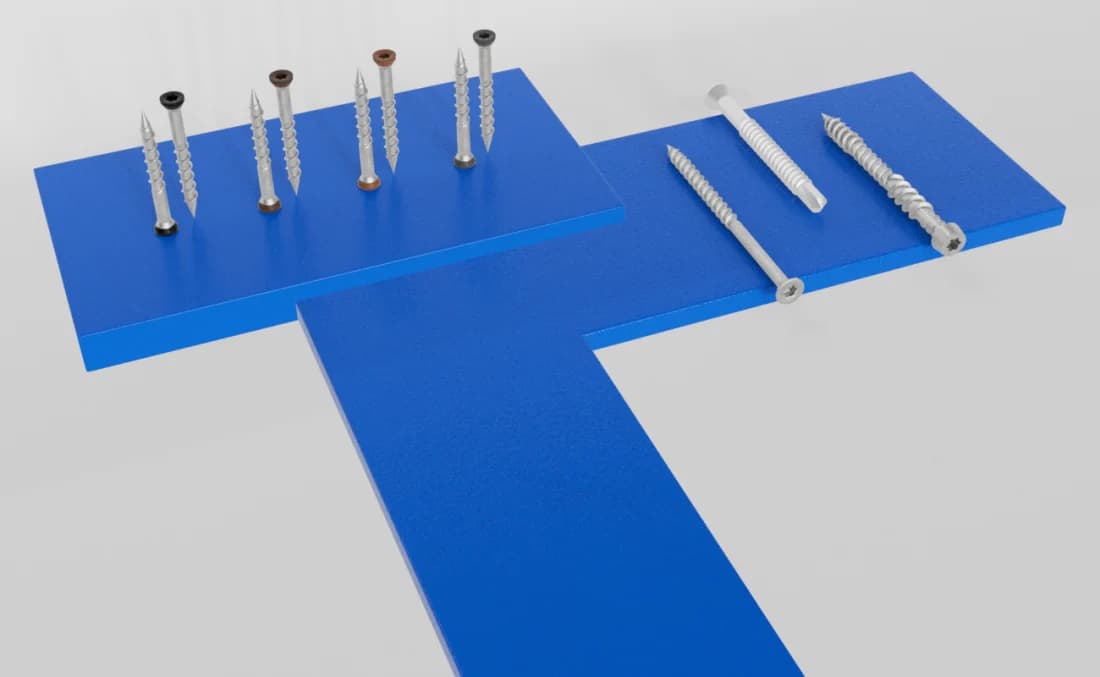
Understanding Common Deck Fastener Drive Types
Deck fasteners come with various head designs, each requiring a specific driver bit. Incorrectly matching a bit to a fastener can lead to stripped heads, making removal difficult and compromising the connection's integrity. Familiarizing yourself with these common types is the first step to avoiding problems.
The most prevalent drive types for deck screws include Phillips, Square (Robertson), Torx (Star), and occasionally Pozi-Drive. Each has distinct characteristics that influence its performance and the bit required.
Phillips head screws are identified by a cross-shaped recess. While common, they are prone to cam-out if the wrong size bit is used or excessive torque is applied. Square drive (Robertson) fasteners feature a square recess, offering better grip and reduced cam-out compared to Phillips. Torx (Star) drive fasteners, with their six-point star-shaped recess, provide superior torque transfer and virtually eliminate cam-out, making them a popular choice for demanding deck applications. Pozi-Drive, while less common in North America for decking, is similar to Phillips but with additional smaller recesses for improved grip.
Identifying the Correct Driver Bit Size and Type
Once you've identified the drive type, the next step is to match the bit size. Driver bits are typically labeled with both their drive type and size. For example, a common Phillips bit size is #2, while Square drive bits are often #2 or #3. Torx bits are designated by a 'T' followed by a number, such as T20 or T25.
Always refer to the fastener manufacturer's recommendations for the correct bit size. This information is usually found on the fastener packaging or in the product specifications. Using a bit that is too small can strip the fastener head, while a bit that is too large may not fully engage, leading to slipping and potential damage to the fastener or the deck material. It is good practice to test the fit of the bit in a spare fastener head before beginning installation.
Some deck screws, particularly those designed for specific hidden fastening systems, may come with proprietary driver bits. These bits are engineered to work precisely with the unique head geometry of the fastener. Always use the bit supplied or specifically recommended by the manufacturer for such systems to ensure proper installation and to maintain any performance claims.
Bit Materials and Durability
Driver bits are made from various materials, each offering different levels of durability and performance. Common materials include hardened steel, chrome vanadium steel, and impact-rated steel. For deck projects, especially those involving a large number of fasteners, investing in high-quality, durable bits is essential.
Hardened steel bits are suitable for general use, but for repetitive tasks or tougher materials, chrome vanadium steel offers increased strength and resistance to wear. Impact-rated bits, designed for use with impact drivers, are specifically engineered to withstand the high torque and rapid hammering action of these tools, reducing the risk of breakage or premature wear. Using non-impact-rated bits with an impact driver can lead to rapid bit failure.
The finish on a driver bit can also play a role. Some bits have a black oxide coating, which provides a minor degree of corrosion resistance and can help reduce slippage. Others may feature a titanium nitride (TiN) coating for enhanced hardness and wear resistance, extending the bit's lifespan.
Practical Example: Fastening Deck Boards with US4 Deck Screws
This means you will need T20 Torx driver bits.
For a project of this scale, it's advisable to have multiple bits on hand. Even high-quality bits can wear down or break over time, especially when dealing with dense decking materials or accidental contact with underlying framing. A good starting point would be to purchase a pack of 5-10 T20 Torx bits. If using an impact driver, ensure these are impact-rated bits. This preparation helps maintain work continuity and prevents project delays due to a worn or broken bit.
Always visually inspect your bits for wear before starting and periodically during the project. If the edges of the bit appear rounded or damaged, replace it immediately to prevent stripping fastener heads. This proactive approach saves time and ensures a secure, professional installation.
Related Product: US4 Deck Screws: [/brands/us4]
Tools and Accessories for Optimal Bit Performance
Beyond the bits themselves, certain tools and accessories can enhance performance and extend bit life. Magnetic bit holders are invaluable for keeping screws securely attached to the bit, especially when working overhead or in tight spaces. Quick-change chucks allow for rapid bit swapping, increasing efficiency when using different bit types or sizes.
For projects requiring precise depth control, especially with softer decking materials, a countersink bit with an adjustable stop can be beneficial. This ensures that the fastener head is driven to the correct depth without over-driving or damaging the deck board surface, while also preparing the hole for the deck screw.
Always ensure your drill or impact driver is set to the appropriate torque setting for the fastener and material. Over-tightening can strip the screw head or damage the deck board, while under-tightening can result in a loose connection. Testing on a scrap piece of material is always recommended to find the optimal setting.
Related Product: Deck Hardware, Accessories, Lighting & Maintenance: [/hardware-and-accessories]
Before you order
- Identify the exact drive type (Phillips, Square, Torx, Pozi-Drive) of your deck fasteners.
- Confirm if any specialized or proprietary bits are required for hidden fastening systems.
- Choose driver bits made from appropriate materials for your tools (e.g., impact-rated bits for impact drivers).
- Purchase an adequate quantity of spare bits to account for wear and potential breakage, especially for large projects.
- Consider additional accessories like magnetic bit holders or quick-change chucks for improved efficiency.
- Test bit fit and depth settings on a scrap piece of decking material before beginning the main installation.
Confirm installation details, approved uses and warranty terms in the current instructions for the exact product and profile. Your installer should verify the substrate, structure and applicable project requirements.
Questions to help you decide
Why do my driver bits keep stripping or breaking?
Bits often strip or break due to a mismatch between the bit and the fastener head, using a worn-out bit, applying excessive torque, or using a non-impact-rated bit with an impact driver. Ensure your bit matches the fastener's drive type and size precisely, replace worn bits, and use impact-rated bits for impact tools.
Can I use a Phillips bit in a Pozi-Drive screw or vice-versa?
While a Phillips bit might partially engage a Pozi-Drive screw (and vice-versa), it is not recommended. The fit will not be precise, leading to increased cam-out, damage to the fastener head, and potential injury. Always use the exact bit type specified for the fastener.
How many spare driver bits should I have for a deck project?
For most medium to large deck projects, it is wise to have at least 3-5 spare bits of each required type and size. For very large projects or if using particularly dense materials, consider purchasing a pack of 10 or more. Bits can wear out, especially when driving many fasteners, and having spares prevents delays.
Request a Material Quote for Your Deck Project
Planning your deck project? Request a material quote today. Provide your project dimensions, desired fastener profile, and ZIP code to confirm current availability and service options for all your deck hardware and accessory needs.
Request a material quote →