Understanding Composite Deck Board Profiles
Composite deck boards come in various profiles, primarily solid or grooved. Solid edge boards are typically installed with face-fastening methods, where screws are driven directly through the board's face into the joist below. Grooved edge boards, however, are designed to accommodate hidden fastening systems, which slot into the grooves along the board's sides. The specific dimensions and shape of these grooves can vary significantly between composite deck board brands and even between different product lines from the same manufacturer.
Before selecting any hardware, verify the exact profile of your chosen composite deck boards. This information is usually available in the manufacturer's product specifications or installation guides. Pay close attention to the depth and width of the grooves if you intend to use a hidden fastening system, as these dimensions will dictate which clips are compatible. An incorrect match can result in clips that do not seat properly, boards that are not securely fastened, or an uneven deck surface.
Hidden Fastening Systems: Ensuring Clip Compatibility
Hidden fastening systems are popular for composite decks as they provide a smooth, fastener-free surface. These systems typically consist of clips that attach to the joists and engage with the grooves on the sides of the deck boards. The key to success here is strict compatibility.
Many composite deck board manufacturers offer their own branded hidden clip systems, engineered to fit their specific board profiles. For example, a US4 composite deck board often recommends a specific US4 clip system to ensure proper spacing, secure fastening, and consistent expansion/contraction. Attempting to use a generic or different brand of clip might result in an improper fit, leading to loose boards, uneven gaps, or even damage to the board edges during installation. Always refer to the composite deck board manufacturer's recommendations for compatible hidden clips. Some systems may offer starter clips for the first board, intermediate clips for field boards, and specialized clips for perimeter or picture-frame applications.
Consider the US4 Hidden Fastener for Grooved Composite Decking, which is designed to work with specific US4 grooved deck boards. This clip system typically includes a screw that secures the clip to the joist, and the clip head then engages with the board's groove. These systems often incorporate built-in spacing, which helps maintain consistent gaps between boards for drainage and expansion.
Face Fastening for Solid Edge Boards and Perimeter
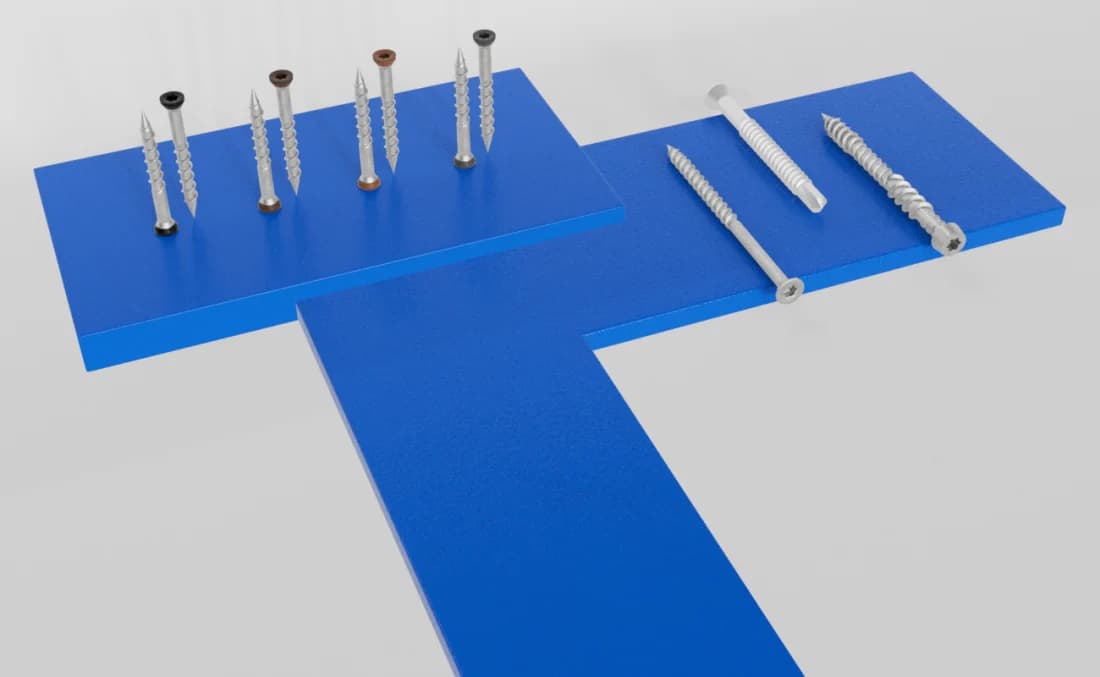
For composite deck boards without grooves, or for the perimeter boards of a grooved deck where a hidden clip system may not be suitable, face fastening is the primary method. This involves driving screws directly through the face of the deck board into the underlying joist. When face fastening composite boards, it's essential to use screws specifically designed for composite materials.
These screws often feature a specific thread design and head type to prevent mushrooming (where the screw head pushes up a collar of material around the entry point) and to create a clean, flush finish. Pre-drilling may be required, especially for denser composite boards, to prevent cracking or splitting. Some composite screw systems also include a matching plug system where a specialized tool drills a hole and countersinks it, allowing a color-matched composite plug to be inserted over the screw head for a seamless look. Always check the composite deck board manufacturer's guidelines for recommended face fastening screws and techniques.
Fascia, Stair Treads, and Trim Fastening
Composite fascia boards, stair treads, and other trim pieces require careful fastening to ensure they remain secure and maintain their aesthetic appeal. These components are often thinner than deck boards and may be more susceptible to movement if not fastened correctly. Specific trim screws, often with smaller heads and finer threads, are designed for these applications.
For fascia boards, it's common to use color-matched screws or a combination of adhesive and fasteners. The placement of screws is critical to allow for the natural expansion and contraction of the composite material, preventing buckling or warping. Always follow the composite manufacturer's instructions for fastening trim, including recommended screw types, spacing, and any necessary pre-drilling or pilot holes. The goal is to secure the material while accommodating its movement.
Worked Example: Selecting Hardware for a US4 Composite Deck
Consider a hypothetical project for a 10-foot by 12-foot deck using US4 grooved composite deck boards, which are 5.5 inches wide and 12 feet long.
1. **Deck Board Quantity:** To cover a 10-foot width with 5.5-inch boards, you'd need approximately 10 feet / (5.5 inches / 12 inches/foot) = 21.8 boards. Round up to 22 boards for the field. Since boards are 12 feet long, you'll need 22 boards.
It's always advisable to purchase an extra box or two to account for any misalignments or damaged clips. For US4 grooved boards, the US4 Hidden Fastener for Grooved Composite Decking (product link: /brands/us4) would be the primary choice.
3. **Perimeter/Starter Clips:** For the first and last board, or for any picture-frame borders, specific starter clips or face-fastening might be required. If using US4 grooved boards, there are often specific starter clips designed to secure the first row without visible fasteners. If face-fastening the perimeter, you would need US4 color-matched composite screws (product link: /hardware-and-accessories).
4. **Fascia Boards:** For a 10x12 deck, you might have two 12-foot fascia boards and two 10-foot fascia boards. If using US4 composite fascia, you would need US4 color-matched fascia screws. Again, account for spares.
This example highlights the need to systematically match hardware to each specific composite component, guided by the manufacturer's recommendations.
Before you order
- Identify the specific brand and collection of your composite deck boards.
- Determine if your deck boards have grooved edges (for hidden clips) or solid edges (for face fastening).
- Consult the deck board manufacturer's installation guide for recommended fastening systems.
- For grooved boards, verify the compatibility of hidden clips with the groove profile.
- For solid edge boards or face-fastened areas, select composite-specific screws to prevent mushrooming.
- Choose appropriate fasteners for fascia, stair treads, and other trim pieces, considering color matching and expansion properties.
- Account for starter clips, end clips, and any special border fastening requirements.
- Confirm the required spacing for both deck boards and trim components, as dictated by the manufacturer.
- Calculate quantities for all hardware components, including spares, based on your deck dimensions and joist spacing.
Confirm installation details, approved uses and warranty terms in the current instructions for the exact product and profile. Your installer should verify the substrate, structure and applicable project requirements.
Questions to help you decide
Can I use any hidden clip system with my composite deck boards?
No, hidden clip systems are generally designed to be compatible with specific brands and profiles of composite deck boards. The dimensions and shape of the board's groove vary between manufacturers. Using an incompatible clip can lead to an insecure installation, uneven spacing, or even damage to the boards. Always refer to your composite deck board manufacturer's recommendations for the correct hidden clip system.
What kind of screws should I use for face-fastening composite deck boards?
When face-fastening composite deck boards, it is important to use screws specifically designed for composite materials. These screws often have unique thread patterns and head designs to prevent 'mushrooming' (where the screw pushes up material around the hole) and to create a clean, flush finish. Some systems also offer color-matched screws or plugs to conceal the fasteners. Standard wood screws may not perform optimally with composite materials.
Do I need special fasteners for composite fascia and trim?
Yes, composite fascia boards and trim pieces often require specialized fasteners. These components can be thinner and more prone to movement from thermal expansion and contraction. Using trim screws with smaller heads, or a combination of adhesive and fasteners, is common. Always follow the composite manufacturer's guidelines for fastening trim, including screw type, placement, and any necessary pre-drilling, to ensure a secure and aesthetically pleasing finish.
Request a Quote for Your Composite Deck Hardware and Accessories
Ready to select the right hardware for your composite deck project? Provide your project dimensions, desired composite deck board profile, and ZIP code to request a material quote. Our team can help confirm current availability and service options for the specific fastening systems and accessories you need.
Request a material quote →