Why Aluminum Framing Requires Specific Hardware Choices
Aluminum deck framing offers advantages such as resistance to rot, insects, and warping, and it is lighter than steel. However, its material properties differ significantly from wood. Aluminum is a softer metal than steel, and it can react with certain other metals through galvanic corrosion if not properly isolated. Its thermal expansion and contraction rates also differ from those of deck boards, which must be accommodated by the fastening system.
Selecting hardware specifically designed or approved for aluminum is essential. Generic fasteners intended for wood or steel may not provide adequate hold, could damage the aluminum, or might accelerate corrosion, compromising the deck's stability over time.
Understanding Galvanic Corrosion and Material Isolation
Galvanic corrosion occurs when two dissimilar metals are in electrical contact in the presence of an electrolyte (like moisture). Aluminum is an active metal and can corrode when in contact with less active metals, such as copper or some types of stainless steel, especially in damp environments. This is a primary concern when selecting fasteners and connectors.
Isolation barriers, such as non-conductive washers or sleeves, can also be employed to separate dissimilar metals, though the primary defense is often material selection for the fasteners themselves.
Fastening Deck Boards to Aluminum Joists
When attaching deck boards to aluminum joists, the choice of fastener system depends on the type of board (hardwood, composite, PVC) and the desired aesthetic (visible or hidden fasteners).
For hidden fastening systems, clips designed for aluminum joists are often employed. These clips typically incorporate a plastic or polymer base to provide a barrier between the deck board and the aluminum joist, while the fastener itself (often stainless steel) secures the clip to the joist. Ensure the clip system explicitly states compatibility with aluminum framing and the specific deck board material.
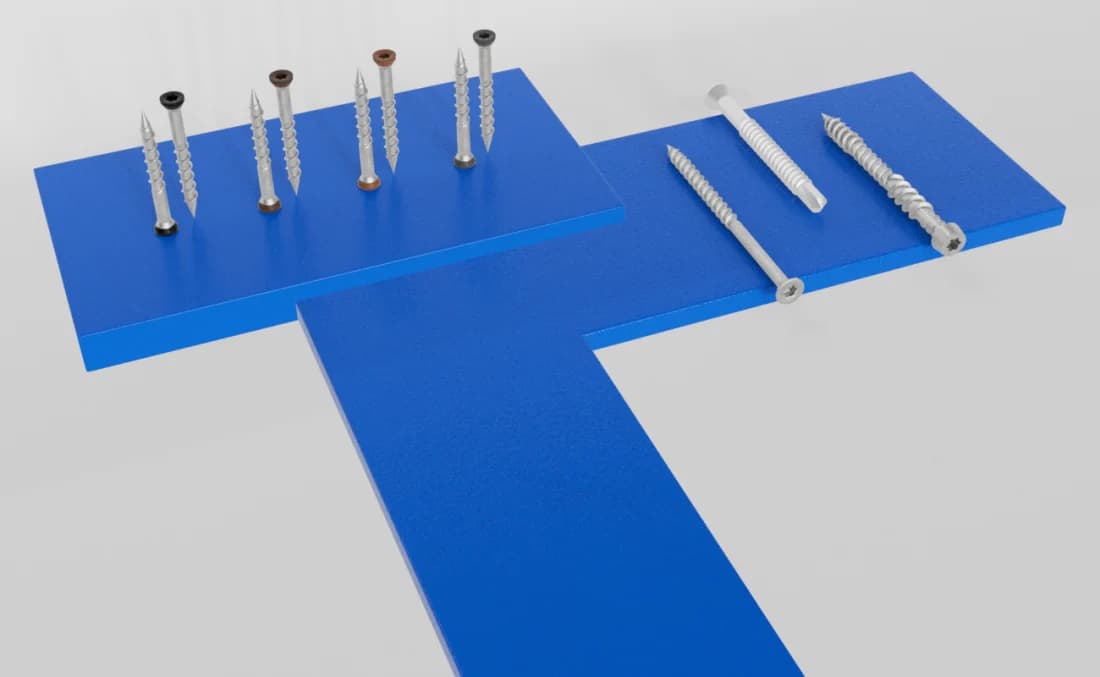
If face-screwing is chosen, screws specifically rated for aluminum applications are necessary. These screws typically have a self-tapping or self-drilling point designed to penetrate aluminum without stripping, and their material composition (e.g., specific grades of stainless steel with appropriate coatings) helps mitigate galvanic corrosion. Pre-drilling is often recommended to prevent damage to the aluminum joist and ensure a clean entry point for the screw.
Structural Connectors and Hardware for Aluminum Framing
Beyond board fasteners, structural connectors are vital for securing joists to beams, beams to posts, and other critical frame connections. These connectors, which might include angles, hangers, or post bases, must also be compatible with aluminum.
Look for structural connectors made from aluminum itself, or from stainless steel grades known to be compatible with aluminum, often with specific coatings or isolation requirements. Always consult the manufacturer's guidelines for installation and ensure any fasteners used with these connectors are also rated for aluminum contact. For demanding assemblies, specifying the connection with the surface is important, and a professional can check the fastening system as one package.
Worked Example: Fastening Composite Decking to Aluminum Joists
The specific hidden clips selected are designed for composite decking and explicitly state compatibility with aluminum framing, featuring a stainless steel screw and a polymer base.
To cover the 12-foot width with 5.5-inch boards, you would need approximately 26 boards (144 inches / 5.5 inches per board, rounded up).
Total clips required: 18 clips/board * 26 boards = 468 clips. This calculation provides the quantity of clips needed, allowing for edge cuts and assuming minimal waste. It's always prudent to add a small percentage (e.g., 5-10%) for waste or unforeseen issues. Additionally, starter and end clips, if required by the system, would need to be calculated separately based on the perimeter of the deck.
Before you order
- Verify that all fasteners and connectors are explicitly rated for use with aluminum framing.
- Check for material compatibility to prevent galvanic corrosion (e.g., specific stainless steel grades, coatings).
- Confirm if isolation barriers (washers, sleeves) are recommended or required by the hardware manufacturer.
- Ensure hidden clip systems are designed for both your specific deck board material and aluminum joists.
- If face-screwing, select self-tapping screws designed for aluminum and consider pre-drilling.
- Review installation instructions for torque settings, pre-drilling requirements, and spacing.
- Consider the thermal expansion differences between deck boards and aluminum framing; ensure hardware accommodates movement.
- Account for all connection points: board-to-joist, joist-to-beam, beam-to-post, and any accessory attachments.
Confirm installation details, approved uses and warranty terms in the current instructions for the exact product and profile. Your installer should verify the substrate, structure and applicable project requirements.
Questions to help you decide
Can I use standard galvanized screws with aluminum framing?
No, standard galvanized screws are generally not recommended for direct contact with aluminum framing. Galvanized coatings are typically zinc-based, and zinc can accelerate galvanic corrosion when in contact with aluminum, especially in the presence of moisture. Always choose fasteners specifically designed or approved for aluminum, such as certain stainless steel grades or specially coated screws.
What kind of lighting can I integrate with an aluminum deck frame?
Integrated lighting options for decks, stairs, and rails can be used with aluminum framing, provided the installation methods and components are compatible. Look for lighting systems that are designed for outdoor use and ensure any mounting hardware or electrical connections do not introduce galvanic corrosion risks. Often, lighting fixtures are self-contained or use non-corrosive materials for mounting, but it's crucial to verify the specific product's compatibility.
Where can I find suitable deck hardware and accessories for aluminum framing?
You can find professional deck hardware and installation accessories through suppliers like Lumber Plus branches. It is recommended to bring your material, application details, and drawings to the local team so the fastening system can be checked as one package. This ensures all components work together effectively for your specific aluminum framing project. Explore our selection of hardware and accessories at [Lumber Plus Hardware and Accessories](/hardware-and-accessories) and consider products from brands like [US4](/brands/us4).
Request a Material Quote for Your Deck Project
Ready to select the right deck hardware and accessories for your aluminum framed deck? Provide your project dimensions, exact profile, and ZIP code to request a material quote. Our team can help confirm current availability and service options for all your fastening and installation needs.
Request a material quote →