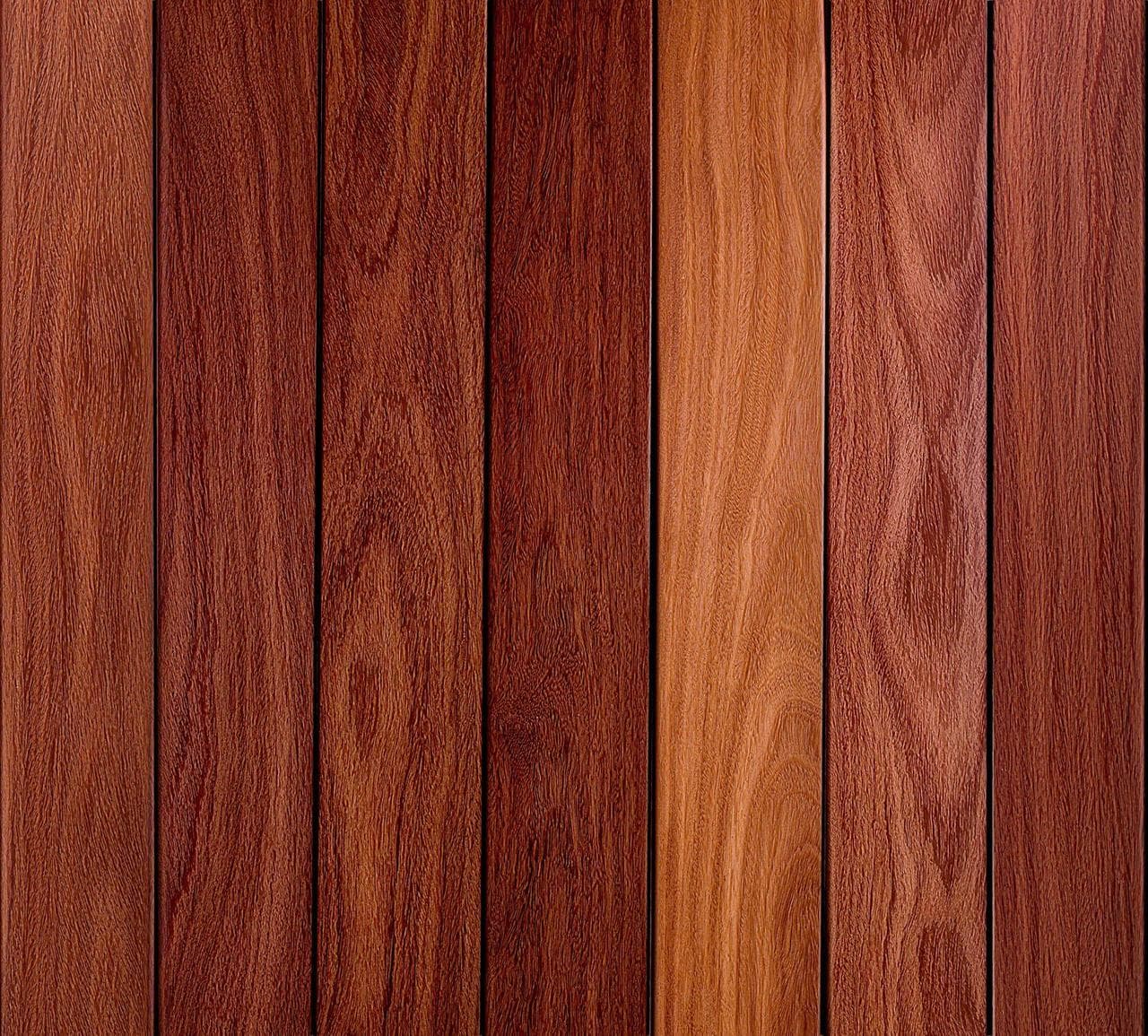
Understanding Cumaru's Core Characteristics
Cumaru is a tropical hardwood known for its density, strength, and natural resistance to various environmental factors. These inherent characteristics are fundamental to understanding its performance as a decking material.
This makes Cumaru a dependable choice for demanding outdoor applications. Furthermore, Cumaru is naturally resistant to insects, rot, and fungi, and carries a Class A fire resistance rating. When worked, Cumaru also emits a distinct scent of cinnamon and vanilla.
While highly durable, Cumaru is dense and hard to work with. Its silica content can dull tools, and its high oil content may complicate gluing processes. Untreated, it will weather to a silver-grey over time.
Standard Decking Dimensions and Profiles
Cumaru decking is typically available in specific dimensions and profiles, which are crucial for planning your deck structure and aesthetics. These measurements refer to the finished size after milling.
Common profiles for Cumaru decking include nominal 1x6 and 5/4x6 boards. In finished dimensions, these typically translate to 3/4 inch by 5.5 inches for the 1x6 profile and 1 inch by 5.5 inches for the 5/4x6 profile. These boards are usually kiln-dried (KD) to ensure stability.
Length availability for Cumaru decking often ranges from 3 feet to 24 feet. When planning your order, consider how these lengths align with your deck's layout to minimize waste and optimize board placement. Longer boards can reduce the number of seams, while shorter lengths might be more suitable for intricate designs or smaller areas.
Approved Applications and Limitations
Cumaru's robust properties make it suitable for a wide variety of applications beyond just decking. Understanding these approved uses, as well as any limitations, helps ensure you select the right material for your specific project.
Beyond decking and heavy flooring, Cumaru is also used in sleepers, bridges (both in and out of water contact), hydraulic works (freshwater and seawater), wood-frame houses, poles, stakes, shipbuilding, cooperage, and heavy carpentry. Its strength and resistance make it ideal for areas requiring high durability and structural integrity.
While Cumaru is highly versatile, it's important to remember that its density can make it challenging to cut and fasten. Proper tools and techniques are essential for successful installation. Always consult manufacturer guidelines for specific installation instructions, fastener recommendations, and spacing requirements, as these can vary based on the exact product and intended use.
Worked Example: Planning a 10x12 Foot Deck
Let's consider a hypothetical 10-foot by 12-foot deck project using Cumaru decking. For this example, we'll assume a standard 1x6 (3/4 inch by 5.5 inch finished) profile and plan for a traditional straight lay.
First, calculate the total square footage: 10 ft * 12 ft = 120 square feet. Each board has a finished width of 5.5 inches (0.458 feet). To cover a 10-foot width, you'll need approximately 10 ft / 0.458 ft per board = 21.8 boards.
For the 12-foot length, if you use 12-foot long boards, you'd need 22 boards of 12 feet each. Total linear footage: 22 boards * 12 linear feet/board = 264 linear feet. If you opt for longer 16-foot boards to minimize end seams, you'd still need 22 boards. However, the 16-foot boards would be cut to 12 feet, leaving a 4-foot offcut from each. These offcuts might be reusable for smaller sections, like stairs or a border, depending on your design.
It's always recommended to add an overage, typically 5-10%, for cuts, mistakes, and potential future repairs. For 264 linear feet, a 10% overage would be 26.4 linear feet, bringing your total to approximately 290.4 linear feet. You would then convert this linear footage into the nearest full board lengths available (e.g., if buying 12-foot boards, 290.4 / 12 = 24.2 boards, so you'd order 25 boards of 12 feet).
Beyond the Boards: Complementary Materials
A successful Cumaru deck project extends beyond just the decking boards. Consider the complementary materials needed for a complete and durable installation. This includes fasteners, substructure materials, and finishing products.
For fastening, you'll need to choose between hidden fastening systems or face screws. Due to Cumaru's density, pre-drilling is almost always necessary for face screws to prevent splitting. Ensure your fasteners are rated for exterior use with dense hardwoods. The substructure, typically made of pressure-treated lumber or a durable alternative, must be robust enough to support the weight of Cumaru decking and any intended loads. Finally, while Cumaru can be left to weather naturally, you might consider sealers or oils to maintain its original color or enhance its appearance. Ensure any chosen finish is compatible with Cumaru's natural oils.
Before you order
- Verify the finished dimensions (thickness and width) of the Cumaru decking profile you need.
- Confirm the available board lengths and how they align with your project's layout to minimize waste.
- Check if the Cumaru is kiln-dried (KD) for stability.
- Review Cumaru's suitability for your specific application (e.g., decking, heavy flooring, or other structural uses).
- Account for an appropriate overage (typically 5-10%) in your material calculations.
- Consider the type of fasteners required (hidden vs. face screws) and ensure they are compatible with Cumaru.
- Plan for a suitable substructure that can support Cumaru's weight and your project's loads.
- Decide on any desired finishes (oils, sealers) and confirm their compatibility with Cumaru.
Confirm installation details, approved uses and warranty terms in the current instructions for the exact product and profile. Your installer should verify the substrate, structure and applicable project requirements.
Questions to help you decide
What are the common finished dimensions for Cumaru decking boards?
Common finished dimensions for Cumaru decking are typically 3/4 inch by 5.5 inches (from a nominal 1x6 profile) and 1 inch by 5.5 inches (from a nominal 5/4x6 profile). These are usually kiln-dried boards.
Is Cumaru decking suitable for all outdoor environments?
Cumaru is a very durable tropical hardwood that is resistant to termites, rot, fungi, and weather changes, making it suitable for a wide variety of demanding outdoor applications. It also carries a Class A fire resistance rating. However, its density means it is hard to work with, and proper installation techniques are crucial.
Do I need to apply a finish to Cumaru decking?
Cumaru can be left untreated to weather to a natural silver-grey patina over time. If you prefer to maintain its original color, you would need to apply a suitable oil or sealer. Ensure any chosen finish is specifically designed for dense hardwoods and is compatible with Cumaru's natural properties.
Ready to Plan Your Cumaru Decking Project?
Request a material quote with your project dimensions, desired Cumaru profile, and ZIP code. We can help confirm current availability and service options for your area. Explore our full range of Cumaru decking and related products to complete your vision.
Request a material quote →