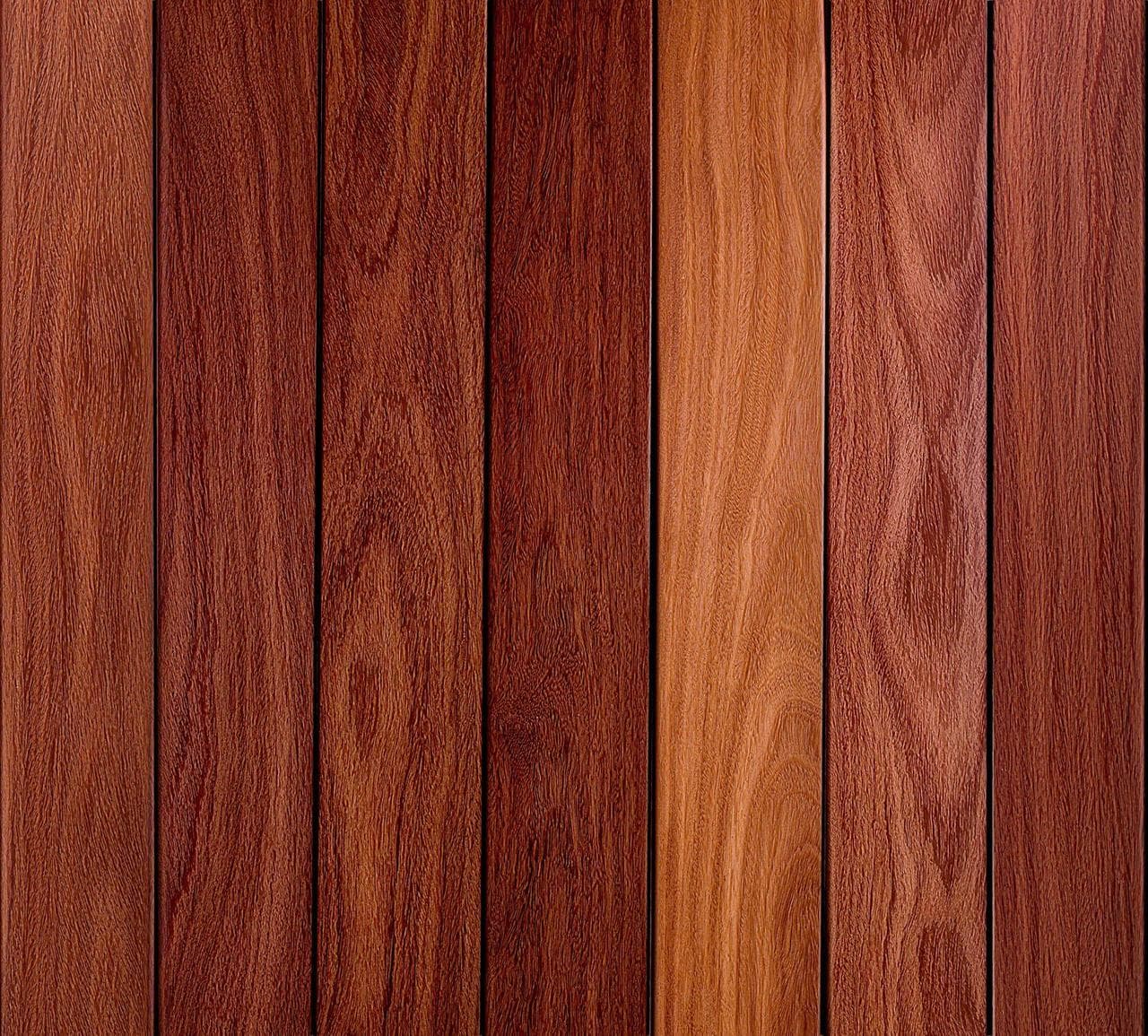
Understanding Cumaru Decking Board Profiles
Cumaru decking is typically available in standard profiles and lengths. For example, common profiles include 1"x6" (milled to approximately 3/4" x 5.5") and 5/4"x6" (milled to approximately 1" x 5.5"). These dimensions are critical for calculating coverage.
The lengths of Cumaru boards can vary, often available in a range from 3 to 24 feet. When planning your order, consider how these available lengths align with your deck's dimensions to minimize waste and optimize the board layout. Longer boards can reduce the number of end joints, potentially contributing to a cleaner aesthetic, but may also be more challenging to transport and handle.
Measuring Your Deck Area
Start by accurately measuring the total square footage of your deck. For simple rectangular or square decks, multiply the length by the width. For more complex shapes, break the area down into smaller, manageable sections (rectangles, triangles, etc.) and sum their individual areas.
Always measure twice to ensure accuracy. If your deck has multiple levels or integrated stairs, measure these areas separately. For stairs, you will need to calculate the surface area of the treads and risers, considering the board width you plan to use.
Calculating Board Footage for Decking
Decking material is often sold by the linear foot or board foot. To convert your square footage into linear feet of decking, you need to consider the width of the boards you plan to use.
For calculation purposes, it's often easiest to consider the effective coverage width per board, including the gap. However, for a conservative estimate, calculate based on the board's actual face width and then add a percentage for gaps later, or calculate based on effective coverage.
A common method is to determine how many linear feet of a specific board width are needed to cover one square foot. For a 5.5-inch wide board (0.4583 feet), one linear foot covers 0.4583 square feet. Therefore, to cover one square foot, you need approximately 1 / 0.4583 = 2.18 linear feet of board. Multiply this factor by your total deck square footage to get the total linear feet required.
Accounting for Waste Factor
No matter how carefully you plan, some material will be lost due to cuts, mistakes, or damaged pieces. This is known as the waste factor. For most decking projects, a waste factor of 5-10% is recommended. For complex layouts, such as diagonal patterns, intricate borders, or decks with many angles and curves, a higher waste factor of 10-15% or more might be necessary.
It's always better to have a small amount of extra material than to run short in the middle of a project, which can lead to delays and additional shipping costs. Leftover boards can be used for future repairs or small projects.
Worked Example: Calculating Cumaru Decking for a Rectangular Deck
Let's assume you are building a rectangular deck that is 16 feet long and 10 feet wide. You plan to use 5/4" x 6" Cumaru decking boards, which have a finished width of 1 inch x 5.5 inches. For this example, we'll use a 7% waste factor.
1. **Calculate Total Deck Area:** 16 feet (length) x 10 feet (width) = 160 square feet.
2. **Determine Board Coverage:** The finished width of the board is 5.5 inches, or 5.5 / 12 = 0.4583 feet. To cover one square foot, you need 1 / 0.4583 = 2.18 linear feet of board.
3. **Calculate Base Linear Feet:** 160 square feet x 2.18 linear feet/square foot = 348.8 linear feet.
4. **Apply Waste Factor:** 348.8 linear feet x 1.07 (for 7% waste) = 373.216 linear feet.
5. **Round Up to Purchase Quantity:** Since boards are sold in full lengths (e.g., 3-24 ft), you would round up to the nearest whole board length that accommodates your project. If you need roughly 374 linear feet, and boards are available in 16-foot lengths, you would need 374 / 16 = 23.375 boards. This means you would purchase 24 boards of 16-foot length, totaling 384 linear feet. Always confirm available lengths and strategize to minimize cuts and waste based on your specific layout.
Considerations for Special Layouts and Features
If your deck includes diagonal layouts, picture-frame borders, or integrated planters, these elements will affect your material calculations. Diagonal layouts typically require a higher waste factor (15-20%) due to increased angle cuts. Picture-frame borders will require specific lengths of boards cut for the perimeter, which should be calculated separately from the main field decking.
For features like benches or built-in elements, measure their individual surface areas and calculate linear footage needed, again factoring in waste. Always consider how board lengths available will integrate with your design to reduce the number of short offcuts.
Before you order
- Measure the total square footage of your deck, including any stairs or multi-level sections.
- Choose your desired Cumaru decking board profile (e.g., 1"x6" or 5/4"x6") and note its actual finished width.
- Calculate the linear feet of decking required based on your deck's area and the board's effective coverage width.
- Apply an appropriate waste factor (5-10% for simple layouts, 10-15%+ for complex designs).
- Consider the available board lengths (3-24 ft) and how they will best fit your project layout to minimize cuts and waste.
- Account for any special features like diagonal patterns, borders, or built-in elements separately.
- Double-check all measurements and calculations before finalizing your material list.
Confirm installation details, approved uses and warranty terms in the current instructions for the exact product and profile. Your installer should verify the substrate, structure and applicable project requirements.
Questions to help you decide
What is Cumaru decking?
Cumaru is a very durable tropical hardwood, resistant to termites and weather changes.
Why is a waste factor important for decking calculations?
A waste factor accounts for material lost due to necessary cuts, errors during installation, or occasional imperfections in boards. Including a waste factor ensures you have enough material to complete your project without delays from reordering, and it helps prevent running short on the job site.
Can I use Cumaru decking for a pool surround?
Cumaru's natural resistance to insects, rot, fungi, and weather changes makes it a suitable option for outdoor applications, including areas that may experience water contact. Its durability and hardness mean it can stand up to foot traffic in such environments. Always ensure proper ventilation and drainage for any decking installation, especially in damp areas.
Ready to Plan Your Cumaru Decking Project?
Request a material quote today. Provide your project dimensions, desired Cumaru decking profile, and ZIP code to confirm current availability and service options. Our team can help you finalize your material list.
Request a material quote →