Assess Your Existing Deck Structure
The first step in any decking renovation is to thoroughly inspect the existing substructure. Check for any signs of rot, insect damage, or structural instability in the current framing.
Verify that joist spacing is appropriate for Cumaru decking. Cumaru's inherent stiffness and strength generally allow for standard joist spacing, but it is crucial to confirm local building codes and manufacturer recommendations for your chosen Cumaru profile.
Consider the condition of fasteners. If you plan to reuse any part of the subframe, ensure all bolts, hangers, and connectors are corrosion-resistant and in good repair. Any compromised structural elements should be replaced before installing new decking.
Evaluate Site Conditions and Drainage
Cumaru is naturally resistant to weather changes, insects, rot, and fungi, making it a durable choice for outdoor environments. However, proper site drainage and ventilation are still critical for the longevity of any deck, especially during a renovation.
Observe how water drains from your existing deck area. Are there any spots where water pools or remains stagnant? Ensure that the ground beneath the deck slopes away from your home's foundation and that there is adequate airflow to prevent moisture buildup. Poor ventilation can lead to mold and mildew on the substructure, even if the Cumaru decking itself is highly resistant. If your renovation involves a ground-level deck, consider adding a gravel bed or other drainage solutions beneath the deck.
Confirm Cumaru Profile and Dimensions
Cumaru decking is available in common profiles such as 1"x6" (actual 3/4" x 5.5") and 5/4"x6" (actual 1" x 5.5"). During a renovation, consider how the new board dimensions will affect the overall height and appearance of your deck, particularly if you are integrating it with existing structures or thresholds.
The lengths available for Cumaru typically range from 3 to 24 feet. Planning your layout with available lengths can help minimize waste and reduce the number of end-to-end seams. For a renovation, this might mean adjusting your design slightly to accommodate standard board lengths, or planning for specific cuts and transitions.
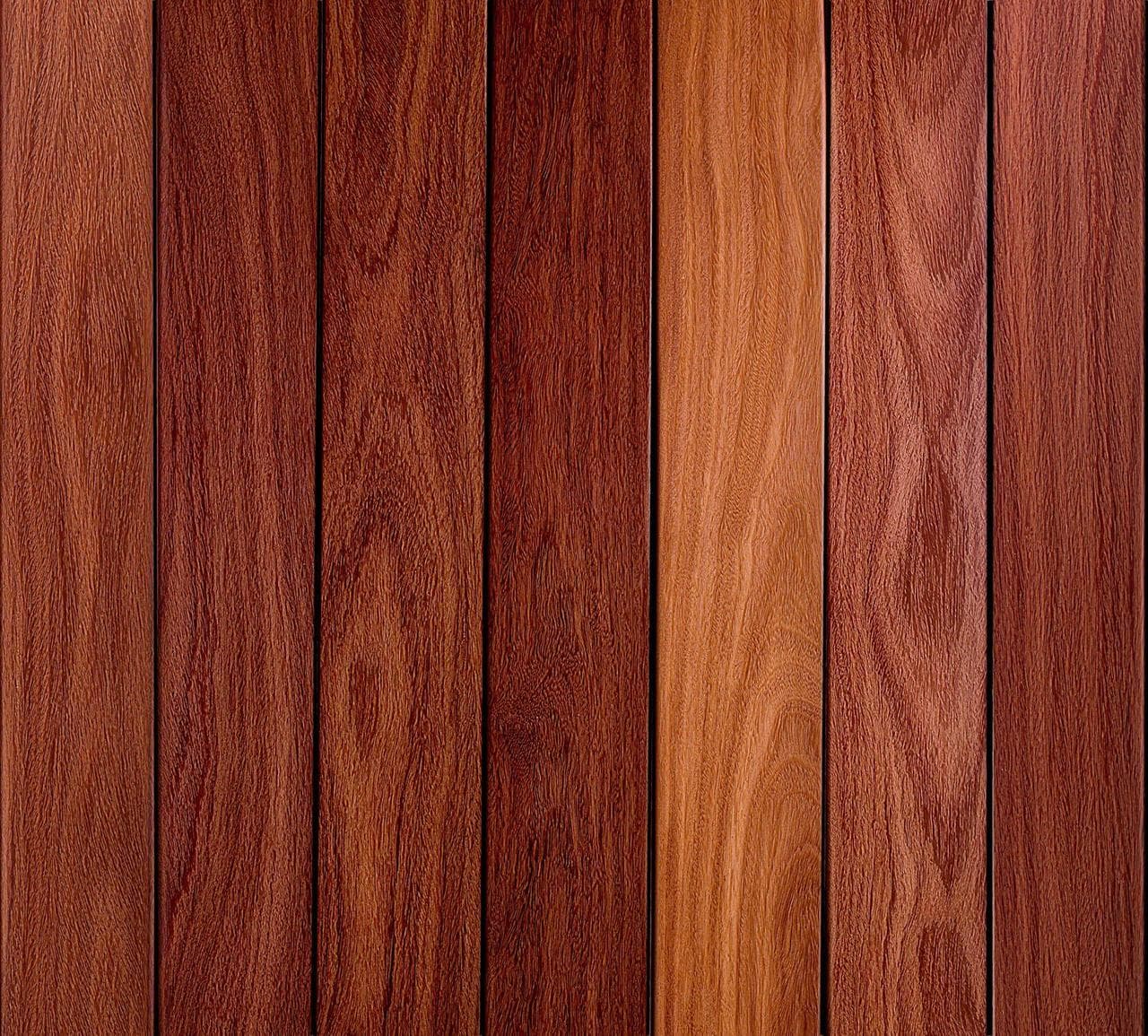
If your renovation involves replacing only a portion of the deck or matching new Cumaru to existing elements, carefully consider the visual impact. While Cumaru weathers to a silver-grey if left untreated, new boards will initially display their natural reddish-brown tones, which may not immediately match older, weathered wood.
Consider Fastening Methods for Renovation
The fastening method for your Cumaru decking can impact both the aesthetic and structural integrity of your renovation. Common options include hidden fasteners or face-fastening.
Hidden fastening systems offer a clean, unblemished surface, but they require precise installation and may not be compatible with all existing substructures, especially if joist spacing is irregular. Face-fastening, using screws driven through the face of the board, is a robust method but will show the fastener heads.
For renovations, consider the ease of access for future maintenance or repairs. Some hidden fastening systems allow for individual board removal, while others may require more extensive disassembly.
Worked Example: Replacing a 10x12 Foot Deck Surface
Let's consider a hypothetical renovation project: replacing the surface of a 10-foot by 12-foot deck.
We plan to use 5/4"x6" Cumaru boards (actual 1" x 5.5"). To cover the 10-foot width, we'll lay the boards across the 12-foot length. Each board is 5.5 inches wide, so a 10-foot width requires approximately 10 feet * 12 inches/foot / 5.5 inches/board = 21.8 boards. We will round up to 22 boards for coverage. For the 12-foot length, we will use 12-foot long boards.
Therefore, we would need 22 boards, each 12 feet long. This totals 264 linear feet of Cumaru decking. For waste and cuts, it's prudent to add 10-15%, so approximately 290-304 linear feet. This calculation assumes minimal waste and straight cuts. If a picture frame border or diagonal layout is desired, the material requirement will increase.
For this project, we would also need to ensure the existing ledger board and any stairs are compatible with the new 1-inch thick decking. If the original decking was thinner, adjustments to the stair risers or ledger board flashing might be necessary to maintain proper transitions and drainage.
Before you order
- Is the existing substructure sound and free from rot or insect damage?
- Does the site have adequate drainage and ventilation to prevent moisture buildup?
- Which Cumaru profile (1"x6" or 5/4"x6") best suits the renovation's aesthetic and structural needs?
- Are the available Cumaru board lengths suitable for minimizing waste and seams in your layout?
- Have you chosen a fastening method (hidden or face-fastened) compatible with your subframe and renovation goals?
- Are there any specific considerations for integrating new Cumaru with existing structures or other materials?
- Have you accounted for a waste factor (typically 10-15%) in your material calculations?
Confirm installation details, approved uses and warranty terms in the current instructions for the exact product and profile. Your installer should verify the substrate, structure and applicable project requirements.
Questions to help you decide
Can I install Cumaru decking directly onto an old deck frame?
You can install Cumaru decking onto an old deck frame, but it's crucial to first inspect the frame thoroughly. Ensure the joists and beams are structurally sound, free from rot or insect damage, and that joist spacing meets the requirements for Cumaru. Cumaru is a heavy material, so the subframe must be capable of supporting its weight over time.
How does Cumaru's density affect renovation projects?
This durability is an advantage for longevity, but it also means that pre-drilling is essential for all fasteners to prevent splitting the wood and to ensure secure connections. Working with Cumaru can also dull tools more quickly than softer woods.
What maintenance considerations are there for Cumaru during a renovation?
Cumaru is naturally resistant to decay and insects. For renovation projects, decide if you prefer the wood to maintain its reddish-brown color (requiring periodic oiling) or to weather to a silver-grey patina (requiring less frequent treatment). Regardless of the finish choice, regular cleaning to remove debris will help preserve the deck's appearance and extend its life.
Ready to Plan Your Cumaru Decking Renovation?
Request a material quote with your project dimensions, exact Cumaru profile preference, and ZIP code. We can help you confirm current availability and service options for your renovation project.
Request a material quote →