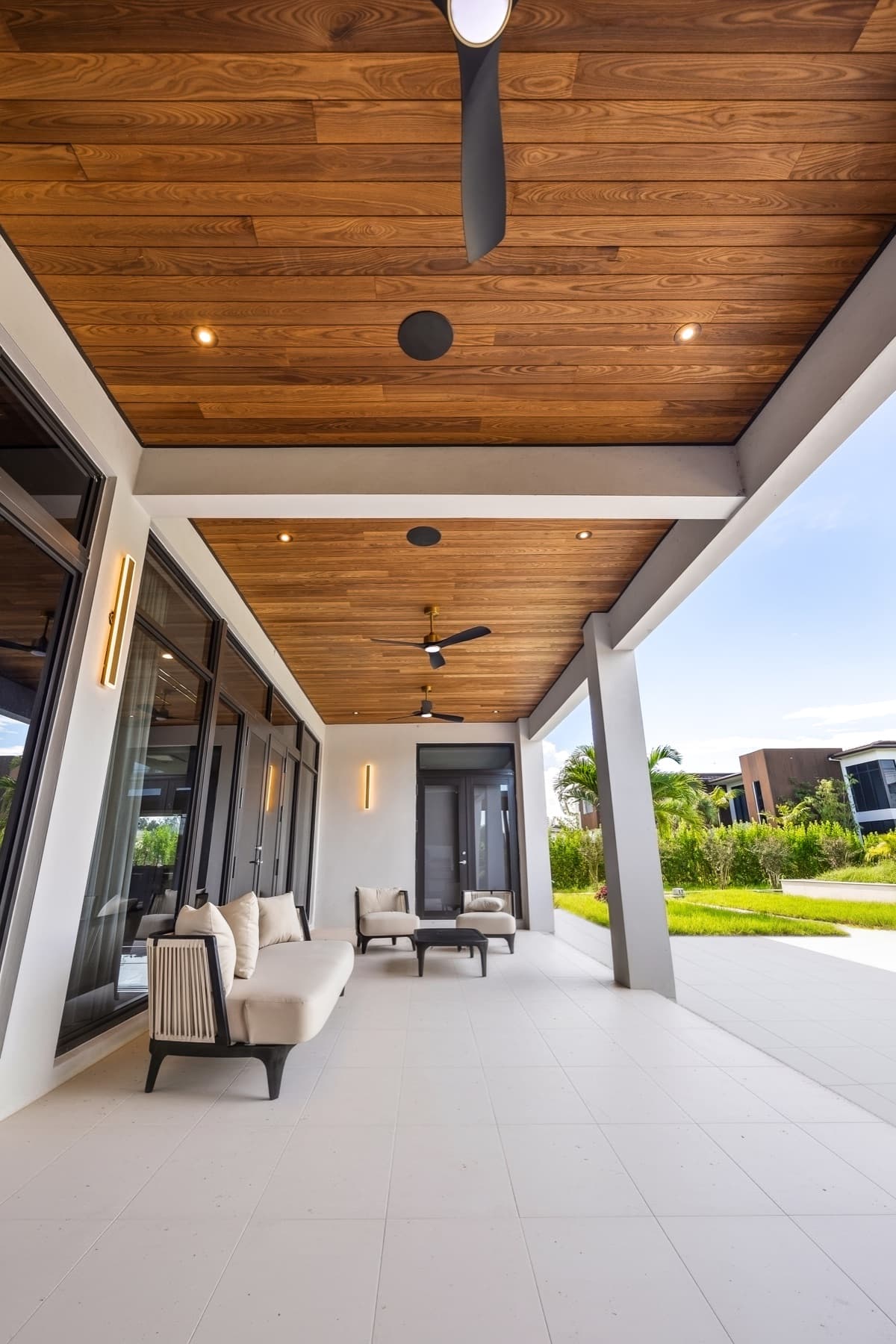
Understanding Winter Challenges for Soffits
Winter weather presents several specific challenges for soffit materials. Fluctuating temperatures between day and night, and across seasons, cause materials to expand and contract. This thermal movement can lead to warping, cracking, or fastener failure if the material is not dimensionally stable or properly installed. Moisture, whether from snowmelt, ice dams, or condensation, can penetrate materials, leading to rot, mold, or staining.
Additionally, the primary function of a soffit is often to facilitate roof ventilation. In cold climates, effective ventilation is crucial to prevent warm, moist air from the interior from condensing in the attic space, which can lead to ice dams and structural damage. Any soffit material chosen must not impede this airflow, or it must be part of a well-designed vented soffit system. Considerations for snow loads and ice formation are also important for the overall roof assembly, though the soffit material itself typically doesn't bear these loads directly.
Material Stability in Cold Temperatures
When selecting materials for winter-exposed soffits, dimensional stability is a key factor. Materials that resist significant expansion and contraction are less prone to issues like gaps, buckling, or fastener pull-through. Thermally modified wood is one option that offers enhanced stability. The thermal modification process alters the wood's cell structure, reducing its ability to absorb moisture and consequently improving its dimensional stability.
For example, Scandinavian thermally modified wood, available in species like Ayous and Ash, is designed to offer a stable and durable option for porch ceilings and soffits. These materials maintain their form better than untreated wood when exposed to temperature changes, making them a suitable choice for areas experiencing cold winters. Similarly, acetylated wood, such as Maximo Accoya, is another option known for its exceptional dimensional stability due to a modification process that makes the wood highly resistant to moisture absorption.
Moisture Resistance and Protection
In winter, soffits are exposed to various forms of moisture, from direct snow and rain to condensation. Materials with inherent moisture resistance or those that can be effectively protected are essential. Brazilian hardwoods like Ipe, Cumaru, and Garapa are naturally dense and resistant to decay and moisture, offering durability in challenging conditions. Their natural oils contribute to this resilience.
Composite ceiling and soffit materials, such as those from the Norx collection, also provide a low-maintenance option with strong resistance to moisture and rot. These engineered products are designed to withstand environmental stressors, including freezing and thawing cycles, without significant degradation. When using any wood product, consider the finishing requirements. While natural hardwoods can be left to weather, applying a suitable finish can add an extra layer of protection against moisture and UV degradation, which can be beneficial in winter conditions.
Ventilation Strategy and Soffit Design
A soffit's role in roof ventilation is paramount, especially in cold climates. Proper attic ventilation helps prevent moisture buildup and ice dams by allowing warm, moist air to escape. When planning your soffit, ensure that the chosen material and installation method do not obstruct the intended airflow. This often involves using vented soffit panels or incorporating discrete vents within solid soffit sections.
For a seamless appearance, some materials can be specified with pre-drilled ventilation holes or grooves. If using solid boards, ensure that the roof assembly has adequate intake ventilation elsewhere, such as continuous soffit vents or individual vent blocks, in conjunction with ridge vents or other exhaust vents at the peak of the roof. Always consult with a building professional to ensure your ventilation strategy meets local building codes and effectively manages moisture in your specific climate.
Worked Example: Selecting Soffit Boards for a Winter Porch
Consider a hypothetical porch with a soffit area measuring 20 feet long by 2 feet wide, in a region with cold, snowy winters. The goal is to select a durable, stable material that complements a contemporary home aesthetic and can withstand temperature swings and moisture.
Option 1: Thermally Modified Ash. This material offers a clean grain and enhanced dimensional stability. If using 1x6 (actual 0.75" x 5.5") tongue-and-groove boards, each 12 feet long, the coverage per board is 5.5 inches x 12 feet = 5.5/12 feet x 12 feet = 5.5 square feet. The total soffit area is 20 feet x 2 feet = 40 square feet. For the 20-foot length, two 12-foot boards can be cut to 10 feet each, covering 5.5 inches x 20 feet = 9.17 square feet. To cover the 2-foot width (24 inches), you would need 24 inches / 5.5 inches per board = approximately 4.36 boards. Rounding up, you'd need 5 boards across the width. Since the longest dimension of the soffit is 20 feet, and boards come in 12-foot lengths, you'd need to use two 12-foot boards per run to get a 20-foot length (cutting one to 8 feet and one to 12 feet, creating a butt joint). If boards are installed parallel to the 20-foot length, you would need 5 runs. Each run would require two 12-foot boards (one cut to 8 feet, one left at 12 feet, with 4 feet offcut). This means 5 runs x 2 boards/run = 10 boards. Total coverage: 10 boards x 5.5 sq ft/board = 55 square feet. This provides sufficient material for cuts and waste.
Option 2: Norx Composite Soffit Panels. If using 1x6 (actual 0.75" x 5.5") Norx composite panels, 12 feet long, the calculation is similar. The panels are highly moisture-resistant and require minimal maintenance, which is a benefit in winter. The same quantity of 10 boards (20 feet long, 5.5 inches wide) would be needed for the 40 square foot area, covering 55 square feet to allow for cuts. The choice between these options would depend on budget, desired aesthetic (natural wood grain vs. consistent composite), and specific maintenance preferences.
Before you order
- Assess local climate: Identify typical winter temperatures, snowfall, and freeze-thaw cycles.
- Evaluate material stability: Prioritize materials known for dimensional stability in varying temperatures (e.g., thermally modified wood, acetylated wood, composites).
- Consider moisture resistance: Choose materials that naturally resist moisture absorption and decay, or plan for effective finishes and protection.
- Plan for ventilation: Ensure selected soffit materials allow for adequate roof ventilation to prevent moisture buildup and ice dams.
- Review installation requirements: Check manufacturer guidelines for fastener types, spacing, and expansion gaps suitable for cold weather.
- Aesthetic compatibility: Select a material and finish that complements the overall architectural style of the home.
- Maintenance expectations: Consider the level of maintenance required for the chosen material, especially during winter months.
Confirm installation details, approved uses and warranty terms in the current instructions for the exact product and profile. Your installer should verify the substrate, structure and applicable project requirements.
Questions to help you decide
What is the best material for soffits in very cold climates?
For very cold climates, materials with high dimensional stability and moisture resistance are recommended. Thermally modified wood (like Ayous or Ash) and acetylated wood (Maximo Accoya) are excellent natural wood options due to their reduced moisture absorption and movement. Composite soffit panels (such as Norx) also offer good performance with minimal maintenance in these conditions. The 'best' material will also depend on your aesthetic preferences and budget.
Do I need to leave gaps between soffit boards for expansion in winter?
Yes, it is generally recommended to allow for expansion and contraction, even in winter. While materials contract in cold weather, they will expand again when temperatures rise. The specific gap size depends on the material type, installation method, and the expected temperature range. Always refer to the manufacturer's installation guidelines for precise recommendations on spacing and fastening to ensure proper performance and prevent issues like buckling or cracking.
How does soffit ventilation work in cold weather?
In cold weather, soffit ventilation is crucial for allowing cool, fresh air to enter the attic space. This cool air helps to keep the attic temperature close to the outdoor temperature, preventing warm, moist air from the living space below from condensing on the cold underside of the roof deck. This process helps prevent moisture buildup, which can lead to mold, rot, and the formation of ice dams on the roof eaves. Ensure your soffit materials do not block these critical intake vents.
Request a Quote for Your Winter Soffit Project
Ready to select the right ceiling and soffit materials for your cold-climate project? Provide your project dimensions, desired profile, and ZIP code to request a material quote. Confirm current availability and service options with our team.
Request a material quote →