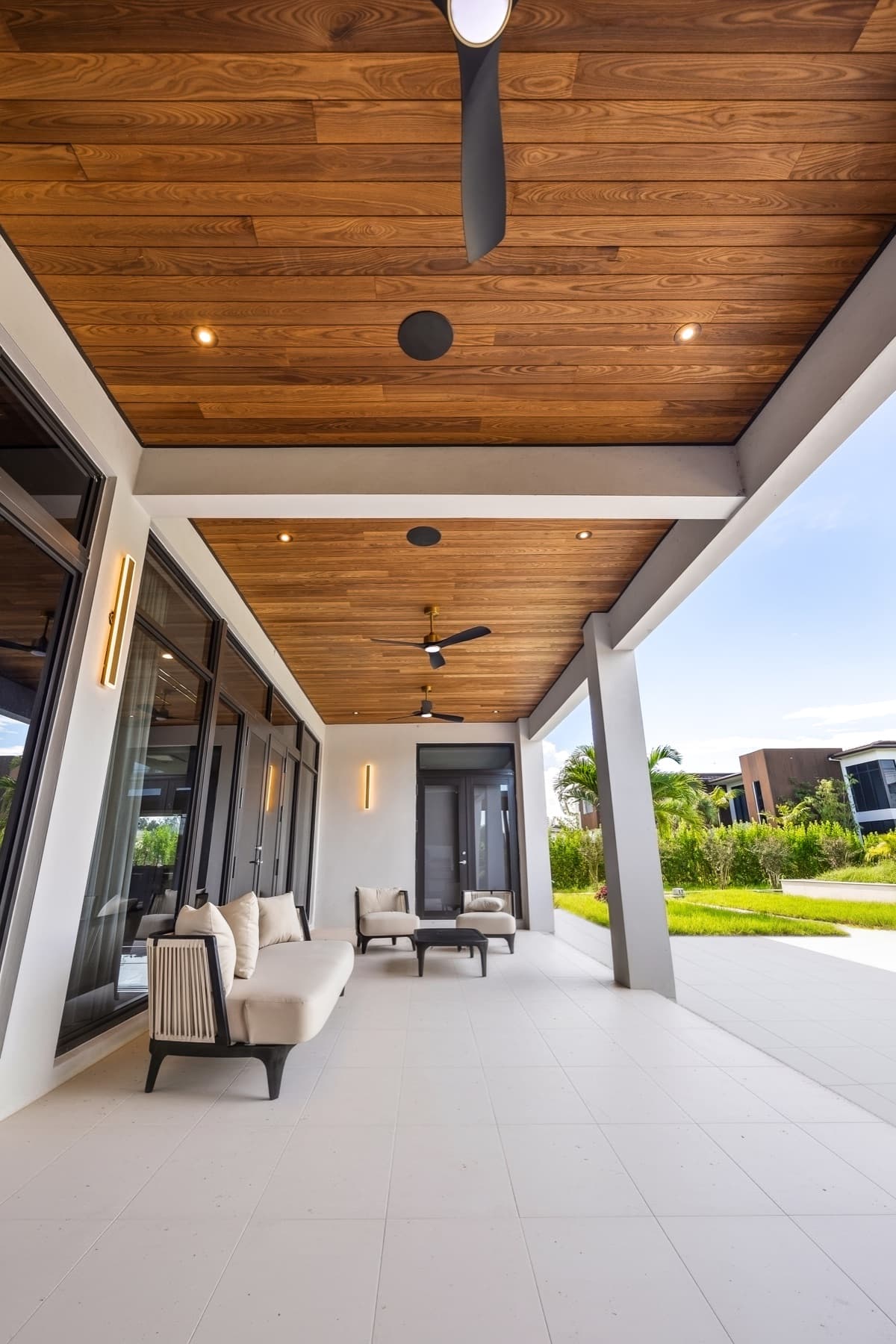
The Importance of a Pre-Purchase Maintenance Plan
Imagine your newly installed porch ceiling looking pristine, only to realize months later that its chosen material requires more frequent cleaning or specific treatments than you anticipated. A pre-purchase maintenance plan helps avoid such surprises. It ensures you select a material whose upkeep aligns with your available time, budget, and desired level of effort.
Different materials respond uniquely to environmental factors like sun exposure, humidity, and rainfall. Understanding these reactions and the necessary protective measures beforehand can save significant time and money in the long run. This proactive approach supports informed decision-making, leading to a more satisfying and sustainable project outcome.
Maintenance for Thermally Modified Wood Ceilings and Soffits
Thermally modified wood, such as Scandinavian Thermally Modified Wood or thermally modified Ash, offers enhanced stability and resistance to decay, making it a suitable choice for exterior soffits and interior ceilings. While the thermal modification process reduces the wood's tendency to absorb moisture and makes it less appealing to insects, it still retains the natural characteristics of wood.
Maintenance for thermally modified wood typically involves periodic cleaning to remove dirt, dust, and any mildew that may accumulate, especially in humid or shaded areas. A mild soap solution and soft brush are often sufficient. If left unfinished, thermally modified wood will naturally weather to a silver-gray patina over time. To preserve its original color, a UV-inhibiting finish or stain can be applied, which will then require reapplication according to the product manufacturer's recommendations, usually every few years depending on exposure.
For example, a thermally modified Ayous ceiling installed in a covered lanai might require less frequent refinishing compared to an exposed soffit receiving direct sun and rain. Regular inspection for any signs of wear, fastener issues, or localized damage is also recommended to address minor issues before they escalate.
Caring for Brazilian Hardwood Ceilings and Soffits
Brazilian hardwoods like Ipe, Cumaru, and Garapa are known for their natural density, durability, and rich appearance, making them popular for both interior and exterior applications, including soffits and porch ceilings. These woods are naturally resistant to rot, decay, and insect infestation.
Brazilian hardwoods can be left unfinished to weather to a silver-gray patina, similar to thermally modified wood. This weathering is a natural process and does not compromise the wood's structural integrity. If you prefer to maintain the wood's original color, an oil-based penetrating finish with UV inhibitors is typically recommended. This finish helps protect the wood from UV degradation and moisture, enhancing its color. Reapplication frequency depends on exposure and the specific product, but annual or biennial reapplication is common for exterior uses.
Routine cleaning with water and a soft-bristle brush is usually sufficient to remove surface dirt. For more stubborn stains, a specialized wood cleaner designed for hardwoods can be used. Promptly addressing any water pooling or debris accumulation can prevent localized staining or mildew growth.
Maintenance for Composite Ceiling and Soffit Materials (NORX)
Composite materials, such as the NORX collection, offer a low-maintenance alternative to natural wood for ceiling and soffit applications. These products are engineered to resist fading, staining, and moisture damage, often without the need for painting, staining, or sealing.
Maintenance for NORX composite ceilings and soffits typically involves periodic cleaning with soap and water to remove dirt, dust, and environmental buildup. A soft brush or cloth can be used. For tougher stains, manufacturer-recommended cleaning products may be suitable. Unlike wood, composite materials do not require refinishing or sealing to maintain their color or protective properties.
While highly durable, it's still advisable to inspect composite installations for any physical damage, such as scratches or impacts, and to ensure proper ventilation in soffit applications. The consistent color and minimal upkeep make composites an attractive option for those seeking a "set it and forget it" approach to overhead surfaces.
A Hypothetical Maintenance Plan Example: Covered Porch Ceiling
Consider a 10-foot by 12-foot covered porch ceiling in a moderately humid climate. The homeowner is evaluating between Thermally Modified Ash and NORX composite panels.
**Option 1: Thermally Modified Ash (Unfinished)**
**Year 1:** Install. Clean twice a year (spring and fall) with mild soap and water to remove pollen and dust. Observe natural silvering process.
**Year 2-5:** Continue bi-annual cleaning. Inspect for any localized mildew spots; if present, use a diluted bleach solution (1 part bleach to 4 parts water) with a soft brush, rinsing thoroughly. The silver patina will deepen. Check fasteners for tightness annually.
**Option 2: NORX Composite Panels (Oxford Gray)**
**Year 1:** Install. Clean once a year (spring) with water and a soft cloth to remove surface dirt. No staining or sealing required.
**Year 2-5:** Continue annual cleaning. For any stubborn marks, use a composite deck cleaner according to manufacturer instructions. No color fading or structural degradation from weathering is expected. Check panel alignment and perimeter trim annually.
This example illustrates that while the initial material cost might be a factor, the long-term time commitment and product expenses for maintenance differ significantly. The Thermally Modified Ash requires more active engagement to manage its natural weathering and potential for mildew, whereas the NORX composite offers a simpler, less frequent cleaning routine.
Before you order
- What is your tolerance for periodic cleaning, staining, or oiling?
- How much direct sun and rain will the ceiling/soffit receive?
- Is a natural weathering (silvering) aesthetic acceptable, or do you prefer to maintain the original color?
- Are there specific environmental factors (e.g., high humidity, coastal salt spray) that might influence material degradation?
- What is your budget for maintenance products (cleaners, stains, oils) over the lifetime of the installation?
- Do you have access to the ceiling/soffit for maintenance tasks, or will professional help be required?
- How often are you willing to inspect the material for signs of wear or damage?
Confirm installation details, approved uses and warranty terms in the current instructions for the exact product and profile. Your installer should verify the substrate, structure and applicable project requirements.
Questions to help you decide
Do I need to seal or finish all wood ceiling and soffit materials?
Not necessarily. Many wood materials, including thermally modified wood and Brazilian hardwoods, can be left unfinished to weather naturally to a silver-gray patina. However, if you wish to preserve the wood's original color, applying a suitable finish or stain with UV inhibitors is recommended. Composite materials typically do not require sealing or finishing.
How often should I clean my ceiling and soffit materials?
Cleaning frequency depends on the material, exposure to elements, and local environmental conditions. For most materials, a light cleaning once or twice a year to remove dust, pollen, and debris is a good starting point. Areas with high humidity, tree cover, or significant pollution may benefit from more frequent cleaning. Always use mild cleaning solutions and soft brushes to avoid damage.
What kind of cleaning products are safe for ceiling and soffit materials?
For most wood and composite materials, a mild soap solution (like dish soap) mixed with water is safe and effective for routine cleaning. Always avoid harsh chemicals, abrasive cleaners, or high-pressure washers, as these can damage the material's surface or finish. For specific stains or mildew, consult the manufacturer's recommendations for appropriate specialized cleaners.
Ready to Plan Your Ceiling or Soffit Project?
Request a material quote with your project dimensions, exact profile, and ZIP code. We can confirm current availability and service options for all our ceiling and soffit materials, including thermally modified wood, Brazilian hardwoods, and NORX composites.
Request a material quote →