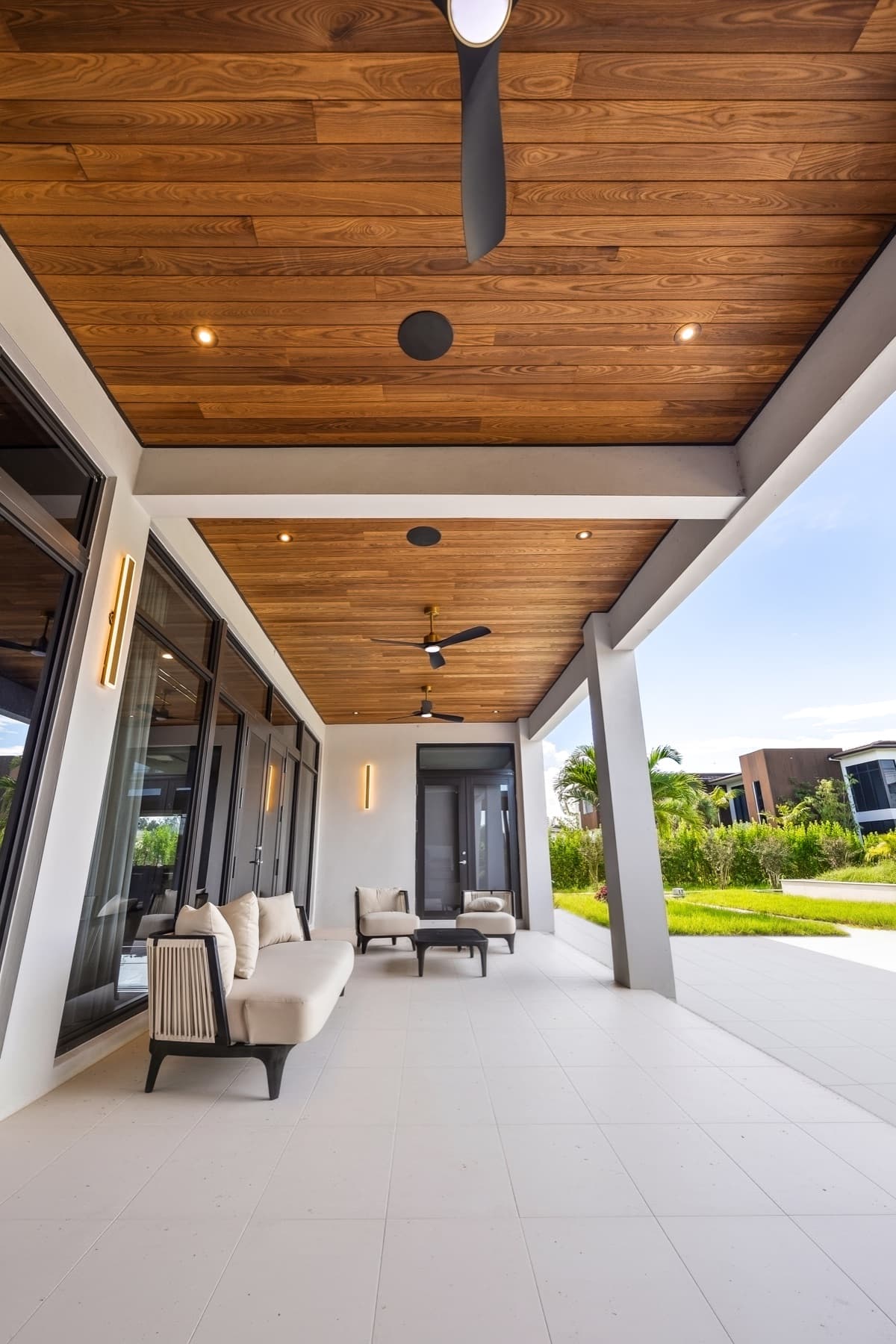
The Value of Physical Samples: Beyond the Screen
Digital representations, while useful for initial inspiration, cannot fully capture the nuances of ceiling and soffit materials. A physical sample allows you to experience the true color, texture, and finish. For instance, a 'deep brown' ipe board might appear different under direct sunlight compared to the shade of your covered patio. Similarly, the 'clean grain' of thermally modified ash may have a subtle shimmer that a photograph cannot convey. These details are crucial for making an informed decision that aligns with your aesthetic goals.
Physical samples also help in understanding the material's profile and thickness, which can influence the overall visual weight and installation considerations. Holding a piece of the actual material provides a tactile understanding that no screen can replicate, helping you visualize the finished project more accurately.
Evaluating Color and Tone Under Project-Specific Lighting
One of the most significant benefits of physical samples is the ability to assess color and tone in the actual environment where they will be installed. Light sources, whether natural sunlight, ambient shade, or artificial fixtures, drastically alter how colors are perceived. A 'golden' garapa board might look vibrant in bright sunlight but appear more subdued in a deeply shaded soffit.
To effectively evaluate, observe samples at different times of day and under various lighting conditions. For exterior applications like porches or eaves, check samples in direct sun, partial shade, and on overcast days. For interior ceilings, consider both natural light from windows and the effect of any planned artificial lighting. This dynamic assessment helps you choose a material that maintains its desired character throughout the day and night.
Assessing Texture and Grain for Visual and Tactile Appeal
The texture and grain pattern of a ceiling or soffit material contribute significantly to its overall aesthetic. Materials like Scandinavian thermally modified wood offer a distinct Nordic character, while thermally modified Ayous provides a lighter appearance. Brazilian hardwoods such as Cumaru or Angelim have their own unique grain patterns and surface textures.
Run your hand over the sample to feel the texture. Is it smooth, subtly textured, or does it have a more pronounced grain? Consider how this texture will look from a distance and up close. For example, a fine, clean grain might be preferred for a contemporary aesthetic, while a more prominent, natural grain could suit a rustic or traditional design. This tactile engagement is key to selecting a material that feels right for your space.
Comparing Samples with Adjacent Finishes and Materials
Ceiling and soffit materials rarely exist in isolation. They interact with siding, trim, flooring, and other architectural elements. Bring your samples to the project site and place them directly against existing or planned finishes. How does the 'deep brown' of a Maximo Accoya board complement your siding color? Does the 'golden' hue of Garapa clash or harmonize with your deck boards?
This comparative evaluation helps ensure visual cohesion across your entire project. Consider not just color, but also the style and 'temperature' of the finishes. A warm-toned wood might pair well with earthy tones elsewhere, while a cooler composite like Norx Oxford Gray could suit a more modern, monochrome palette. This step is critical for a unified design.
Understanding Product Documentation and Sample Labels
Each physical sample should come with clear product documentation or a label. This information typically includes the material type (e.g., thermally modified wood, Brazilian hardwood, Norx composite), species (e.g., Ayous, Ash, Ipe), profile, and any specific finish details. This documentation is vital for ensuring you are evaluating the exact product you intend to purchase.
Always cross-reference the sample label with the product specifications on our website or in our brochures. This confirms you are looking at the correct material and helps avoid confusion, especially when comparing multiple options. Pay attention to any notes regarding color variation, natural characteristics, or recommended applications, as these can influence your final decision. For example, some wood species naturally exhibit more color variation than others.
Worked Example: Selecting Soffit Boards for a Covered Patio
Let's consider a hypothetical covered patio project. The homeowner wants a soffit material that offers a natural wood look, brightens the space, and complements their existing cedar siding and dark gray deck. They are considering three options: thermally modified Ayous, Garapa, and Norx composite in a wood-look finish.
1. **Initial Sample Review:** The homeowner obtains physical samples of all three. Indoors, under incandescent light, the Ayous appears light and subtle, the Garapa a rich golden, and the Norx a consistent, medium brown.
2. **On-Site Evaluation (Morning Sun):** The homeowner takes the samples to the patio. In the morning sun, the Ayous retains its lightness, but its fine grain becomes more pronounced, offering a delicate texture. The Garapa truly shines, reflecting light and adding a vibrant golden warmth that brightens the patio ceiling. The Norx appears slightly darker than indoors, with its wood-grain texture visible but less organic than the natural wood options.
3. **On-Site Evaluation (Afternoon Shade):** Later in the day, the patio is in full shade. The Ayous still looks light, but its warmth is slightly diminished. The Garapa maintains its golden hue but is less radiant. The Norx, being a consistent composite, holds its color well, providing a uniform, stable appearance.
4. **Comparison with Existing Materials:** Placing the samples against the cedar siding, the Garapa's golden tones harmonize beautifully with the cedar's warm, reddish hues, creating a cohesive natural palette. The Ayous also works well, offering a lighter contrast. The Norx, while attractive, provides a more distinct, less integrated look with the natural cedar.
5. **Final Decision:** The homeowner decides on Garapa. While Ayous was appealing for its lightness, the Garapa's ability to brighten the shaded patio area with its vibrant golden tones, and its excellent complement to the cedar siding, made it the preferred choice. The Norx was a strong contender for consistency but lacked the natural character desired for this specific project. This systematic evaluation, using physical samples in the actual environment, led to a confident and informed decision.
Before you order
- Obtain physical samples of all candidate ceiling and soffit materials.
- Observe samples under natural light (direct sun, shade, overcast) at different times of day.
- Evaluate samples under any planned artificial lighting for interior applications.
- Feel the texture and assess the grain pattern of each material.
- Compare samples directly against existing or planned adjacent finishes (siding, trim, deck).
- Review all product documentation and sample labels to confirm material type, species, and profile.
- Consider the overall aesthetic and how each sample contributes to your project's desired mood.
Confirm installation details, approved uses and warranty terms in the current instructions for the exact product and profile. Your installer should verify the substrate, structure and applicable project requirements.
Questions to help you decide
How many samples should I request?
It is generally recommended to request samples of all materials you are seriously considering. This allows for direct comparison and a comprehensive evaluation. If you are undecided between different species or finishes within a product line, request samples of each variation.
What if my samples look slightly different from the delivered product?
Natural wood products, like thermally modified wood or Brazilian hardwoods, can exhibit natural variations in color and grain due to their organic nature. While samples are representative, minor differences are inherent and expected. For composite materials like Norx, consistency is generally higher, but slight batch variations can still occur. Always discuss expectations regarding natural variation with your supplier.
Can I keep the samples for an extended period?
Yes, keeping samples for a reasonable period allows you to evaluate them under various conditions and integrate them into your design process. However, it's advisable to make your final decision within a timeframe that ensures the product you sampled is still available and relevant to current stock or production cycles. If a significant amount of time passes, it may be beneficial to confirm availability and current product specifications.
Ready to Select Your Ceiling and Soffit Materials?
Request a material quote with your project dimensions, exact profile, and ZIP code. Our team can also help confirm current availability and service options for your chosen materials. Explore our full range of ceiling and soffit materials, including thermally modified wood and other premium options, to find the perfect fit for your project. Visit our product pages for more details: * [Ceiling and Soffit Materials](/ceiling-and-soffit) * [Versatex](/brands/versatex) * [Thermally Modified Wood](/thermally-modified-wood)
Request a material quote →