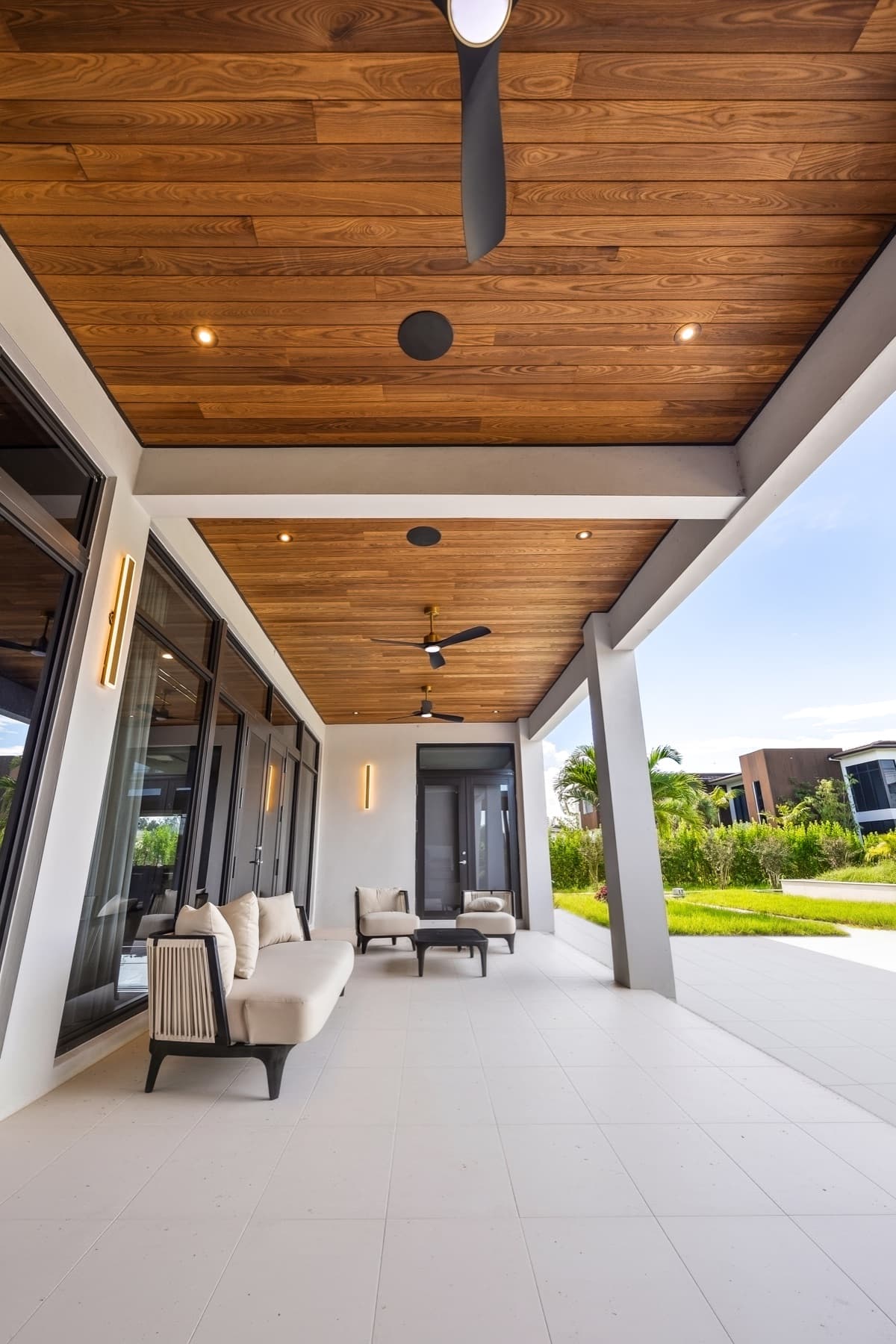
The Impact of Color on Perceived Space and Light
The color of your ceiling and soffit materials directly affects how light is reflected or absorbed, influencing the brightness and perceived size of the area. Lighter finishes, such as those found in natural Ayous or light-toned thermally modified woods, tend to reflect more light. This can make a covered porch or lanai feel more open and brighter, especially in areas with limited natural light or during overcast conditions. A light ceiling can also visually lift the overhead plane, creating a sense of increased vertical space.
Conversely, darker finishes, like those of rich Brazilian hardwoods such as Ipe or Cumaru, or deep gray composite options from Norx, absorb more light. This can create a sense of intimacy and coziness, ideal for spaces where a more dramatic or sheltered atmosphere is desired. While darker colors can make a space feel smaller, they can also add depth and sophistication, drawing attention to architectural details or lush surrounding landscapes. The choice depends heavily on the intended function and mood of the space.
Natural Wood Finishes: Embracing Character and Warmth
Natural wood offers a diverse palette of colors and grain patterns, each bringing unique character to a ceiling or soffit. Thermally modified wood, available in species like Ash and Ayous, presents a refined, clean grain, often with a consistent honey to medium brown tone. These materials can be left unfinished to age naturally to a silver-gray patina or protected with clear sealers to maintain their initial warmth.
Brazilian hardwoods, including Ipe, Cumaru, Garapa, Angelim, Jatoba, and Tigerwood, showcase a spectrum of rich, deep browns, golden hues, and distinctive striations. Ipe and Cumaru, for instance, are known for their dense grain and deep, chocolatey tones that can darken further with age. Garapa offers a brighter, golden appearance that can brighten a room. Each species provides a distinct visual texture and depth that can complement various architectural styles.
When selecting natural wood, consider the wood's inherent color variation and how it will interact with direct and indirect sunlight throughout the day. Obtain physical samples to observe how the natural light in your specific project area affects the perception of the wood's color and grain.
Painted and Pre-finished Options: Consistency and Customization
For those seeking a uniform color or a specific aesthetic match, painted or pre-finished ceiling and soffit materials offer consistency and convenience. Maximo Accoya, for example, is an acetylated wood product that accepts paint and stain exceptionally well, allowing for a wide range of custom colors. This can be particularly useful when matching existing trim, siding, or a specific design theme.
Composite ceiling and soffit boards, such as those from the Norx collection, often come in pre-finished colors like Oxford Gray. These materials provide a consistent appearance without the need for on-site finishing, which can save time and labor. The factory-applied finishes are designed for durability and color retention, making them a low-maintenance option for overhead applications.
When considering painted or pre-finished options, always verify the product's suitability for exterior or interior use as intended, and confirm any specific maintenance requirements for the finish. While pre-finished materials offer immediate color, future repainting or re-finishing may be necessary depending on exposure and product specifications.
Integrating Lighting and Other Elements with Color Choices
The ceiling and soffit are not isolated elements; they interact with lighting fixtures, fans, and adjacent wall materials. When choosing a color, consider how it will complement or contrast with these other components. For example, a light-colored ceiling can enhance the effectiveness of recessed lighting by reflecting its output, while a darker ceiling might require more powerful or strategically placed fixtures to achieve desired illumination levels.
The finish—whether matte, satin, or semi-gloss—also plays a role. Matte finishes tend to absorb light, creating a softer, more subdued look. Satin and semi-gloss finishes, by contrast, have a subtle sheen that can reflect light and add a touch of sophistication. While highly reflective finishes are less common for outdoor ceilings, a slight sheen can help brighten a space without creating glare.
Consider the overall color scheme of your home's exterior. A soffit color that picks up a shade from your siding, trim, or roofing can create a cohesive and well-designed appearance. Conversely, a contrasting color can be used to define a specific area or highlight an architectural feature.
Worked Example: Selecting a Soffit Color for a Covered Patio
Let's consider a hypothetical covered patio, 12 feet by 16 feet, with light-colored stucco walls and a dark gray roof. The homeowner desires a space that feels bright and inviting during the day but also offers a sense of warmth in the evenings. They are debating between two options: a thermally modified Ayous ceiling and a Norx Oxford Gray composite soffit.
Option 1: Thermally Modified Ayous. This material offers a light, consistent wood tone that would reflect significant daylight, making the patio feel expansive and airy. Its natural character would introduce warmth and texture, contrasting gently with the stucco and harmonizing with any natural landscaping. If left unfinished, it would eventually weather to a soft silver-gray, blending with the roof, or it could be sealed to maintain its golden hue. This choice supports the 'bright and inviting' goal.
Option 2: Norx Oxford Gray Composite. This pre-finished option would provide a consistent, deep gray tone, creating a more defined and intimate overhead space. It would visually connect with the dark gray roof, creating a unified exterior palette. While it would absorb more light than the Ayous, strategic recessed lighting could illuminate the space effectively in the evenings, contributing to a 'warm' ambiance without being overly bright. This choice leans towards a more contemporary and low-maintenance aesthetic.
The decision hinges on the primary desired outcome. For maximum brightness and natural warmth, the Ayous is suitable. For a cohesive, modern look with minimal maintenance and a more intimate feel, the Norx Oxford Gray is a strong contender. The homeowner should obtain samples of both to view them in the actual patio light conditions before making a final choice.
Before you order
- Consider the amount of natural light the area receives.
- Evaluate how the chosen color will reflect or absorb light.
- Determine if you prefer a bright, expansive feel or a cozy, intimate atmosphere.
- Obtain physical samples and observe them in the project's specific lighting conditions.
- Assess how the color and finish will complement or contrast with existing exterior elements (siding, trim, roof).
- Think about the long-term maintenance implications of the chosen finish (natural weathering vs. consistent color).
- Consider how lighting fixtures and fans will integrate with the ceiling/soffit color.
Confirm installation details, approved uses and warranty terms in the current instructions for the exact product and profile. Your installer should verify the substrate, structure and applicable project requirements.
Questions to help you decide
Do lighter colors make a ceiling look higher?
Generally, yes. Lighter colors reflect more light, which can create an illusion of increased vertical space and make a ceiling appear higher and the overall area feel more open and expansive. This is particularly beneficial for covered areas or spaces with lower ceiling heights.
How do I choose between a natural wood finish and a painted finish?
The choice depends on your aesthetic preference and maintenance expectations. Natural wood offers unique grain patterns and character, and can be left to weather or sealed. Painted finishes provide a uniform color, can match specific palettes, and may offer consistent durability. Consider the desired architectural style and the level of maintenance you are willing to commit to.
Should my soffit color match my siding or my roof?
There is no single rule, and both approaches can be effective. Matching your soffit color to your siding can create a seamless, cohesive look. Matching it to your roof can help visually anchor the upper portion of your home and provide a balanced aesthetic. A third option is to choose a complementary color that ties into other exterior elements, such as trim or window frames, to add visual interest.
Ready to Select Your Ceiling and Soffit Materials?
Request a material quote with your project dimensions, desired profile, and ZIP code. Confirm current availability and service options for our range of thermally modified wood, hardwood, and Norx composite ceiling and soffit boards. Explore our products: Ceiling and Soffit Materials, Versatex, Thermally Modified Wood.
Request a material quote →