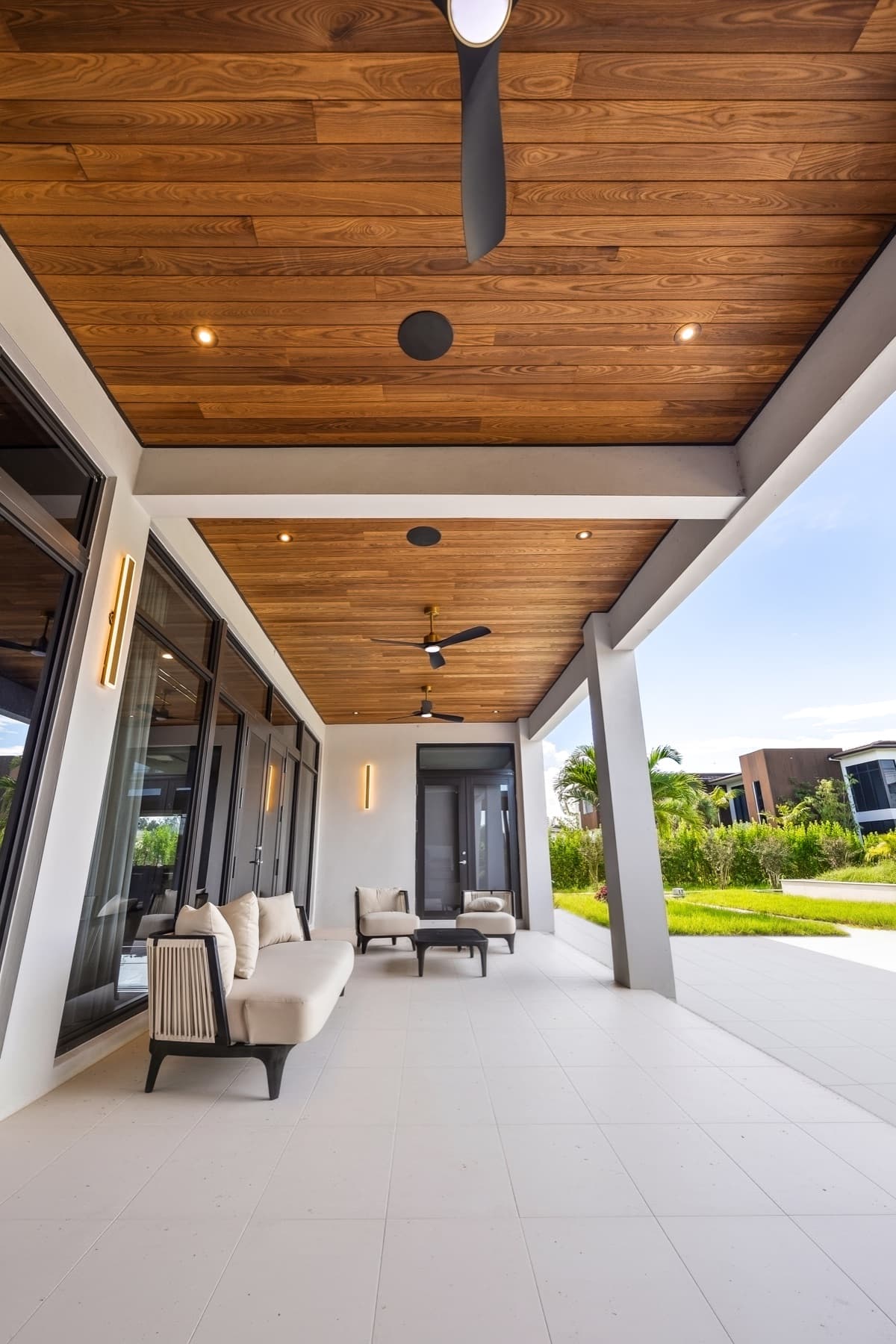
Understanding the Impact of Material on a Small Porch
The material you select for your porch ceiling and soffit dictates much of its look and feel. For a small porch, materials that offer a clean, consistent appearance can help avoid a cluttered or busy impression. Options range from various wood species to advanced composite products, each with distinct characteristics.
Thermally modified wood, such as Ayous or Ash, provides enhanced stability and resistance to environmental factors, making it suitable for outdoor applications. These woods often feature a consistent grain that contributes to a serene aesthetic. Maximo Accoya, an acetylated wood, offers similar benefits with a focus on durability. Brazilian hardwoods like Ipe, Cumaru, or Garapa bring natural color variations and robust performance. For those seeking a low-maintenance solution with consistent color, composite options like Norx offer a uniform appearance and simplified upkeep.
Consider the desired ambiance: a light-colored wood can brighten the space, while a darker tone might create a more intimate, sheltered feel. The material's texture also plays a role; smooth finishes tend to reflect more light and appear more contemporary, while a subtle grain can add warmth and traditional character.
Choosing the Right Profile for Visual Impact
The profile of the ceiling and soffit boards significantly influences the perceived scale and style of a small porch. Common profiles include tongue-and-groove, shiplap, and nickel gap, each offering a distinct visual effect.
Tongue-and-groove boards create a seamless, elegant surface, ideal for a traditional or classic look. The tight fit minimizes visual interruptions, contributing to a sense of continuous flow. Shiplap profiles, with their characteristic overlapping edges, provide a clean, modern aesthetic with subtle shadow lines that add depth without overwhelming the space. Nickel gap, a variation of shiplap, features a small, consistent reveal between boards, offering a more pronounced linear effect that can visually elongate the porch.
For a small porch, narrower board widths can often make the space feel larger and more detailed. Conversely, very wide boards might make the ceiling appear heavy or out of proportion. Experimenting with samples can help visualize how different profiles and widths interact with the porch's dimensions and existing architectural elements.
Color and Finish: Enhancing Light and Scale
The color and finish of your ceiling and soffit materials are crucial for a small porch. Light colors, such as natural Ayous or light-toned Garapa, can reflect more natural light, making the porch feel brighter and more open. This is particularly beneficial for north-facing porches or those shaded by dense foliage.
Darker finishes, such as a deep brown thermally modified wood or Norx Oxford Gray, can create a sense of enclosure and intimacy, which might be desirable for a cozy retreat. However, on a very small porch, excessively dark colors could make the space feel smaller. A balanced approach might involve using a darker finish on the soffit to ground the structure, paired with a slightly lighter ceiling to maintain an airy feel.
The finish type also matters: a matte finish will absorb more light, while a satin or semi-gloss finish will reflect more. Consider how the finish interacts with any integrated lighting, as reflections can create interesting visual effects. For natural wood, clear sealers or light stains allow the wood's inherent character to show through while offering protection.
A Hypothetical Small Porch Project: Material Selection
Imagine a small front porch, 8 feet wide by 6 feet deep, with a standard flat ceiling. The home features light-colored siding and dark trim. The goal is to create an inviting, slightly contemporary entry that feels larger than its actual footprint.
For this project, we might consider using thermally modified Ayous tongue-and-groove boards. Ayous offers a light, consistent grain and a pale, neutral tone that would brighten the space. The tongue-and-groove profile would provide a clean, continuous surface, visually expanding the ceiling. Each board measures 5.5 inches wide by 12 feet long. The 8-foot width of the porch means we can run the boards perpendicular to the house, avoiding seams across the shorter dimension. For the 6-foot depth, each board would need to be cut to 6 feet, resulting in two 6-foot sections per 12-foot board.
To cover an 8-foot by 6-foot area (48 square feet), with boards covering 5.5 inches (0.458 feet) per width, we would need 8 feet / 0.458 feet = approximately 17.47 boards across the width. Rounding up to 18 boards for full coverage and potential waste. Since each 12-foot board yields two 6-foot sections, we would need to purchase 9 full 12-foot boards (18 sections / 2 sections per board = 9 boards). This calculation ensures minimal waste and a consistent appearance. The light color of the Ayous would contrast gently with the dark trim, creating a welcoming, defined entryway without feeling enclosed.
Integrating Lighting and Other Features
Even on a small porch, integrated lighting can dramatically enhance the atmosphere. Recessed can lights offer a clean look that doesn't obstruct the visual flow of the ceiling. For a small space, fewer, well-placed lights are often more effective than many closely spaced fixtures. Consider the beam spread and color temperature of the lights to complement the chosen ceiling material and desired mood.
If a ceiling fan is desired for comfort, select a compact model appropriate for the porch's dimensions. Ensure that the fan's housing and blade finish coordinate with the ceiling material and overall design. When planning for any penetrations like lights or fans, ensure that the chosen ceiling material is compatible and that proper support and sealing details are considered during installation.
For a small porch, simplicity often yields the best results. Overly elaborate fixtures or too many elements can overwhelm the space. Focus on clean lines and functional integration.
Before you order
- Consider the porch's dimensions and existing architectural style.
- Evaluate material options: Thermally Modified Wood, Brazilian Hardwood, Accoya, or Norx Composite.
- Choose a board profile (tongue-and-groove, shiplap, nickel gap) that complements the desired aesthetic and perceived scale.
- Select a color and finish that either brightens the space or creates a desired intimate feel.
- Plan for integrated lighting or a compact ceiling fan, if desired, ensuring compatibility with chosen materials.
- Confirm the installation direction of boards to minimize seams and optimize visual flow.
- Calculate material quantities carefully, accounting for cuts and potential waste.
Confirm installation details, approved uses and warranty terms in the current instructions for the exact product and profile. Your installer should verify the substrate, structure and applicable project requirements.
Questions to help you decide
What is the best material for a small porch ceiling in terms of durability?
For durability in outdoor conditions, thermally modified wood like Ayous or Ash, or acetylated wood like Maximo Accoya, are excellent choices due to their enhanced stability and resistance to moisture and insects. Brazilian hardwoods such as Ipe and Cumaru also offer exceptional natural durability. Composite materials like Norx provide a low-maintenance, long-lasting alternative.
Can I use a dark ceiling color on a small porch without making it feel too enclosed?
Yes, a dark ceiling color can create a cozy and intimate atmosphere. To prevent it from feeling too enclosed, balance it with lighter wall colors, ample natural light, or strategically placed artificial lighting. Using a dark color with a slightly reflective finish can also help to bounce some light around the space. Consider the overall balance of light and dark elements in your design.
How do board profiles affect the appearance of a small porch ceiling?
Board profiles significantly impact the visual perception of space. Tongue-and-groove boards offer a smooth, continuous look that can make a small porch feel more expansive. Shiplap or nickel gap profiles introduce subtle or more pronounced lines, which can add depth and linear interest. Running boards parallel to the longest dimension of the porch can also help visually stretch the space. Narrower board widths often work well in smaller areas, contributing to a sense of scale and detail.
Ready to Define Your Small Porch?
Request a material quote with your project dimensions, exact profile preference, and ZIP code to confirm current availability and service options for your ceiling and soffit materials. Explore our full range of options at our Ceiling and Soffit Materials page, or consider our Versatex and Thermally Modified Wood collections for complementary materials.
Request a material quote →