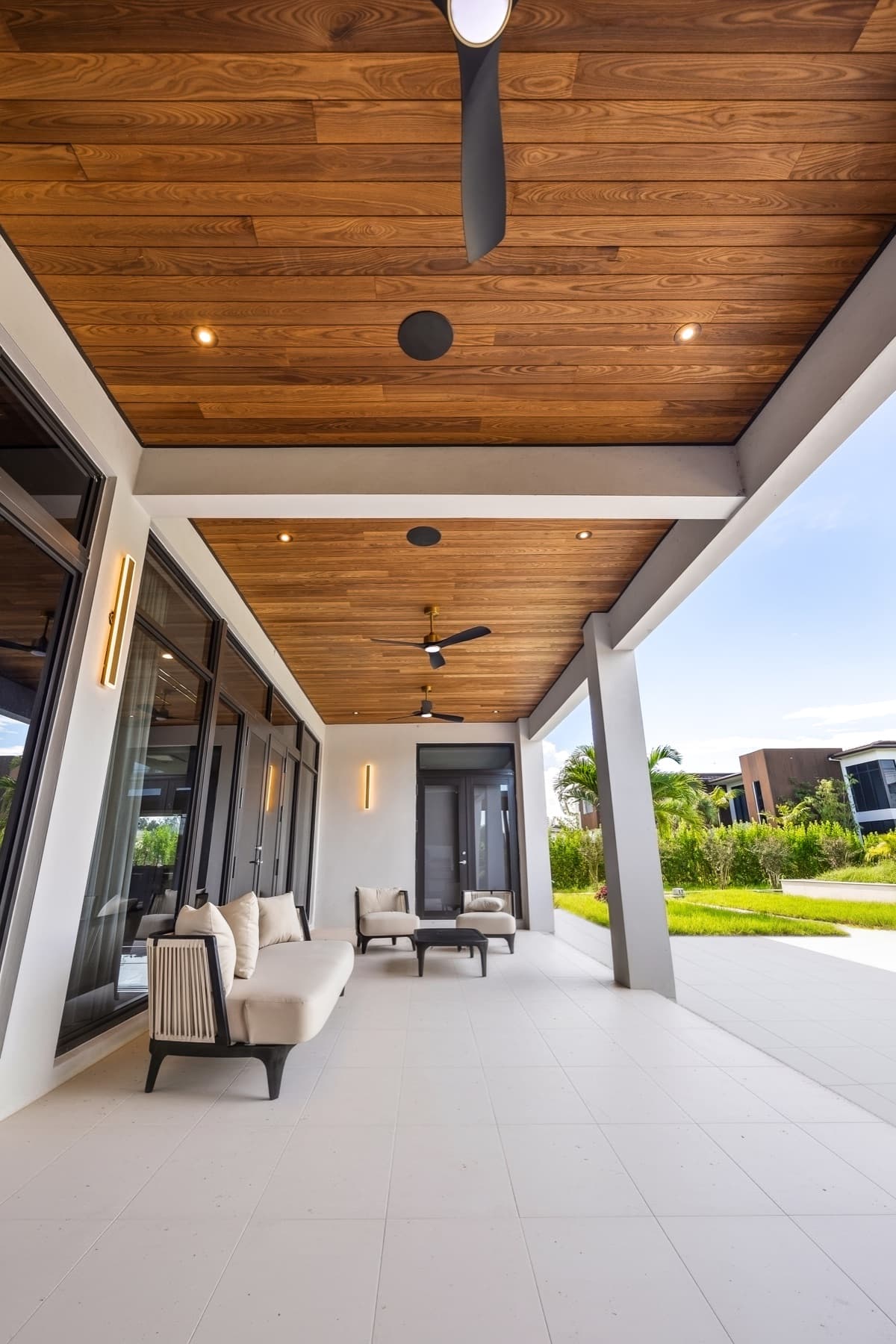
Considering the Harrisburg Climate for Porch Ceilings
Harrisburg's climate presents specific considerations for exterior materials. Summers can be warm and humid, while winters bring freezing temperatures and snow. These conditions mean that porch ceiling and soffit materials must be able to withstand significant seasonal changes without excessive warping, cracking, or deterioration. Materials with inherent stability and resistance to moisture are often preferred.
Good air circulation within the porch structure and proper roof ventilation are important. The porch ceiling itself, while protected by the roof, can still experience humidity and temperature swings. Selecting materials that are dimensionally stable under these conditions helps ensure a long-lasting and attractive finish.
Wood Options for Porch Ceilings and Soffits
Wood offers natural beauty and warmth, making it a popular choice for porch ceilings. Several types of wood are suitable, each with distinct characteristics.
Thermally Modified Wood: Scandinavian thermally modified wood, such as Ayous and Ash, is a process that enhances wood's durability and stability through heat treatment. This treatment makes the wood more resistant to moisture, decay, and insect activity, which is beneficial for outdoor applications like porch ceilings and soffits. The modification process also gives the wood a consistent, rich brown tone.
Brazilian Hardwoods: Species like Ipe, Cumaru, Garapa, Angelim, Jatoba, and Tigerwood are known for their natural density, strength, and resistance to decay and insects. These hardwoods offer a range of colors, from golden tones to deep browns, and can provide a luxurious, long-lasting finish. They are often chosen for their inherent durability and minimal need for chemical treatments.
Maximo Accoya: Accoya is acetylated wood, a modification process that alters the wood's cell structure to significantly improve its dimensional stability and durability. It resists rot and insects effectively, making it a high-performance option for exterior applications like porch ceilings. Maximo Accoya offers a clear, consistent grain suitable for various finishes.
Norx Composite: For those seeking a low-maintenance alternative with the appearance of wood, Norx composite materials are an option. These products are designed to resist fading, staining, and moisture, often requiring less upkeep than natural wood. Norx offers various profiles and colors, such as Oxford Gray, to complement different home styles.
Integrating Ventilation and Lighting
The porch ceiling often serves as the soffit for the main roof structure, making proper ventilation crucial for roof health. If your roof system relies on soffit vents for attic air intake, ensure that your chosen ceiling material and installation method do not obstruct this airflow. Some ceiling systems can incorporate vented panels or offer profiles that allow for discreet ventilation.
Lighting is another key element. Recessed lighting is a common choice for porch ceilings, providing ambient light without visual clutter. Plan the placement of light fixtures early in your design process to ensure adequate wiring and proper spacing between fixtures and ceiling joists. For a cohesive look, consider the finish of light trims to complement your ceiling material. Fans can also be integrated, especially in deeper porches, to improve air circulation during warmer months.
Porch Proportions and Material Scale
The scale of your porch ceiling material should be proportionate to the size of your porch and the overall architectural style of your home. For smaller porches, narrower boards might create a sense of spaciousness, while wider boards can make a larger porch feel grander. Consider the visual impact of the board width and profile (e.g., V-groove, tongue-and-groove) in relation to the height and depth of your porch.
A useful approach is to visualize the installed material. If possible, obtain samples of different board widths and profiles. Hold them up in the actual porch space to get a better sense of how they will look. This helps in understanding how the material's texture, color, and board lines will contribute to the finished aesthetic.
Worked Example: Selecting for a Traditional Harrisburg Porch
Imagine a Harrisburg home with a classic, welcoming front porch measuring 12 feet wide by 8 feet deep. The homeowner desires a natural wood look that is durable and relatively low maintenance, complementing the home's brick facade and white trim. The existing roof system requires continuous soffit ventilation.
Decision Process:
1. Material Choice: Given the desire for natural wood and durability in the Harrisburg climate, thermally modified Ayous or Ash is a strong candidate. Its enhanced stability and resistance to decay make it suitable for a semi-exposed porch. Alternatively, Maximo Accoya could be considered for its superior stability and paintability, allowing for a custom color if desired.
2. Profile and Finish: A 1x6 (nominal) tongue-and-groove board profile would offer a traditional appearance with clean lines. For thermally modified wood, a clear sealant or natural oil finish would protect the wood while allowing its inherent color and grain to show through. If Maximo Accoya is chosen, it could be painted a light color to brighten the porch, or finished with a clear coat.
3. Ventilation Integration: To maintain roof ventilation, the design would incorporate a perimeter ventilation strip or specify a material system that allows for continuous air intake, such as a vented soffit panel system that visually blends with the ceiling boards. This ensures that the porch ceiling does not block the attic's airflow.
4. Lighting: Recessed LED lights, spaced evenly, would provide ample illumination without disrupting the ceiling's clean lines. For a 12x8 foot porch, four to six recessed fixtures might be appropriate, depending on desired light levels. A ceiling fan could also be centered for air movement.
Before you order
- Verify local building codes and HOA requirements for exterior materials.
- Assess the existing roof ventilation system and ensure ceiling material choice supports it.
- Measure porch dimensions accurately for material quantity calculation.
- Consider the home's architectural style and choose a material and profile that complements it.
- Evaluate material durability and maintenance requirements against Harrisburg's climate.
- Plan for integrated lighting and fan placement, including wiring access.
- Obtain material samples to visualize appearance in the actual porch setting.
- Confirm the desired finish or coating, if any, and its compatibility with the chosen material.
Confirm installation details, approved uses and warranty terms in the current instructions for the exact product and profile. Your installer should verify the substrate, structure and applicable project requirements.
This is a planning guide for projects in Harrisburg, PA. Ask our team to confirm availability, delivery to your ZIP code and which branch can support your order.
Questions to help you decide
What is the best type of wood for a porch ceiling in Harrisburg, PA?
For porch ceilings in Harrisburg, durable and stable wood options are preferred. Thermally modified woods like Ayous or Ash, Brazilian hardwoods such as Ipe or Cumaru, and Maximo Accoya are excellent choices due to their enhanced resistance to moisture, decay, and dimensional changes. These materials are well-suited to handle the seasonal climate fluctuations.
How do I ensure proper ventilation with my porch ceiling?
If your porch ceiling also functions as a soffit for your roof, it's crucial to maintain proper attic ventilation. This often means ensuring that the ceiling material does not block existing soffit vents. You might need to integrate vented soffit panels, use a material system designed for ventilation, or consult with a contractor to confirm your roof's specific ventilation needs and how your ceiling choice will interact with them.
Can I paint or stain my porch ceiling material?
Many porch ceiling materials can be painted or stained, but compatibility varies by product. Thermally modified woods and Maximo Accoya generally accept finishes well. Brazilian hardwoods may require specific oils or sealants due to their density. Composite materials like Norx are often pre-finished and designed for minimal maintenance, so painting might not be necessary or recommended. Always check the manufacturer's recommendations for any finishes.
Ready to Plan Your Porch Ceiling Project?
For your Harrisburg porch project, request a material quote with your project dimensions, desired profile, and ZIP code. We can confirm current availability and service options for ceiling and soffit materials.
Request a material quote →