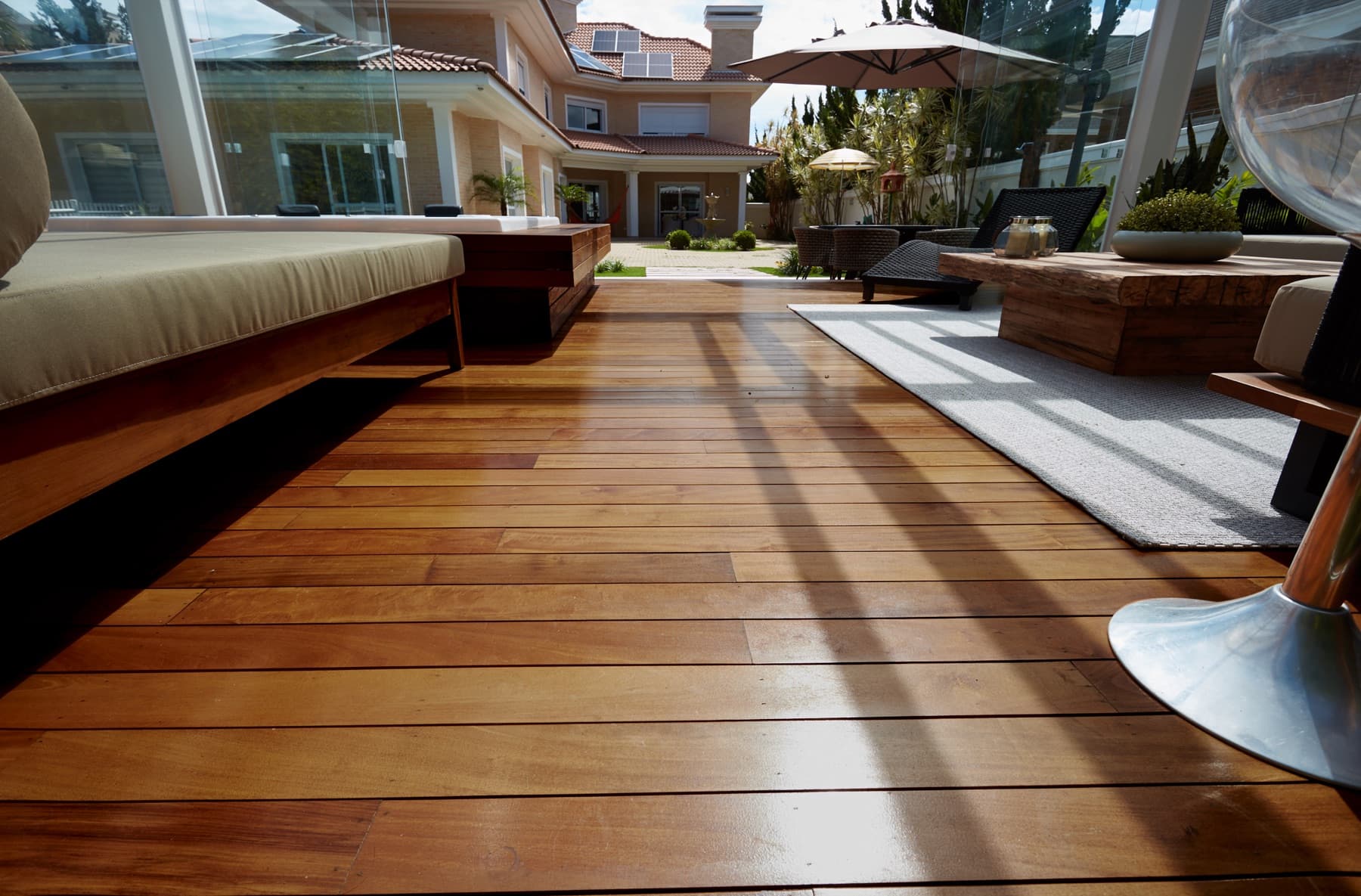
Evaluating Your Existing Deck Frame for Hardwood
Before selecting your hardwood decking, it is essential to determine if your existing deck frame can adequately support the new material. Hardwood species like Ipe and Cumaru are significantly denser and heavier than many common decking materials. This density contributes to their durability but also means the supporting structure must be sound.
Inspect all joists, beams, and support posts for signs of rot, insect damage, or structural fatigue. Look for any sagging, splitting, or excessive movement when walked upon. Ensure that all fasteners are secure and free of corrosion. The spacing of your existing joists is also critical; while many hardwoods can span standard joist spacing, denser species might benefit from tighter spacing to prevent movement or deflection over time. If the frame shows any compromise, repairs or reinforcements will be necessary before new decking is installed.
Considering Hardwood Species for Harrisburg Projects
Lumber Plus offers a selection of Brazilian hardwoods, each with distinct characteristics suitable for outdoor applications. For deck renovations in Harrisburg, Ipe and Cumaru are prominent choices due to their resilience.
Ipe, also known as Brazilian walnut, is a benchmark hardwood. Its color ranges from reddish-brown to olive-brown. Ipe is noted for its minimal movement post-installation and resistance to weather changes. This makes it a strong candidate for Harrisburg’s varied seasonal conditions, including winter exposure. (S1)
It is resistant to termites and weather changes and has an air dry density of 5.75 lbs/bf. Cumaru offers stiffness, strength, and extreme hardness, making it a dependable choice for demanding builds. It presents a color range that includes reds and browns. (S1)
Both Ipe and Cumaru can be left untreated to weather to a silvery-gray patina or can be regularly oiled to maintain their original color. This flexibility allows for different aesthetic outcomes depending on your preference and maintenance commitment.
Hardwood Decking Profiles and Dimensions
Hardwood decking is available in a variety of profiles and lengths, which can influence both the aesthetic and the installation process of your renovation. Common profiles include standard dimensional lumber, which can be face-fastened, and options designed for hidden fastener systems.
For Ipe, typical availability ranges from 1"x2" through 6"x6" dimensions, with lengths from 3 to 24 feet. (S1) Cumaru also comes in various profiles. When planning your renovation, consider how board width and length will impact the visual flow of your deck and minimize waste. Longer boards can reduce the number of visible seams, contributing to a cleaner appearance. However, shorter boards might be more manageable for DIY installations or smaller, intricate deck layouts. Always confirm current profiles and lengths with a Lumber Plus representative, as availability can vary.
Calculating Material Needs: A Hypothetical Example
Let's consider a hypothetical deck renovation project in Harrisburg where you plan to replace the decking surface of an existing 12-foot by 16-foot rectangular deck.
First, calculate the total square footage: 12 feet * 16 feet = 192 square feet. The actual coverage of a 1x6 board is 5.5 inches, or approximately 0.458 feet. To cover the 16-foot length, you would need 16 feet / 0.458 feet/board = approximately 34.9 boards in width.
For the 12-foot length, assuming you purchase boards in 12-foot lengths to minimize cuts, you would need 35 boards * 12 feet/board = 420 linear feet of Ipe. Add 10-15% for cuts, waste, and any potential future repairs. This would bring your total to approximately 462 to 483 linear feet. This translates to roughly 84 to 88 boards if purchasing 12-foot lengths.
Remember, this is a simplified example. Actual calculations should account for specific board lengths available, desired spacing between boards, and any complex deck shapes or patterns like picture-frame borders. Always over-order slightly to account for cutting errors, defects, or future repairs. It is recommended to provide your detailed project dimensions when requesting a quote for precise material estimation.
Maintenance Considerations for Hardwood Decking
Hardwood decking, especially Ipe and Cumaru, is known for its low maintenance requirements compared to many other decking materials. A simple wash once a year is generally sufficient to keep the deck clean. (S2)
If you prefer to maintain the rich, natural color of your hardwood deck, an annual application of a UV-blocking sealer or oil is recommended. Without this, the wood will naturally weather to a silvery-gray patina, a process that does not affect its structural integrity. (S1, S2) This choice allows you to select the appearance that best suits your home and lifestyle. Regular cleaning helps prevent the buildup of dirt, mildew, and other debris that can lead to staining or degradation over time.
Before you order
- Assess the condition of your existing deck frame: Check joists, beams, and posts for rot, insect damage, or structural weakness.
- Verify joist spacing: Ensure it can support the density and weight of hardwood decking.
- Choose your hardwood species: Consider Ipe for benchmark durability or Cumaru for a strong, resilient alternative.
- Decide on desired aesthetic: Will you maintain the natural color with oil or allow it to weather to a silvery-gray?
- Determine board profile and length: Plan for efficient material use and desired visual outcome.
- Calculate material quantity: Measure your deck area accurately and account for waste.
- Plan for ventilation: Ensure adequate airflow beneath the deck for longevity.
- Consider installation method: Face-fastening or hidden fasteners.
- Budget for materials and potential professional installation.
- Request a detailed quote with your specific project dimensions and preferred species.
Confirm installation details, approved uses and warranty terms in the current instructions for the exact product and profile. Your installer should verify the substrate, structure and applicable project requirements.
This is a planning guide for projects in Harrisburg, PA. Ask our team to confirm availability, delivery to your ZIP code and which branch can support your order.
Questions to help you decide
How long do hardwood decks last in Harrisburg's climate?
With proper care, hardwood decking like Ipe can last up to 75 years, and Cumaru over 25 years. Their natural density and resistance to rot, insects, and weather changes make them suitable for Harrisburg’s seasonal variations, including winter exposure. (S1, S2)
Does hardwood decking require special maintenance for winter weather?
Hardwood decking like Ipe and Cumaru is naturally resistant to weather changes, including winter conditions. A yearly wash is generally sufficient. If you want to maintain the original color, an annual application of a UV-blocking sealer is recommended. Otherwise, it will weather to a silvery-gray patina without structural compromise. (S1, S2)
Can I install hardwood decking over an existing deck frame myself?
While possible, installing dense hardwoods like Ipe and Cumaru requires specialized tools and techniques due to their hardness. Professional installation is often recommended to ensure proper fastening, spacing, and a durable finish. If you plan a DIY approach, ensure you have the correct tools and knowledge for working with dense hardwoods. (S1)
Ready to Transform Your Harrisburg Deck?
Request a material quote for your hardwood decking project. Provide your project dimensions, exact profile preference, and ZIP code to confirm current availability and service options.
Request a material quote →