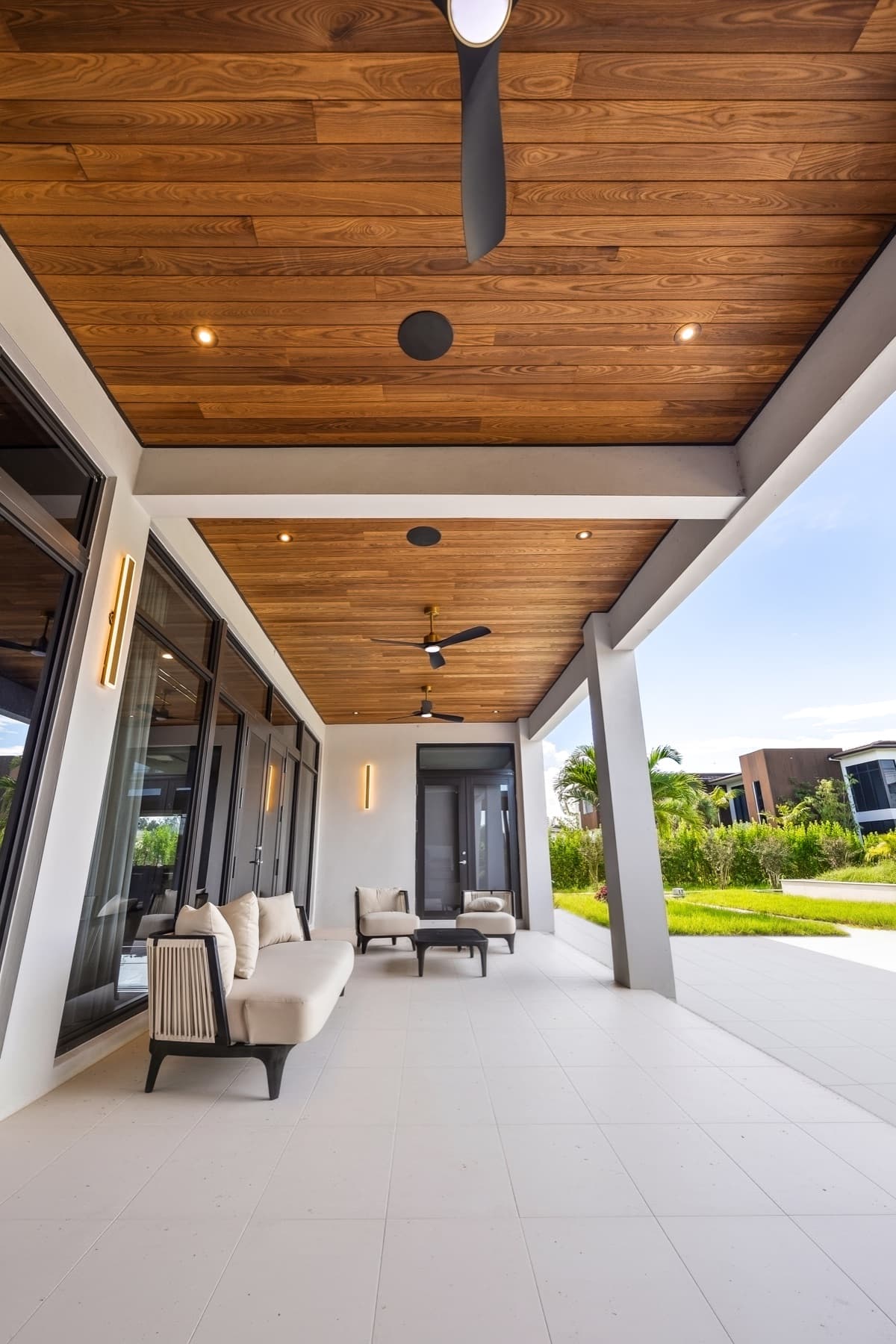
Understanding Porch Ceilings and Soffits
The porch ceiling is the visible underside of your porch roof, creating an outdoor 'room' feel. Soffits are the enclosed areas beneath the eaves, extending from the house wall to the fascia. Both play a role in protecting the underlying structure from weather, providing a finished look, and, critically, facilitating attic ventilation when designed correctly. For Austin homes, a well-designed porch ceiling and soffit system can help manage heat gain and maintain a comfortable outdoor space.
Consider how these elements interact with the overall architectural style of your home. A traditional home might benefit from classic beadboard or natural wood, while a modern residence could feature a cleaner, linear plank design. The material choice also influences maintenance requirements and long-term durability.
Material Options: Wood and Composite
Lumber Plus offers a range of materials suitable for porch ceilings and soffits, each with distinct advantages:
Thermally Modified Wood: Scandinavian thermally modified wood, such as Ayous or Ash, offers enhanced stability and resistance to environmental changes. This process makes the wood less prone to expansion, contraction, and decay, which is beneficial in Austin's humid climate. It provides a natural wood aesthetic that can be stained or left to weather naturally. Thermally modified Clear Radiata also offers a clean grain for contemporary applications. You can explore these options at /thermally-modified-wood/scandinavian.
Hardwoods: Brazilian hardwoods like Ipe, Cumaru, Garapa, Angelim, Jatoba, and Tigerwood are known for their density, durability, and natural beauty. These woods offer deep brown tones or golden hues that can brighten a space. While highly durable, they may require more specialized installation and finishing to maintain their appearance over time. See more at /ceiling-and-soffit.
Composite (NORX): NORX composite ceiling and soffit boards offer a low-maintenance alternative to natural wood. These materials are engineered for consistency and often come in pre-finished colors, such as Oxford Gray. They resist rot, insects, and warping, making them a practical choice for areas exposed to moisture and sun. This can be a good option for homeowners seeking a consistent look without the periodic refinishing associated with some wood products. Refer to /ceiling-and-soffit for more details.
Accoya: As an acetylated wood, Accoya offers exceptional dimensional stability and durability, distinct from thermally modified wood. It's a premium option for ceiling and soffit applications where longevity and performance are paramount. Its inherent stability makes it highly resistant to swelling and shrinking, which is a significant advantage in fluctuating temperatures and humidity. Discover Accoya at /brands/accoya.
Planning for Ventilation in Austin's Climate
Effective roof ventilation is critical in Austin, TX, to manage attic temperatures and moisture. Soffit materials play a direct role in this system. While porch ceilings primarily offer aesthetic and protective benefits for the porch itself, soffits are integral to the home's overall ventilation strategy. If your roof design relies on soffit vents for intake airflow, ensure that any new soffit material chosen allows for proper ventilation. This might involve using perforated soffit panels or integrating discrete vent systems.
Consult with a roofing professional or architect to ensure your chosen ceiling and soffit plan does not impede necessary attic airflow. Blocking soffit vents can lead to increased attic temperatures, higher cooling costs, and potential moisture issues, which are concerns in Austin's hot and humid summers.
Integrating Lighting and Fans
A porch ceiling is an ideal place to integrate lighting and ceiling fans, enhancing comfort and usability. When selecting materials, consider how easily they can accommodate recessed lights, surface-mounted fixtures, or fan mounts. For wood products, pre-planning wiring and blocking for fixtures is essential before installation. Composite materials may require specific cutting tools and methods to ensure clean edges around openings.
In Austin, where outdoor entertaining is common, adequate lighting can extend the usability of your porch into the evening. Ceiling fans are also highly recommended to provide air circulation, making your porch more comfortable during warm months. Ensure that any fixtures are rated for outdoor use and damp conditions.
Worked Example: Designing a 12'x8' Porch Ceiling
Let's consider a hypothetical 12-foot by 8-foot porch ceiling for an Austin home, aiming for a natural wood look with good stability. We'll choose thermally modified Ayous planks, which typically come in lengths up to 16 feet and widths around 5.5 inches (nominal, actual width may vary).
1. **Determine Area:** The porch ceiling area is 12 ft * 8 ft = 96 square feet.
2. **Choose Plank Orientation:** For a 12-foot length, running planks perpendicular to the 8-foot width would mean fewer cuts and a cleaner look, as most planks are available in sufficient length. This would require 8-foot long planks.
3. **Calculate Plank Count (Width):** If actual plank width is 5.125 inches (for a 5.5-inch nominal board), then 8 feet (96 inches) / 5.125 inches/plank = approximately 18.73 planks. Round up to 19 planks to ensure full coverage.
4. **Calculate Plank Count (Length):** We need 19 planks, each 12 feet long. So, 19 planks * 12 linear feet/plank = 228 linear feet.
5. **Account for Waste:** Always add a waste factor, typically 10-15%, for cuts, imperfections, and future repairs. For 228 linear feet, a 10% waste factor adds 22.8 linear feet, totaling approximately 251 linear feet.
6. **Order Quantity:** If planks are sold in 12-foot lengths, you would need to order 21 planks (251 linear feet / 12 linear feet/plank, rounded up).
This example assumes minimal complex cuts and a consistent plank width. For more intricate designs or specific plank sizes, a detailed cut plan is recommended. Consider also the framing beneath; proper blocking will be needed for any ceiling fans or heavy light fixtures.
Before you order
- What is the total square footage and linear footage of your porch ceiling and soffit areas?
- Do you prefer the natural aesthetic of wood (thermally modified, hardwood) or the low-maintenance benefits of composite?
- What is the existing or planned roof ventilation strategy? Will your chosen soffit material support it?
- What is the desired finish? Natural weathering, stained, or pre-finished color?
- Will you be integrating recessed lighting, surface-mounted fixtures, or ceiling fans?
- What is your budget for materials and installation?
- What are the local building codes or HOA requirements for exterior materials in your Austin neighborhood?
- How will the material respond to Austin's specific climate conditions (sun exposure, humidity, potential for heavy rain)?
- What is the planned support spacing for the ceiling and soffit materials, and does your chosen material conform to manufacturer specifications for that spacing?
Confirm installation details, approved uses and warranty terms in the current instructions for the exact product and profile. Your installer should verify the substrate, structure and applicable project requirements.
This is a planning guide for projects in Austin, TX. Ask our team to confirm availability, delivery to your ZIP code and which branch can support your order.
Questions to help you decide
How do Austin's climate conditions affect my choice of porch ceiling and soffit materials?
Austin's hot summers and high humidity mean materials must be dimensionally stable and resistant to moisture and UV degradation. Thermally modified wood and composite options are often preferred for their enhanced stability and durability in these conditions compared to untreated wood, which can be more prone to warping or rot without consistent maintenance.
Can I install a ceiling fan on any porch ceiling material?
Most porch ceiling materials can accommodate a ceiling fan, but proper structural blocking must be in place above the ceiling to support the fan's weight and absorb its vibration. This blocking should be installed during the framing phase. Always ensure your fan is rated for outdoor, damp locations.
What maintenance is required for wood porch ceilings in Austin?
The maintenance for wood porch ceilings depends on the type of wood and desired finish. Thermally modified wood and hardwoods, if left natural, will weather to a silver-gray patina and may require occasional cleaning. If you prefer to maintain the original wood color, periodic cleaning and reapplication of a UV-protective finish or stain will be necessary. Composite materials generally require less maintenance, typically just cleaning with soap and water.
Plan Your Austin Porch Ceiling and Soffit Project
Ready to select the right materials for your Austin, TX porch? Request a material quote with your project dimensions, exact profile preferences, and ZIP code. Confirm current availability and service options for your location.
Request a material quote →