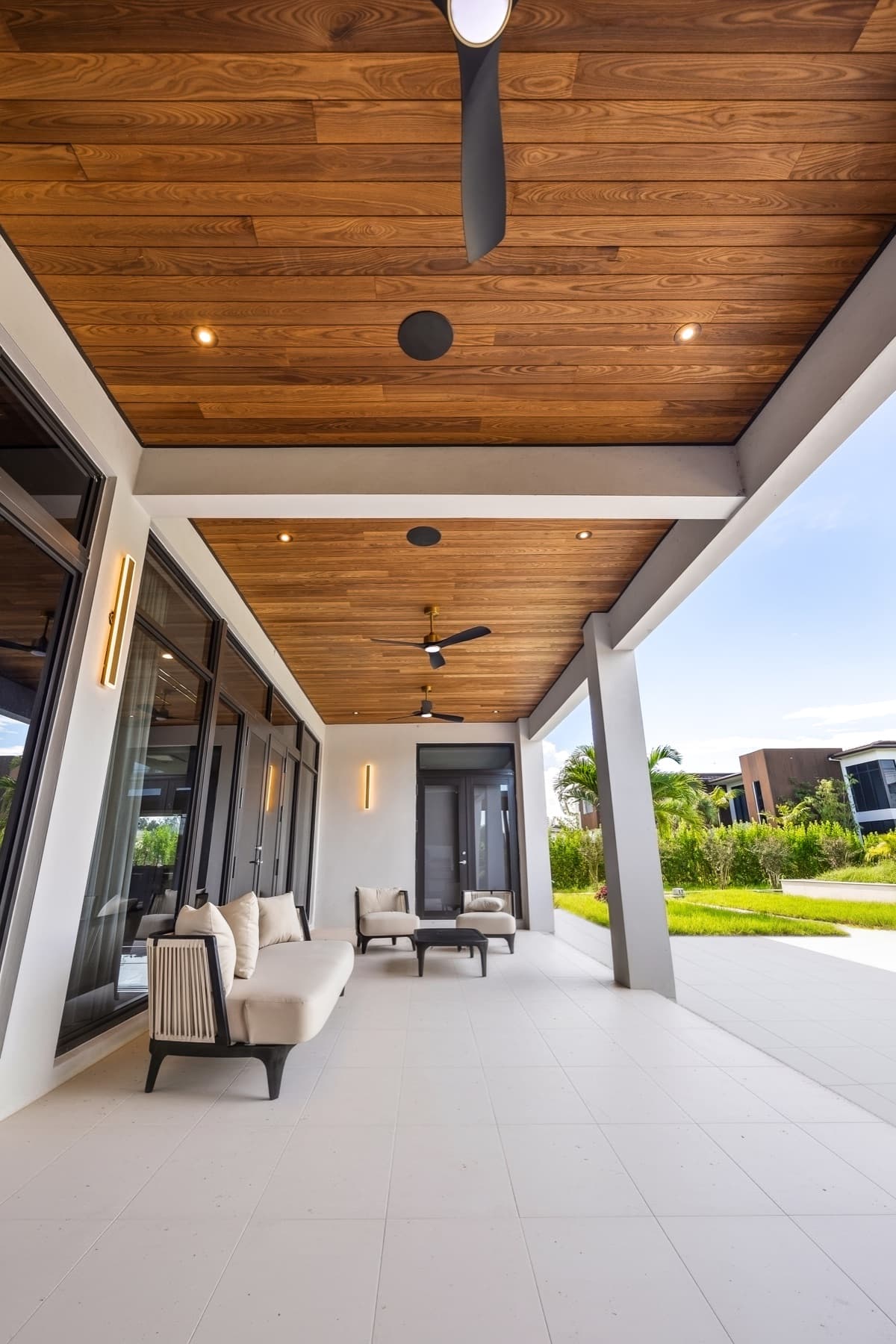
Understanding Light Finishes in Ceiling and Soffit Materials
Light finishes for ceiling and soffit materials encompass a range of tones, from pale woods to white or off-white composites. These finishes are chosen for their ability to reflect light, making covered areas feel more spacious and inviting. The perceived lightness can vary significantly based on the material's grain, texture, and the specific coating or treatment applied.
For wood products, a light finish often means a natural wood species that is inherently pale, or a clear coat that enhances its natural light color. Thermally modified woods, for example, can offer distinct light tones. Composite materials may provide a broader spectrum of light colors, including solid whites and grays, which can offer a consistent, uniform appearance.
Complementing Walls and Paving with a Light Ceiling
A light ceiling or soffit can create a visual connection or contrast with adjacent walls and paving. If your home features darker exterior walls or rich-toned paving, a light ceiling can provide a welcome break, preventing the space from feeling enclosed. Conversely, if your walls and paving are already light, a slightly contrasting light ceiling can add depth without sacrificing brightness.
Consider the overall color scheme of your home's exterior. A light wood tone, such as that found in certain thermally modified Ayous or Scandinavian wood species, can introduce warmth and natural texture. For a more modern or minimalist aesthetic, a light gray or white composite panel from collections like Norx can offer a clean, uniform look that complements contemporary siding and hardscaping. The goal is to achieve visual balance and harmony.
Light Wood Options: Scandinavian Thermally Modified Wood and Ayous
For projects aiming for a light, natural wood aesthetic, Scandinavian Thermally Modified Wood and Thermally Modified Ayous are notable options. Scandinavian thermally modified wood offers a Nordic character, presenting a light, consistent tone that can brighten porch ceilings and soffits. This material undergoes a modification process that enhances its stability and durability.
Thermally modified Ayous provides another light wood choice, known for its clean grain. This makes it suitable for contemporary ceiling and soffit applications where a smooth, uniform appearance is desired. Both options offer the natural beauty of wood with inherent light coloring, making them strong contenders for light-finished overhead surfaces. For further details, explore the Thermally Modified Wood collection.
It is important to note that while these woods are naturally light, their exact shade can vary due to natural wood characteristics and the thermal modification process. Always review samples to confirm the desired appearance.
Composite Alternatives: Light Tones from Norx
When a consistent, low-maintenance light finish is a priority, composite materials like those in the Norx collection offer practical solutions. Norx composite ceiling and soffit products come in various light shades, including options like Oxford Gray, which can provide a contemporary and uniform look.
These composite options are engineered for outdoor exposure, offering color stability and a consistent appearance that requires minimal upkeep. This can be particularly advantageous for soffits and porch ceilings where access for maintenance might be less frequent. When comparing wood and composite, consider the balance between natural variation and engineered consistency, as well as long-term maintenance preferences.
Worked Example: Selecting a Light Porch Ceiling
Consider a hypothetical covered front porch measuring 12 feet wide by 8 feet deep, with existing light gray siding and dark gray paving stones. The homeowner wants to brighten the space and create a welcoming entry.
Option 1: Scandinavian Thermally Modified Wood. This material offers a light, natural wood tone (approximately 6 inches wide per board). To cover 96 square feet, assuming minimal waste and standard 12-foot lengths, approximately 192 linear feet of material would be needed. This introduces warmth and a subtle natural grain that complements the cool gray tones of the siding and paving without clashing.
Option 2: Norx Oxford Gray composite panels (approximately 6 inches wide per board). This option provides a uniform, light gray finish that harmonizes with the existing siding. For the same 96 square feet, 192 linear feet would be required. This creates a clean, modern aesthetic with consistent color and reduced maintenance.
The choice between these two options depends on the desired aesthetic: natural warmth and variation with wood, or uniform, low-maintenance consistency with composite. Both effectively achieve a light, bright overhead surface for the porch.
Before you order
- What is the existing color palette of your home's exterior (siding, trim, paving)?
- Do you prefer the natural variation of wood or the consistent appearance of composite materials for a light finish?
- How much natural light does the covered area receive? A lighter finish will reflect more light.
- What level of maintenance are you comfortable with for the ceiling/soffit material?
- Do you want the ceiling to blend with or subtly contrast with adjacent surfaces?
- Have you reviewed physical samples of your preferred light finish options under different lighting conditions?
- What is your project budget for materials and installation?
Confirm installation details, approved uses and warranty terms in the current instructions for the exact product and profile. Your installer should verify the substrate, structure and applicable project requirements.
Questions to help you decide
Can light ceiling materials make a small porch feel larger?
Yes, light finishes reflect more natural light, which can create an illusion of greater space and openness, making a small porch or covered area feel less confined and more inviting.
Do light wood finishes require more maintenance than darker ones?
The maintenance requirements for wood finishes are generally more related to the type of finish (e.g., clear coat, stain, paint) and the wood species itself, rather than solely its lightness. Natural wood finishes may require periodic reapplication of protective coatings to maintain their appearance. Composite materials, regardless of color, typically offer lower maintenance.
Are all light wood ceiling materials equally durable?
Durability varies significantly by wood species and any modification processes. Thermally modified woods, for example, are engineered for enhanced stability and resistance to environmental factors, making them suitable for exterior ceiling and soffit applications. Always refer to product specifications for detailed durability information for specific materials.
Ready to Brighten Your Outdoor Space?
Request a material quote with your project dimensions, exact profile, and ZIP code to confirm current availability and service options for light ceiling and soffit materials. Explore our selection of <a href="/ceiling-and-soffit">Ceiling & Soffit materials</a>, including <a href="/thermally-modified-wood">Thermally Modified Wood</a> and <a href="/brands/versatex">Versatex</a> options.
Request a material quote →