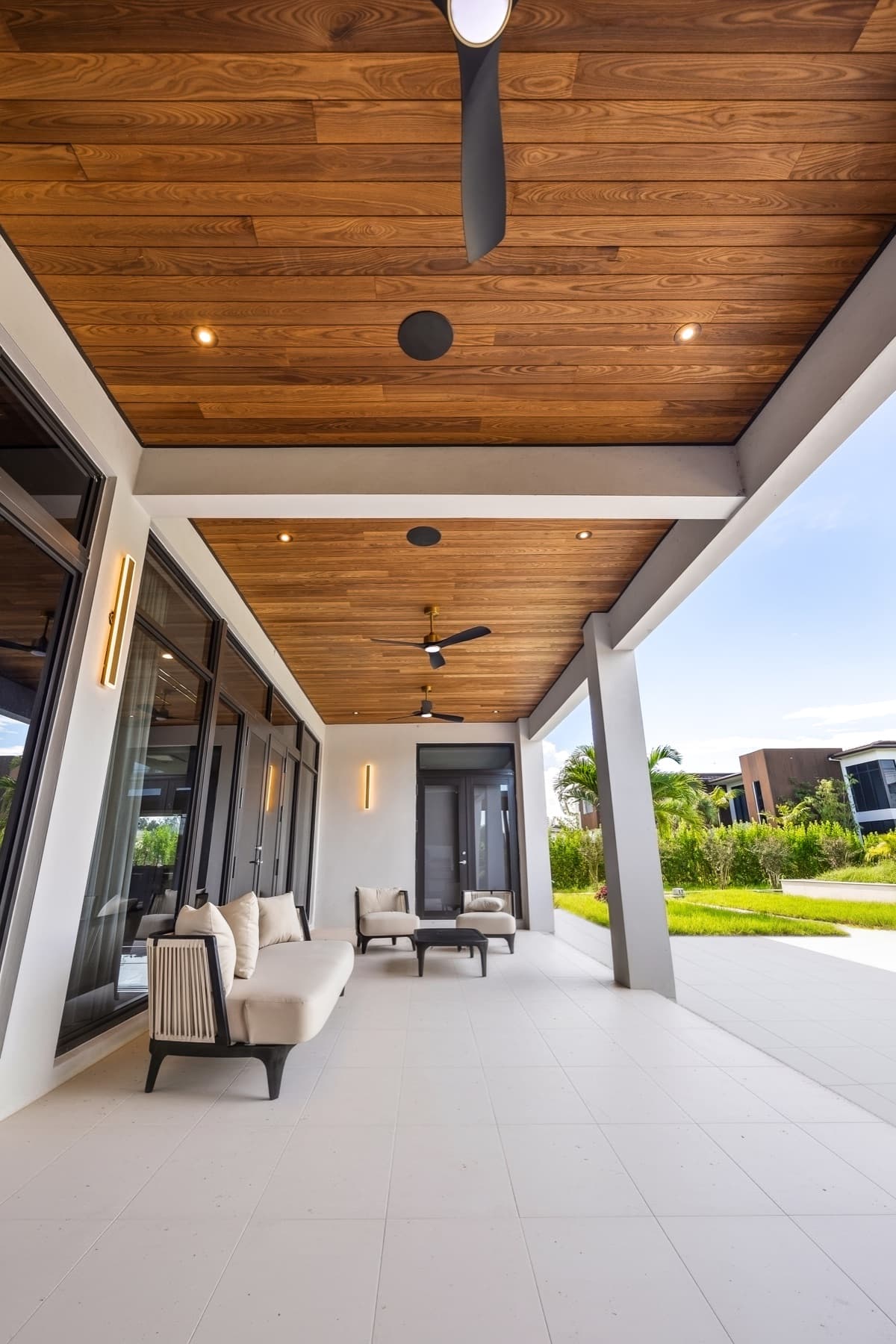
Factory Finishes vs. Site-Applied Coatings
A key distinction in ceiling and soffit materials is whether they arrive with a factory finish or are intended for site-applied coatings. Factory finishes are typically applied in controlled environments, which can result in a consistent, durable surface. These often include stains, sealers, or paints that are cured under optimal conditions.
Site-applied coatings, on the other hand, offer flexibility in color and finish selection after installation. However, their application is subject to ambient conditions, which can affect drying times and overall finish quality. Proper preparation of the substrate is crucial for site-applied coatings to adhere correctly and perform as expected.
Some materials, like certain thermally modified woods, may be suitable for either option, while others, such as specific composite panels, might come pre-finished and not recommend additional coatings.
Thermally Modified Wood: Natural Beauty or Custom Coatings
Thermally modified wood, such as Scandinavian thermally modified wood or thermally modified Ash, undergoes a heat treatment process that enhances its stability and durability. This process can also impart a distinct, rich color to the wood, often a deep brown or amber tone. Many choose to leave thermally modified wood unfinished to showcase its natural appearance, which will gradually weather to a silver-gray patina over time when exposed to UV light and moisture.
If a specific color or enhanced protection is desired, thermally modified wood can be coated on-site. It's important to select coatings formulated for exterior wood applications that allow the wood to breathe and accommodate its natural movement. Water-based stains and sealers are often suitable, but always consult the coating manufacturer's recommendations for compatibility with thermally modified substrates. Avoid film-forming finishes that can trap moisture, especially in exterior applications.
For example, thermally modified Ayous ceilings are often admired for their light, consistent grain and can be left natural or finished with a clear protective coating to maintain their initial color.
Hardwood Options: Protecting and Enhancing Grain
Brazilian hardwoods like Ipe, Cumaru, Garapa, Angelim, and Jatoba offer exceptional density and natural resistance, making them popular choices for exterior soffits and interior ceilings. These woods often feature rich, varied grain patterns and colors, from golden hues to deep reds and browns. Many homeowners and builders prefer to highlight these natural characteristics.
Similar to thermally modified wood, hardwoods can be left unfinished, allowing them to age gracefully to a silver patina. However, applying a suitable finish can help preserve their original color and provide additional protection against environmental factors. Oil-based finishes are frequently recommended for hardwoods, as they penetrate the wood fibers, enhancing the natural color and offering UV protection without creating a thick surface film.
When selecting a coating for hardwoods, ensure it is compatible with dense, oily wood species. Some hardwoods may require a period of weathering before certain coatings can be effectively applied. Always perform a patch test in an inconspicuous area to confirm adhesion and appearance.
Composite Ceiling and Soffit Materials: Pre-Finished Convenience
Composite ceiling and soffit materials, such as those from the Norx collection, often come with a factory-applied finish. These materials are engineered for consistency and low maintenance, with finishes designed to withstand weathering and retain their color over time. The factory finish is an integral part of the product, providing a uniform appearance and eliminating the need for immediate site-applied coatings.
Generally, composite materials are not intended to be painted or stained after installation. Applying additional coatings to a pre-finished composite can void warranties, lead to poor adhesion, or result in an undesirable aesthetic. If a specific color or finish is required, it is best to select a composite product that offers that option directly from the manufacturer.
For example, Norx composite ceiling and soffit products in shades like Oxford Gray are designed to offer a consistent, pre-finished look directly out of the box, reducing project time and labor for finishing.
Worked Example: Selecting a Finish for a Covered Porch Ceiling
Consider a homeowner planning a 10-foot by 20-foot covered porch ceiling. They are evaluating two options: thermally modified Ash and a Norx composite panel.
**Option 1: Thermally Modified Ash**
The homeowner appreciates the natural, clean grain of thermally modified Ash. They want to preserve its initial warm brown tone as much as possible, rather than letting it weather to gray, and desire a low-sheen finish. After consulting with a material supplier, they decide on a UV-inhibiting, clear, water-based penetrating oil specifically recommended for thermally modified wood.
This choice allows the wood's natural character to show through while offering protection against UV degradation and moisture. The coating will need to be reapplied periodically, typically every 2-3 years, depending on exposure. The total area is 200 sq ft.
**Option 2: Norx Composite Panel**
The homeowner also considers a Norx composite panel in a pre-finished Oxford Gray. This option appeals due to its consistent color, minimal maintenance requirements, and the fact that it does not require any additional finishing work on-site. The factory finish is designed for long-term color stability.
In this case, no additional coatings are needed or recommended. The decision simplifies installation, as there's no drying time or curing process for a site-applied finish. The homeowner would simply order the required quantity of pre-finished panels.
This example illustrates that the choice of material directly dictates the finishing strategy, from product selection to ongoing maintenance.
Before you order
- Identify the material type (thermally modified wood, hardwood, composite).
- Determine if a factory-applied finish is present or desired.
- If applying a site coating, check the coating manufacturer's compatibility with the substrate.
- Consider the desired aesthetic: natural weathering, color preservation, or specific color.
- Evaluate the long-term maintenance implications of the chosen finish.
- For exterior applications, ensure the finish offers UV protection and moisture resistance.
- Perform a small test patch if unsure about site-applied coating performance.
- Confirm that any site-applied coating will not void the material's warranty.
Confirm installation details, approved uses and warranty terms in the current instructions for the exact product and profile. Your installer should verify the substrate, structure and applicable project requirements.
Questions to help you decide
Can I paint over pre-finished composite ceiling and soffit panels?
Generally, it is not recommended to paint over pre-finished composite ceiling and soffit panels. These materials come with a factory-applied finish that is engineered for durability and color retention. Applying additional paint may lead to poor adhesion, peeling, or an uneven finish, and could potentially void the manufacturer's warranty. If a specific color is desired, it's best to choose a composite product that offers that color directly from the factory.
What kind of finish should I use for thermally modified wood in an exterior soffit application?
For exterior thermally modified wood soffits, you have options. If you prefer the wood to naturally weather to a silver-gray patina, you can leave it unfinished. If you wish to maintain its original warm brown tones, consider a UV-inhibiting, clear, water-based penetrating oil or stain specifically formulated for exterior wood. Avoid thick, film-forming finishes that can trap moisture. Always consult the coating manufacturer's instructions for application and reapplication schedules.
Do I need to apply a finish to Brazilian hardwoods like Ipe or Cumaru for a porch ceiling?
Brazilian hardwoods like Ipe and Cumaru are naturally dense and durable. For a porch ceiling, you can choose to leave them unfinished, and they will gradually weather to a soft silver-gray patina over time. If you prefer to preserve their rich, natural color, applying an oil-based finish formulated for dense hardwoods can help. These oils penetrate the wood, enhancing its color and providing some UV protection. Regular reapplication will be necessary to maintain the desired look.
Ready to Plan Your Ceiling or Soffit Project?
Request a material quote with your project dimensions, exact profile, and ZIP code to confirm current availability and service options for our ceiling and soffit materials.
Request a material quote →