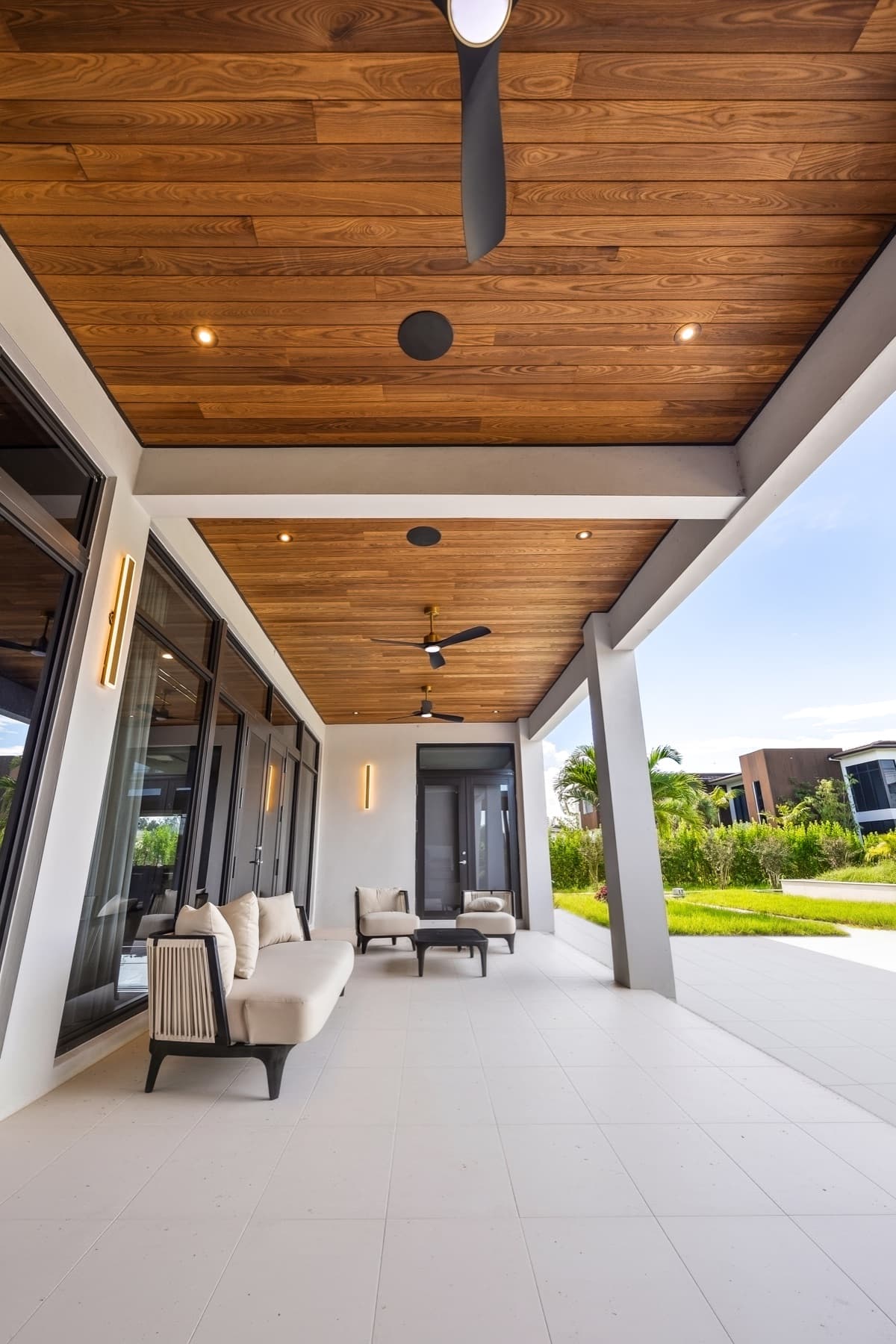
Understanding Your Ceiling and Soffit Material
The type of material you choose for your ceiling or soffit significantly influences fastener selection. Different wood species and composite materials have varying densities, moisture movement characteristics, and surface finishes that dictate suitable fastener types and installation techniques. For instance, a dense Brazilian hardwood will require different fastening considerations than a lighter, thermally modified wood.
Thermally modified wood, such as Ayous or Ash, is known for its stability and reduced moisture movement compared to untreated wood. This can allow for different fastening approaches, potentially reducing the need for oversized fasteners to accommodate swelling and shrinkage. Maximo Accoya, an acetylated wood, also offers enhanced stability. Composite materials like those in the Norx collection may have specific manufacturer recommendations for fastening to maintain warranty and performance.
Identifying the Substrate: What Are You Fastening To?
Before selecting fasteners, accurately identify the substrate or framing material that will support your ceiling or soffit. Common substrates include wood framing (joists, rafters, blocking), metal studs, or existing sheathing. The fastener must be long enough to penetrate the ceiling or soffit material and achieve adequate embedment into the structural substrate.
For wood framing, screws or nails are typical. If fastening into metal studs, self-tapping screws designed for metal are necessary. Ensure the substrate is sound, level, and provides sufficient bearing surface for the chosen material. The fastener's grip in the substrate is paramount for a secure overhead installation.
Visible vs. Concealed Fastening Methods
The aesthetic you desire for your ceiling or soffit will guide whether you opt for visible or concealed fasteners. Visible fastening, where fasteners are driven through the face of the board, offers a robust hold and can be a design choice, especially when using matching or contrasting fastener heads.
Concealed fastening methods create a clean, uninterrupted surface. This often involves tongue-and-groove profiles where fasteners are driven through the tongue at an angle, hidden by the adjacent board. Some systems may use clips or specialized hidden fastening devices. While aesthetically pleasing, concealed systems often require precise installation and may have specific material compatibility requirements. Always confirm the compatibility of concealed fasteners with your chosen ceiling or soffit profile.
Material Compatibility and Corrosion Resistance
Fastener material must be compatible with the ceiling or soffit material and the environmental conditions. For outdoor applications like porches or eaves, corrosion-resistant fasteners are essential to prevent staining of the wood and maintain structural integrity.
Even for interior ceilings, if there's any risk of moisture or humidity, corrosion-resistant fasteners can prevent unsightly streaks or rust marks. Certain wood species, particularly some hardwoods, can react with incompatible metals, leading to discoloration. Always check manufacturer recommendations for specific material pairings.
Worked Example: Fastening a Thermally Modified Ayous Porch Ceiling
Let's consider a hypothetical 10-foot by 12-foot porch ceiling using 1x6 (nominal) thermally modified Ayous tongue-and-groove boards. The goal is a clean, concealed fastener appearance.
1. **Material:** Thermally Modified Ayous, 1x6 tongue-and-groove (actual dimensions approximately 3/4 inch thick by 5-1/8 inches wide, covering 5 inches per board).
3. **Fastening Method:** Concealed fastening through the tongue.
Stainless steel offers excellent corrosion resistance for long-term outdoor performance.
The first and last boards, and any rip cuts at the perimeter, might require face-nailing or screwing, with the fasteners carefully countersunk and filled for a consistent finish.
6. **Quantity Calculation:** A 10-foot width requires 10 feet * 12 inches/foot / 5 inches/board = 24 boards. Each board is 12 feet long.
Before you order
- Identify your ceiling or soffit material (species, composite, profile).
- Determine the structural substrate (wood joists, metal studs, sheathing).
- Choose between visible or concealed fastening for your desired aesthetic.
- Verify fastener material compatibility with your ceiling/soffit material and environmental exposure (e.g., stainless steel for outdoors).
- Confirm fastener length provides adequate embedment into the substrate.
- Review manufacturer's specific fastening recommendations for your chosen material.
- Plan for perimeter and end board fastening, which may differ from field fastening.
- Calculate the approximate quantity of fasteners needed, adding a buffer for waste.
Confirm installation details, approved uses and warranty terms in the current instructions for the exact product and profile. Your installer should verify the substrate, structure and applicable project requirements.
Questions to help you decide
Can I use standard nails for an outdoor soffit?
For outdoor soffits, standard steel nails are generally not recommended due to their susceptibility to rust and corrosion. Rust can lead to unsightly stains on the wood and compromise the structural integrity of the fastening over time. Always opt for corrosion-resistant fasteners, such as stainless steel or high-quality galvanized nails or screws, especially in areas exposed to moisture or humidity, like covered porches and eaves.
What is the benefit of using screws over nails for ceiling and soffit materials?
Screws generally provide a stronger, more secure hold than nails, especially in overhead applications where gravity is a constant force. They resist withdrawal better and can help prevent boards from sagging or pulling away over time. Screws also allow for easier removal if a board needs to be replaced or adjusted. However, nails can be faster to install with a nail gun, which might be a consideration for large projects, provided they are appropriate for the material and substrate.
How do I ensure hidden fasteners actually remain hidden?
To ensure hidden fasteners remain concealed, it's crucial to use the correct profile of ceiling or soffit material (typically tongue-and-groove) and the appropriate fastening tool. For tongue-and-groove boards, fasteners are driven at an angle through the tongue, so the groove of the next board covers them. This requires precise angling and depth setting, often achieved with a specialized flooring nailer or screw gun attachment. Always ensure the fastener head is fully embedded and not interfering with the fit of the next board.
Request a Material Quote for Your Ceiling or Soffit Project
Ready to select your ceiling and soffit materials? Provide your project dimensions, desired profile, and ZIP code to request a material quote. We can help confirm current availability and service options for all your project needs. Visit our product pages for: Ceiling and Soffit Materials, Versatex, and Thermally Modified Wood.
Request a material quote →