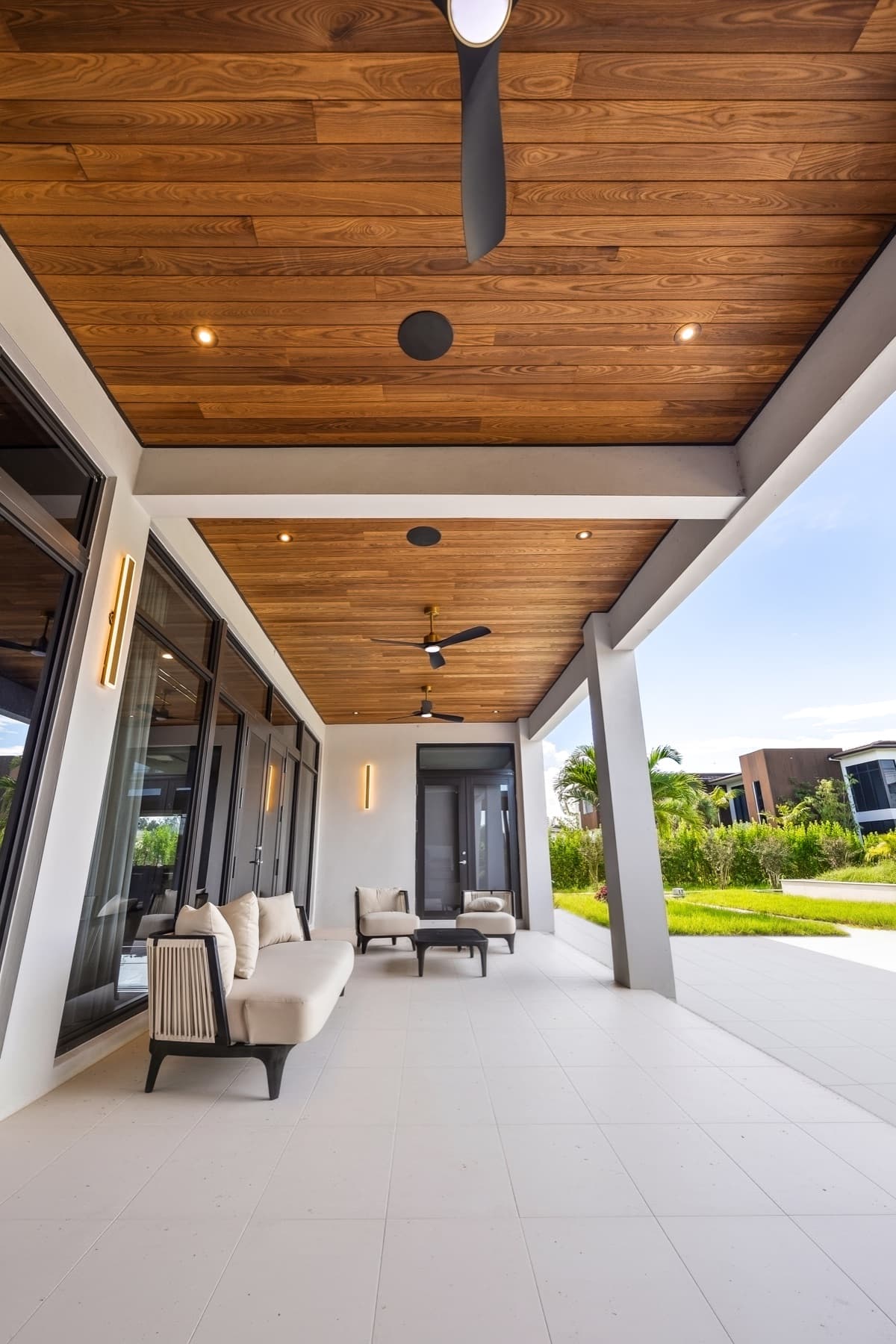
Understanding Your Material Order for Logistics
The first step in planning logistics is to thoroughly understand the materials you've ordered. Ceiling and soffit boards come in various species and profiles, each with specific handling and storage considerations. For example, thermally modified wood, like Scandinavian thermally modified wood, is stable but should still be protected from direct moisture and sunlight before installation to maintain its appearance. Brazilian hardwoods such as Ipe or Cumaru are dense and heavy, requiring more robust handling equipment or additional personnel for unloading.
Consider the dimensions and weight of your specific order. Long boards, common for soffit applications to minimize seams, require ample space for maneuvering. Heavier materials might necessitate a forklift or a larger crew for safe unloading. Knowing these details upfront allows you to prepare the right equipment and manpower.
Composite options, such as Norx composite ceiling and soffit, often come in standardized lengths and can be lighter than some solid wood options, but still require careful stacking to prevent bowing or damage to edges.
Planning for Delivery: Site Access and Unloading
Effective delivery planning starts with assessing your jobsite's accessibility. Can a large delivery truck safely navigate to your property? Are there any low-hanging wires, narrow driveways, or tight turns that could impede access? Communicate these details to your supplier in advance. Sometimes, an alternative drop-off point or a smaller delivery vehicle might be necessary.
Designate a clear, level area for unloading. This area should be free of debris, mud, or other obstructions. If a forklift is required, ensure the ground is firm enough to support its weight and that there's sufficient clear space for the equipment to operate safely. For manual unloading, ensure enough personnel are available to move bundles efficiently and safely.
Be prepared for the delivery date. While suppliers provide estimated delivery windows, it's wise to have your site ready for the earliest possible arrival. Confirm who will be on site to receive and sign for the delivery, and ensure they are aware of the material quantities and profiles to verify the order against the packing slip.
On-Site Storage Best Practices
Once delivered, proper storage is paramount to protect your investment. Materials should be stored in a dry, well-ventilated area, preferably indoors or under a sturdy, waterproof covering. Direct exposure to rain, snow, or prolonged sunlight can affect wood products, leading to warping, discoloration, or other damage.
Elevate materials off the ground using dunnage or blocking to prevent moisture absorption and improve air circulation. This is particularly important for wood products like Maximo Accoya or thermally modified Ash, which benefit from stable conditions. Stack bundles flat and evenly to prevent bowing or twisting of individual boards. For longer lengths, ensure supports are spaced adequately to prevent sagging.
Protect materials from construction traffic and other trades. Consider fencing off the storage area or clearly marking it as a material staging zone. This minimizes the risk of accidental damage from tools, equipment, or other workers. If storing outdoors for any period, use opaque tarps that allow for some air circulation while blocking UV rays and moisture.
Jobsite Staging for Efficiency
Staging refers to organizing materials on the jobsite in a way that optimizes workflow and minimizes handling. Ideally, materials should be stored as close as possible to their point of installation without obstructing other work or pathways. For ceiling and soffit projects, this might mean stacking bundles near the area where the boards will be installed, perhaps on a ground-level deck for a porch ceiling or in a protected area under the eaves for soffit work.
Consider the sequence of installation. If different profiles or lengths are being used in distinct areas, stage them separately and clearly label them. This prevents confusion and reduces the time spent searching for the right piece. For example, if you have both solid boards and vented soffit panels, keep them distinctly organized.
Maintain a clean and organized staging area throughout the project. This not only improves efficiency but also enhances safety, reducing trip hazards and making it easier to locate tools and materials.
Worked Example: Porch Ceiling Material Staging
Let's consider a hypothetical project: installing a new porch ceiling using 1x6 (nominal) thermally modified Ayous boards on a 10-foot by 20-foot porch. The boards are supplied in random lengths up to 16 feet.
1. **Delivery Access:** The property has a paved driveway leading directly to the front of the house. The porch is elevated approximately 3 feet from the ground. A standard flatbed truck can access the driveway.
2. **Unloading:** Due to the random lengths and the weight of the bundles (Ayous is lighter than some hardwoods, but still substantial in bulk), a crew of two to three people will be needed for manual unloading. The designated unloading zone is a clear, level area on the driveway, just in front of the porch.
3. **Storage:** The most suitable storage location is under the existing covered patio adjacent to the porch, which offers protection from sun and rain. Dunnage (2x4 scraps) will be laid on the patio surface, spaced every 3-4 feet, to elevate the bundles. The bundles will be stacked flat, ensuring even support along their length. An additional tarp, secured loosely, will provide extra protection from incidental splashes or dust.
4. **Staging for Installation:** As installation progresses, individual bundles will be moved from the main storage area to the porch itself. A temporary workbench will be set up on the porch, allowing for cutting and fitting close to the installation point, minimizing trips and material handling. Shorter offcuts, if reusable, will be stacked neatly nearby for later use in smaller sections or returns.
Before you order
- Confirm delivery vehicle size compatibility with jobsite access.
- Designate a clear, level unloading zone free of obstructions.
- Ensure adequate personnel or equipment for safe unloading.
- Identify a dry, well-ventilated storage area, preferably indoors or fully covered.
- Plan to elevate materials off the ground using dunnage.
- Confirm materials will be stacked flat and evenly to prevent warping.
- Protect stored materials from direct sunlight, moisture, and construction traffic.
- Strategically stage materials near the installation area to optimize workflow.
- Communicate all site access constraints to your supplier in advance.
- Verify receipt of materials against the packing slip upon delivery.
Confirm installation details, approved uses and warranty terms in the current instructions for the exact product and profile. Your installer should verify the substrate, structure and applicable project requirements.
Questions to help you decide
How far in advance should I plan for delivery and storage?
It's best to start planning delivery and storage logistics as soon as you place your order, or even during the quoting process. This allows you to communicate any site-specific challenges to your supplier and ensure all necessary preparations are made before the materials arrive. Confirming arrangements a week or two before the estimated delivery date is a good practice.
What if my jobsite has limited space for storage?
If space is a constraint, prioritize protecting the materials that will be installed first. You might need to arrange for staggered deliveries if possible, or seek a temporary off-site storage solution. For very tight sites, consider using vertical storage racks if materials can be safely secured, or plan for more frequent, smaller deliveries to minimize on-site footprint. Always ensure materials are protected from the elements and potential damage.
Can I leave materials uncovered if rain is not expected?
Even without expected rain, it's generally advisable to keep ceiling and soffit materials covered. Direct sunlight can cause discoloration or uneven drying, especially for wood products like thermally modified wood or hardwoods. Dust, debris, and condensation can also affect uncovered materials. A breathable, opaque tarp offers protection from various elements without trapping excessive moisture.
Ready to Plan Your Ceiling and Soffit Project?
Request a material quote with your project dimensions, exact profile, and ZIP code to confirm current availability and service options for your area. We're here to help you get started.
Request a material quote →