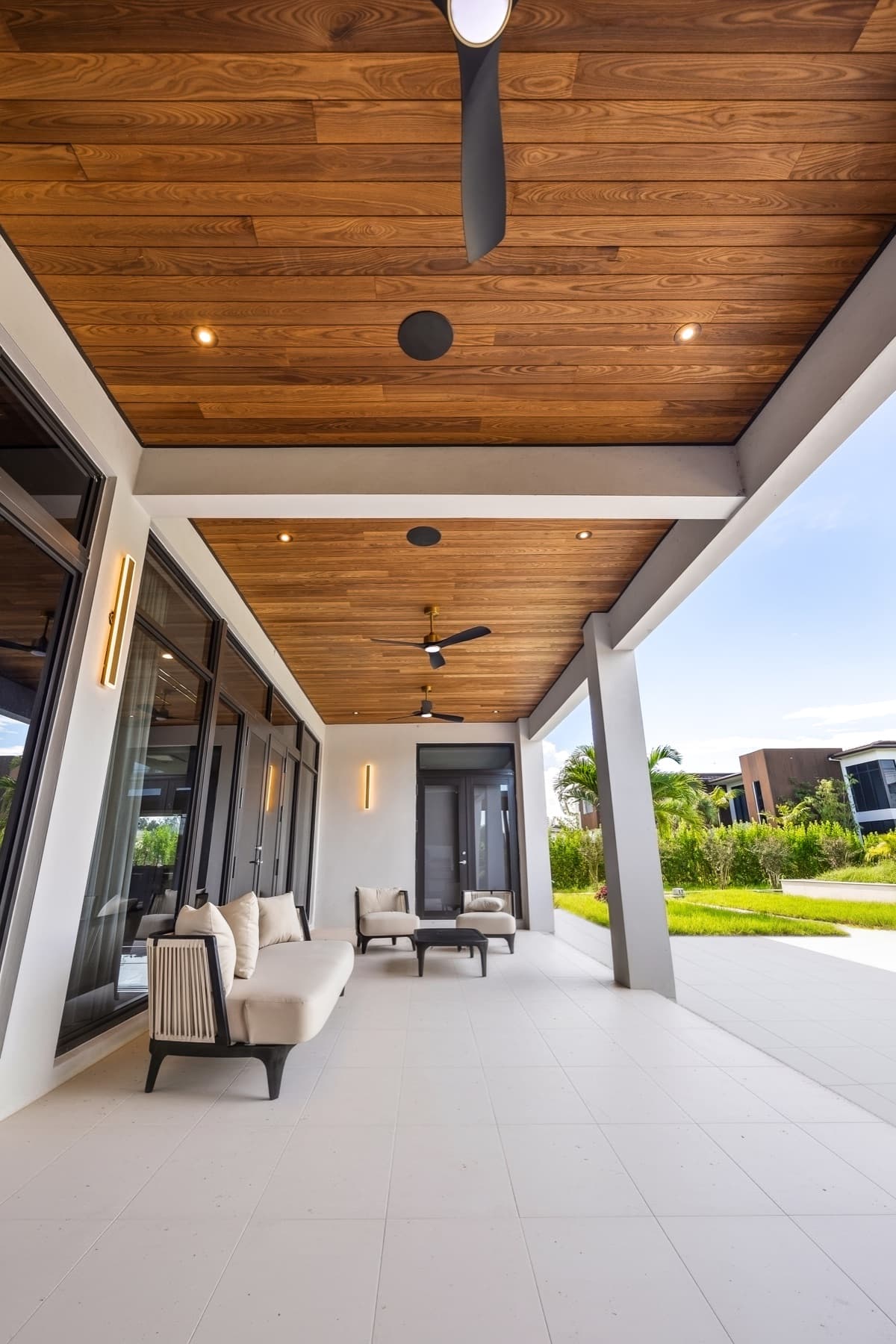
Understanding the Visual Impact of Dark Finishes
Dark finishes on ceilings and soffits can achieve several distinct visual effects. They can make a tall space feel more intimate and cozy, or conversely, create a strong contrast against lighter walls and trim, highlighting architectural features. In outdoor settings, a dark soffit can visually recede, drawing attention to the structure of the home or the landscaping.
However, dark colors absorb more light. This means the overall illumination of the space will be affected, requiring careful planning for artificial lighting. It is crucial to consider how natural light interacts with the chosen dark finish throughout the day, as its appearance can shift dramatically from bright morning sun to evening shadows.
Material Options for Dark Ceilings and Soffits
Several material types are suitable for achieving a dark finish on ceilings and soffits, each offering unique characteristics.
Thermally modified wood, such as Scandinavian thermally modified wood or thermally modified Ash, can be a candidate for dark applications. These woods undergo a high-heat treatment process that enhances their stability and can deepen their natural color. While not inherently black, some thermally modified woods can be stained or finished to achieve a dark brown or charcoal tone, maintaining the natural wood grain. For example, thermally modified Ayous offers a clean grain that can be stained to a deep hue. (S1)
Brazilian hardwoods like Ipe or Cumaru naturally exhibit deep, rich brown tones that can appear dark, especially when wet or treated with certain finishes. These materials are known for their density and natural resistance, making them suitable for exterior applications where a robust, dark aesthetic is desired. (S1)
Composite ceiling and soffit materials, such as the Norx collection, offer consistent color and require less maintenance than natural wood. These products are often available in pre-finished dark shades, including deep grays and browns, providing a uniform look without the need for staining or painting. (S1)
Choosing the Right Dark Shade
Dark finishes are not monolithic; they encompass a spectrum from deep browns to charcoal grays and near-blacks. The specific shade you choose will influence the overall mood of your space. A warm, dark brown can evoke a sense of tradition and comfort, while a cool, deep gray might lean towards a more contemporary or industrial aesthetic.
It is highly recommended to obtain physical samples of your preferred materials and finishes. Observe these samples under the actual lighting conditions of your project area—both natural and artificial—at different times of day. This will help you understand how the color truly appears and how it interacts with surrounding elements like exterior walls, roofing, and landscaping.
Practical Considerations for Dark Finishes
While aesthetically striking, dark finishes come with practical considerations. Dark surfaces tend to show dust, pollen, and cobwebs more readily than lighter ones, potentially requiring more frequent cleaning, especially in sheltered outdoor areas like porches or lanais. The visibility of minor imperfections or scratches can also be more pronounced on darker surfaces.
For exterior applications, consider how a dark finish might affect the temperature of the immediate area. Darker colors absorb more solar radiation, which could lead to a slightly warmer surface temperature. While this is less critical for a ceiling or soffit than for a walking surface, it is a factor to keep in mind for overall thermal performance, particularly in hot climates.
Worked Example: Darkening a Covered Patio Ceiling
Consider a covered patio with dimensions of 12 feet by 18 feet. The homeowner desires a sophisticated, defined look for the ceiling, opting for a dark finish. After reviewing samples, they select a thermally modified Ash ceiling board, pre-finished in a deep charcoal stain. The boards are available in 1x6 (nominal) profiles, which are approximately 5.5 inches wide, and come in lengths of 8, 10, and 12 feet.
For the 12x18 foot ceiling, running the boards parallel to the 18-foot dimension (requiring 12-foot lengths) minimizes waste and seams. Each 12-foot board covers 5.5 inches in width. To cover 12 feet (144 inches) of width, approximately 144 inches / 5.5 inches/board = 26.18 boards are needed. Rounding up, 27 boards of 12-foot length would be purchased. The total linear footage would be 27 boards * 12 feet/board = 324 linear feet. If 10-foot lengths were used, 18 feet (216 inches) would require two boards per run, plus cuts, increasing complexity and waste.
This example assumes a simple rectangular layout and does not account for specific cutting plans around obstacles like light fixtures or ceiling fans, nor does it factor in potential waste from imperfect cuts or damaged pieces. Always add an overage percentage (typically 10-15%) for cuts and contingencies.
Before you order
- Have I viewed physical samples of the dark finish under various lighting conditions (natural, artificial, day, night)?
- Does the chosen dark finish complement the existing exterior elements (walls, roofing, trim, landscaping)?
- What impact will the dark finish have on the perceived brightness and warmth of the space?
- Am I prepared for the potential need for more frequent cleaning to maintain the appearance of the dark surface?
- Have I considered the material's suitability for the local climate, especially regarding thermal absorption for exterior applications?
- Is the chosen material available in suitable profiles and lengths to minimize waste and seams for my project dimensions?
- Have I accounted for adequate artificial lighting to compensate for the light absorption of the dark ceiling/soffit?
Confirm installation details, approved uses and warranty terms in the current instructions for the exact product and profile. Your installer should verify the substrate, structure and applicable project requirements.
Questions to help you decide
Will a dark ceiling make my porch feel smaller?
A dark ceiling can create a more intimate and cozy atmosphere. While it might visually lower a very tall ceiling, it can also provide a sense of enclosure and sophistication, especially in larger outdoor spaces. The perceived size also depends on the surrounding wall colors and overall lighting.
How do I maintain a dark ceiling or soffit?
Maintenance depends on the material. For natural wood, this may involve periodic cleaning and reapplication of appropriate finishes to preserve the color and protect the wood. For composite materials, regular cleaning with mild soap and water is typically sufficient. Dark surfaces may show dust and pollen more readily, so more frequent cleaning might be desired.
Can I use a dark finish on a sloped porch ceiling?
Yes, a dark finish can be very effective on a sloped porch ceiling. It can accentuate the architectural lines and add depth to the space. The play of light and shadow on a sloped dark surface can create a dynamic visual effect. Ensure the chosen material is suitable for the slope and any required ventilation.
Ready to Transform Your Space with a Dark Ceiling or Soffit?
Request a material quote today. Provide your project dimensions, desired profile, and ZIP code to confirm current availability and service options for our ceiling and soffit materials.
Request a material quote →