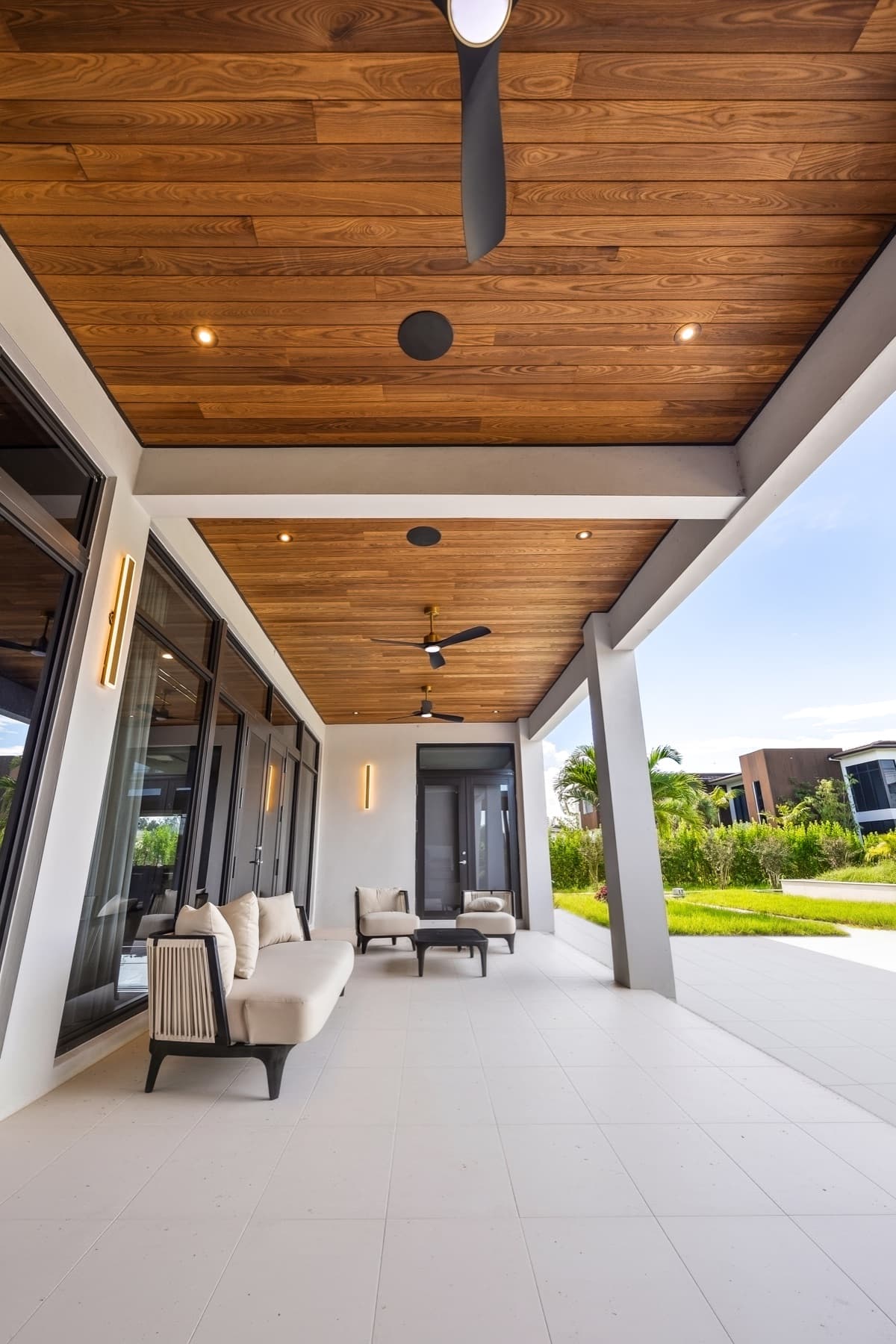
Understanding Structural Support for Ceiling Fans
A ceiling fan, particularly one intended for outdoor use, must be securely mounted to a robust structural element. This is typically a joist, blocking, or a fan-rated electrical box securely fastened to the framing. The finish material, such as thermally modified wood, hardwood, or composite ceiling boards, serves as a decorative surface and does not provide the necessary support for the fan's weight or operation.
Before selecting your ceiling and soffit materials, identify the exact location of your fan and verify the existing or planned framing can accommodate it. For new construction or significant renovations, this means coordinating with your builder or structural engineer to ensure appropriate blocking is installed. For existing structures, a thorough inspection of the framing is essential.
Choosing Outdoor-Rated Ceiling Fans
For any outdoor application, such as a porch or lanai, it is crucial to select a ceiling fan specifically rated for outdoor use. These fans are designed to withstand exposure to moisture, humidity, and temperature fluctuations. Look for ratings like "damp-rated" or "wet-rated," depending on the level of direct exposure to rain or splashing water. A damp-rated fan is suitable for covered outdoor areas like porches, while a wet-rated fan can handle direct rain.
Using an indoor fan outdoors can lead to premature failure, electrical hazards, and voided warranties. The fan's housing, blades, and electrical components must be resistant to corrosion and moisture damage to ensure safe and long-term operation.
Integrating Fan Location with Ceiling Layout
The placement of your ceiling fan will influence the layout of your ceiling and soffit materials. Consider the fan's canopy diameter and downrod length in relation to the overall ceiling height and the desired visual balance. Ideally, the fan should be centered within the space it serves, or thoughtfully offset to complement other architectural features.
When planning the installation of wood or composite ceiling boards, you will need to cut the material precisely around the fan's electrical box and mounting bracket. This requires accurate measurements and careful cutting to ensure a clean, professional finish. The fan canopy will then conceal the cut edge of the ceiling material.
Material Compatibility and Aesthetics
Whether you choose Scandinavian thermally modified wood, Maximo Accoya, Brazilian hardwoods like Ipe or Cumaru, or Norx composite boards for your ceiling, ensure the fan's style and finish complement the chosen material. For instance, a natural wood ceiling might pair well with a fan featuring bronze or matte black finishes, or blades that echo the wood tone. Conversely, a modern composite ceiling might suit a fan with a brushed nickel or white finish.
Lumber Plus offers a range of ceiling and soffit materials that provide various aesthetic options. Thermally modified Ayous and Ash offer clean grain for contemporary ceilings, while Ipe and Cumaru can create deep brown soffits. Garapa provides golden ceilings. Consider how the fan's presence will interact with the visual lines and character of your chosen ceiling material.
Explore our selection of ceiling and soffit materials:
/ceiling-and-soffit
Consider our thermally modified wood options:
/thermally-modified-wood
Or our Versatex brand for cellular PVC trim:
/brands/versatex
Worked Example: Porch Ceiling Fan Integration
Consider a hypothetical covered porch measuring 10 feet by 12 feet, with a ceiling height of 9 feet. They have chosen thermally modified Ash ceiling boards in a 1x6 (nominal) profile for their clean grain and contemporary look.
This blocking is sized to securely hold the fan's weight and absorb its operational vibrations.
2. **Ceiling Material Layout:** The Ash ceiling boards are planned to run parallel to the 12-foot dimension. This means each board will be cut to just under 12 feet in length. When boards reach the fan location, they will be cut to fit around the fan's mounting bracket. For a fan with a 6-inch diameter canopy, a 6.5-inch diameter hole would be cut into the ceiling boards. This cut is made after the boards are aligned and marked, ensuring the hole is centered over the electrical box. The fan's canopy will then cover this opening, providing a finished look.
3. **Installation Sequence:** The structural support and electrical wiring are completed first. Then, the thermally modified Ash ceiling boards are installed, cutting out the necessary opening for the fan at the appropriate stage. Finally, the ceiling fan is mounted to the fan-rated box, with its canopy covering the perimeter of the opening in the ceiling boards. This sequence ensures structural integrity and a clean finish.
Before you order
- Verify existing or plan for new structural blocking at the fan location.
- Select a ceiling fan specifically rated for outdoor (damp or wet) use.
- Determine the exact placement of the fan to ensure proper airflow and visual balance.
- Measure the fan canopy diameter for precise cutting of ceiling materials.
- Choose ceiling and soffit materials that complement the fan's style and finish.
- Coordinate with your electrician and contractor on installation sequence.
- Confirm the fan's electrical requirements and wiring are in place.
Confirm installation details, approved uses and warranty terms in the current instructions for the exact product and profile. Your installer should verify the substrate, structure and applicable project requirements.
Questions to help you decide
Can I mount a ceiling fan directly to my wood ceiling boards?
No, ceiling and soffit boards, whether wood or composite, are finish materials and are not designed to support the weight or dynamic forces of a ceiling fan. A ceiling fan must always be mounted to a dedicated, fan-rated electrical box securely fastened to structural framing, such as joists or blocking.
What kind of fan do I need for a covered porch?
For a covered porch that is protected from direct rain, a "damp-rated" ceiling fan is typically appropriate. If your porch is more exposed to moisture or direct precipitation, a "wet-rated" fan would be necessary. Always check the fan's specifications for its outdoor rating.
How do I ensure a neat finish around the fan's base?
The fan's canopy is designed to cover the electrical box and the edges of the opening cut into the ceiling material. Precise measurement and careful cutting of your ceiling boards around the electrical box location are essential. The fan's canopy will then conceal these cuts, providing a clean and finished appearance.
Plan Your Ceiling Fan and Ceiling Material Project
Ready to select the ideal ceiling and soffit materials for your project, integrated with a ceiling fan? Request a material quote with your project dimensions, desired profile, and ZIP code to confirm current availability and service options. Our team can help you identify the right materials for your vision.
Request a material quote →