Why Choose Angelim for Deck Stairs?
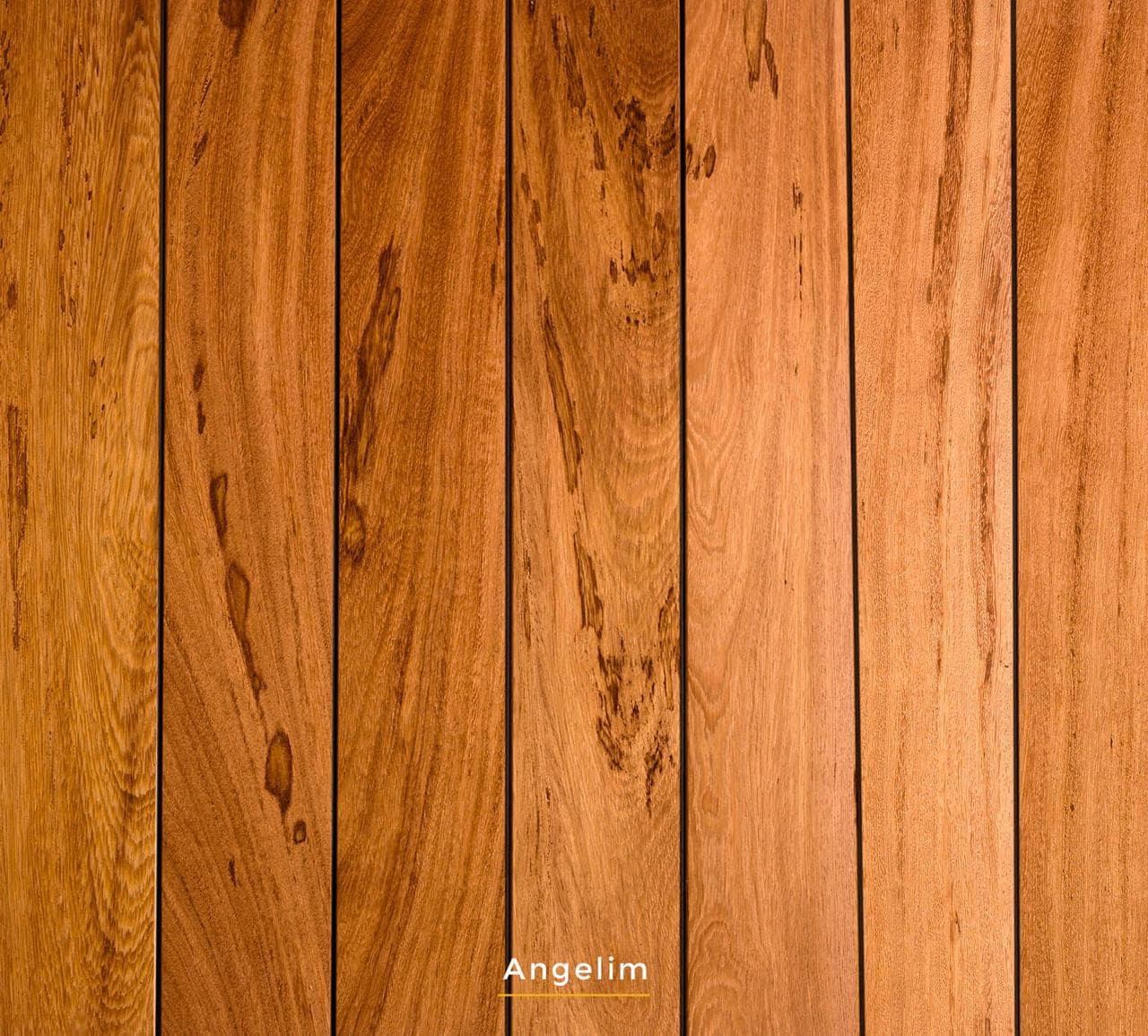
Angelim, also known as Angelim Pedra, is a hardwood recognized for its inherent strength and durability. Its heartwood typically presents a yellowish beige hue that deepens to a pinkish brown, offering a distinctive appearance that can complement various outdoor designs. The material's density and stability are key advantages when considering it for high-traffic areas like stairs.
These properties make it a suitable material for exterior applications where exposure to the elements is constant. When properly installed and maintained, Angelim stairs can endure the demands of outdoor use while retaining their visual quality.
Angelim is also noted for being absorptive, which allows for easy finishing with stains and oils. This characteristic provides flexibility in achieving a desired look for your stairs, whether you aim to enhance its natural color or match it closely with other elements of your outdoor space.
Understanding Stair Components and Angelim Suitability
Deck stairs typically consist of several key components: stringers, risers, and treads. Stringers are the structural supports that carry the load, while risers are the vertical boards between treads, and treads are the horizontal surfaces you step on.
Angelim's strength and durability make it a candidate for stair treads and risers. For treads, the material needs to withstand concentrated foot traffic and resist wear. Angelim's density helps in this regard. For risers, the material provides a visual complement to the treads and deck surface.
While Angelim can be used for treads and risers, the primary structural components, the stringers, often require specific lumber dimensions and species approved by local building codes. Consult your contractor and local authorities to ensure all structural elements meet safety and code requirements.
Planning Tread Dimensions and Fastening
When using Angelim for stair treads, careful planning of dimensions is crucial. Standard tread depths and rise heights are often dictated by local building codes to ensure safety. Angelim is available in various profiles, including 1x4 through 6x6, offering options for tread thickness and width. The specific profile chosen will depend on the required structural integrity and aesthetic preference.
Proper fastening is essential for secure and stable stair treads. Angelim is noted as being easy to install, though pre-drilling is recommended. This is particularly important for hardwoods to prevent splitting, especially near board ends or when using face fasteners. Hidden fastening systems may also be an option, but their compatibility with Angelim and stair tread applications should be verified with the manufacturer and your installer.
Consider the potential for expansion and contraction of the wood due to moisture and temperature changes. Appropriate spacing between treads and at the connection points to stringers is necessary to accommodate this movement without causing stress or warping.
Ensuring Structural Support and Code Compliance
The structural integrity of your deck stairs is paramount. While Angelim is a durable material, it is the underlying framing and stringers that provide the primary support. These components must be adequately sized and securely attached to the deck frame and the ground, following engineering guidelines and local building codes.
Local building codes specify requirements for stair dimensions, such as minimum tread depth, maximum riser height, handrail height, and baluster spacing. These codes are in place to ensure safety and prevent falls. Before purchasing materials, confirm all design specifications with your local building department and your contractor to avoid costly rework.
For projects with winter exposure or coastal conditions, consider how moisture and potential freeze-thaw cycles might impact the stair structure. Proper drainage around the base of the stairs and the use of appropriate fasteners and sealants can help mitigate these effects. While Angelim is resistant to moisture, the entire stair assembly needs to be designed for its environment.
Worked Example: Designing Angelim Stair Treads
Let's consider a hypothetical project where a homeowner wants to build a set of stairs connecting a deck to a patio, requiring 5 steps. The local code specifies a minimum tread depth of 10 inches and a maximum riser height of 7.75 inches. The total rise from the patio to the deck surface is 38 inches.
First, calculate the individual riser height: 38 inches total rise / 5 steps = 7.6 inches per riser. This falls within the allowable maximum. Next, for the treads, we want to achieve a 10-inch depth using Angelim boards. Assuming Angelim is available in nominal 5/4x6 (actual ~1 inch thick by 5.5 inches wide) and 5/4x4 (actual ~1 inch thick by 3.5 inches wide) profiles, we can combine two boards to create the desired depth.
Using one 5/4x6 board (5.5 inches) and one 5/4x4 board (3.5 inches) for each tread, side-by-side, yields a total tread depth of 9 inches. To reach the 10-inch minimum, a custom cut or a different board combination might be needed, or the design could utilize a single wider board if available (e.g., a nominal 5/4x10, which would be approximately 9.25 inches actual width, possibly acceptable depending on code interpretation for actual vs. nominal). For simplicity, if a 5/4x12 (actual ~11.25 inches wide) board is available, it could be cut to the exact 10-inch depth. For 5 steps, you would need 5 pieces of this board, each cut to the required width and length (e.g., 36 inches for a 3-foot wide stair). Always account for waste and order extra material. Pre-drilling is essential for securing these treads to the stringers.
Before you order
- Confirm local building codes for stair dimensions (tread depth, riser height, handrails, balusters).
- Consult with a contractor or structural engineer for stringer design and material specification.
- Verify Angelim availability in suitable profiles for treads and risers.
- Plan for pre-drilling and appropriate fasteners for hardwood stair components.
- Consider the aesthetic match between stair components and the main Angelim decking.
- Account for material expansion/contraction and adequate spacing.
- Review drainage considerations for the stair landing and base, especially in wet climates.
Confirm installation details, approved uses and warranty terms in the current instructions for the exact product and profile. Your installer should verify the substrate, structure and applicable project requirements.
Questions to help you decide
Can Angelim be used for all parts of a deck stair?
Angelim is well-suited for stair treads and risers due to its density, durability, and resistance to moisture and termites. However, the structural stringers typically require specific lumber dimensions and species, which must comply with local building codes. Always consult with your contractor and local authorities for structural requirements.
What kind of fasteners should I use for Angelim stair treads?
When installing Angelim stair treads, pre-drilling is recommended to prevent splitting, especially with hardwoods. Use high-quality, corrosion-resistant screws designed for exterior use with dense hardwoods. Consult with your fastener supplier or contractor for specific recommendations compatible with Angelim and your climate.
How do I maintain Angelim stairs?
Angelim is absorptive and can be easily finished with stains and oils. Regular cleaning to remove debris and occasional reapplication of a suitable finish can help maintain its appearance and protect the wood. Always follow the specific maintenance recommendations for the finish product you choose. Periodic inspection for loose fasteners or wear is also advised.
Ready to Plan Your Angelim Deck Stairs?
For a material quote tailored to your project, please provide your project dimensions, desired Angelim profile, and ZIP code. We can also confirm current availability and service options for your area. Contact us to get started.
Request a material quote →