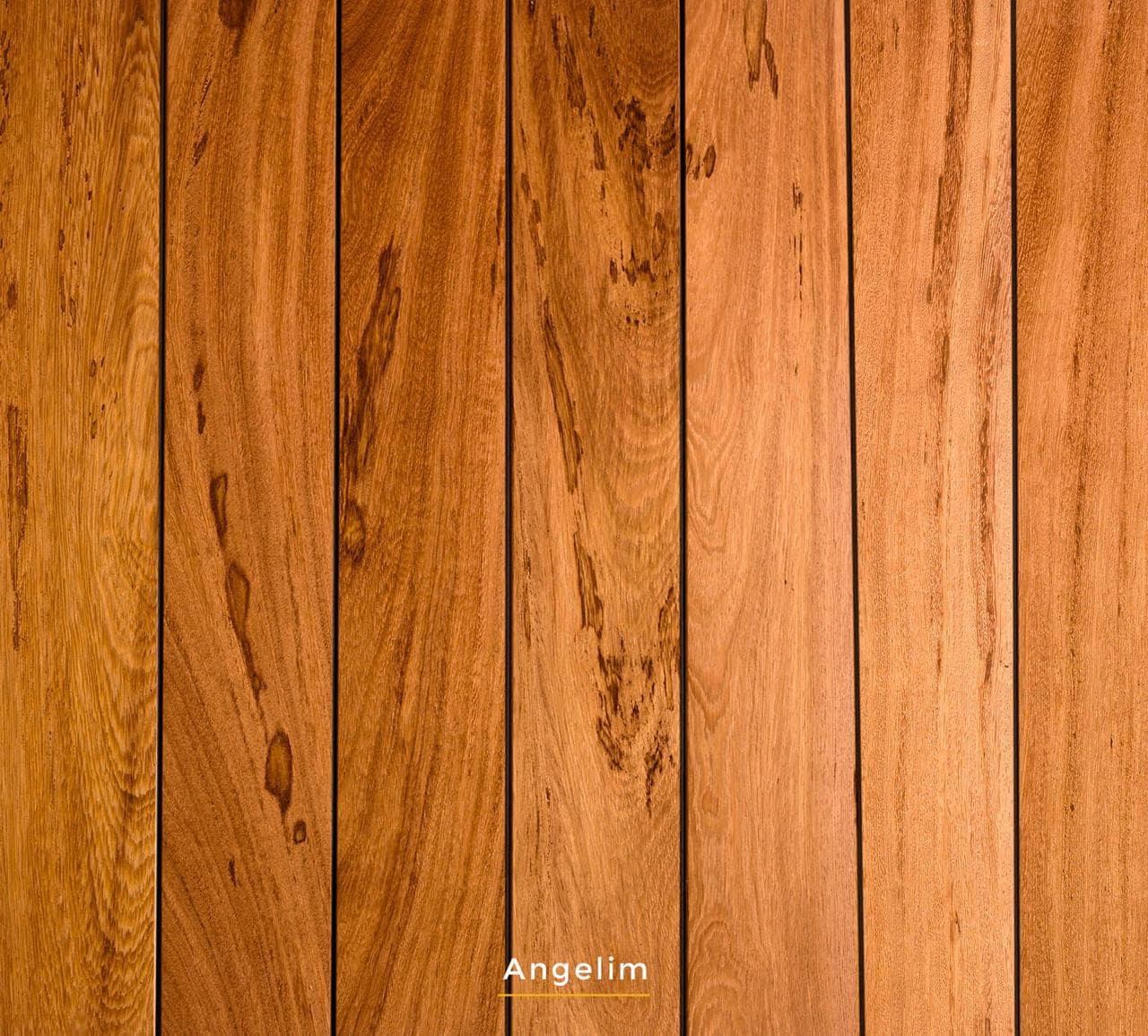
Angelim's Natural Color and Grain
Angelim (Hymenolobium spp.) is known for its distinctive appearance. The heartwood, the densest part of the tree, typically displays a yellowish beige hue when newly milled. Over time and with exposure to light, this color tends to darken, evolving into a rich pinkish brown. This natural aging process, often referred to as 'patina,' is a characteristic of many hardwoods. The sapwood, which is the outer, living wood, usually appears lighter, ranging from white to grayish.
The grain of Angelim is generally straight to interlocked, contributing to its unique texture. These natural variations in color and grain mean that no two boards are exactly alike, offering a unique, organic aesthetic to any deck. When selecting Angelim, it's helpful to view multiple boards or samples to appreciate the full spectrum of its natural beauty. This inherent variability should be considered part of its appeal, rather than a drawback.
Understanding the Impact of Sunlight and Exposure
Sunlight is a primary factor in how Angelim decking's color will evolve. Ultraviolet (UV) radiation from the sun causes wood to oxidize and, over time, can lead to a silver-gray patina if left unfinished. This process is natural and does not compromise the wood's structural integrity, as Angelim is very durable and resistant to insects and moisture.
For those who prefer to maintain the wood's original warm tones, regular application of a UV-inhibiting oil or stain is essential. Decks exposed to intense, direct sunlight will likely show color changes more rapidly than those in shaded areas. Conversely, a deck under a covered porch or in a heavily shaded yard will retain its initial color longer, even without a finish. Consider the specific sun exposure patterns of your project area when planning your finish.
Choosing Between Unfinished and Finished Angelim
The decision to leave Angelim decking unfinished or to apply a protective coating significantly impacts its long-term appearance. An unfinished Angelim deck will gradually weather to a soft silver-gray. This 'weathered' look is often desired for its natural, low-maintenance aesthetic, blending seamlessly with certain architectural styles and natural landscapes. While it requires less active maintenance in terms of reapplication, periodic cleaning is still recommended to remove dirt and mildew.
For those who wish to preserve the rich, warm colors of Angelim, applying an exterior-grade oil or stain is the preferred approach. Angelim is described as absorptive, making it easy to finish with stains and oils. These finishes can enhance the wood's natural tones, provide UV protection, and help repel water, which can reduce the rate of graying. Finishes require reapplication at regular intervals, typically annually or biennially, depending on product specifications and environmental exposure. This choice involves a trade-off between the natural, low-maintenance graying and the vibrant, protected color requiring more frequent attention.
Selecting the Right Stain or Oil for Angelim
When choosing a stain or oil for Angelim decking, consider both the desired aesthetic and the level of protection. Clear oils will deepen the natural color of the wood, highlighting its grain and allowing the yellowish beige to pinkish brown tones to shine through. Tinted stains can subtly alter the color, adding warmth or a different hue while still allowing the wood grain to be visible.
Look for products specifically formulated for exterior hardwood decking. These typically contain UV inhibitors, mildewcides, and water repellents to protect the wood from the elements. Always test your chosen finish on a scrap piece of Angelim or an inconspicuous area of the deck to ensure the color and appearance meet your expectations before applying it to the entire project. Different brands and types of finishes can produce varied results, even with similar color descriptions.
A Hypothetical Scenario: Deck for a Sunny Patio
Consider a hypothetical 12-foot by 16-foot Angelim deck designed for a sunny patio, intended to serve as an extension of an outdoor dining area. The homeowner desires to maintain the rich, warm, pinkish-brown tones of the Angelim and wishes to minimize the silver-gray weathering. The deck receives direct sunlight for most of the day.
In this scenario, leaving the Angelim unfinished would quickly lead to the silver-gray patina. To preserve the desired color, an exterior-grade hardwood oil with UV inhibitors would be recommended. A clear or lightly tinted oil that enhances the natural reddish-brown hues of Angelim would be suitable. The homeowner should plan for annual reapplication of the oil, especially given the high sun exposure. This proactive approach to finishing will help protect the wood's color and surface, maintaining the desired aesthetic for the outdoor dining space. Regular cleaning would also be part of the maintenance routine to remove any surface dirt or pollen before reapplication.
Before you order
- What is the desired long-term appearance: natural silver-gray patina or maintained rich wood tones?
- How much direct sunlight will the deck receive daily?
- Are you prepared for annual or biennial reapplication of a finish, or do you prefer lower-maintenance weathering?
- Have you obtained physical samples of Angelim to observe its natural color variations?
- Have you tested your chosen finish on a scrap piece of Angelim to confirm the resulting color?
- Do you have a plan for cleaning the deck, regardless of whether it is finished or unfinished?
Confirm installation details, approved uses and warranty terms in the current instructions for the exact product and profile. Your installer should verify the substrate, structure and applicable project requirements.
Questions to help you decide
What is the natural color of Angelim decking?
Angelim heartwood starts as a yellowish beige and gradually darkens to a pinkish brown with exposure to light. The sapwood is typically white to grayish.
Will Angelim decking change color over time?
Yes, like many hardwoods, Angelim will naturally weather to a silver-gray patina if left unfinished and exposed to sunlight. If finished with a UV-inhibiting oil or stain, its original rich colors can be preserved for longer, though reapplication will be necessary.
Is Angelim easy to finish with stains or oils?
Yes, Angelim is described as absorptive, which generally means it takes stains and oils well. This characteristic makes it suitable for various finishing applications.
Ready to Plan Your Angelim Decking Project?
Request a material quote with your project dimensions, desired profile, and ZIP code. Confirm current availability and service options for Angelim decking, and begin planning your outdoor space today.
Request a material quote →