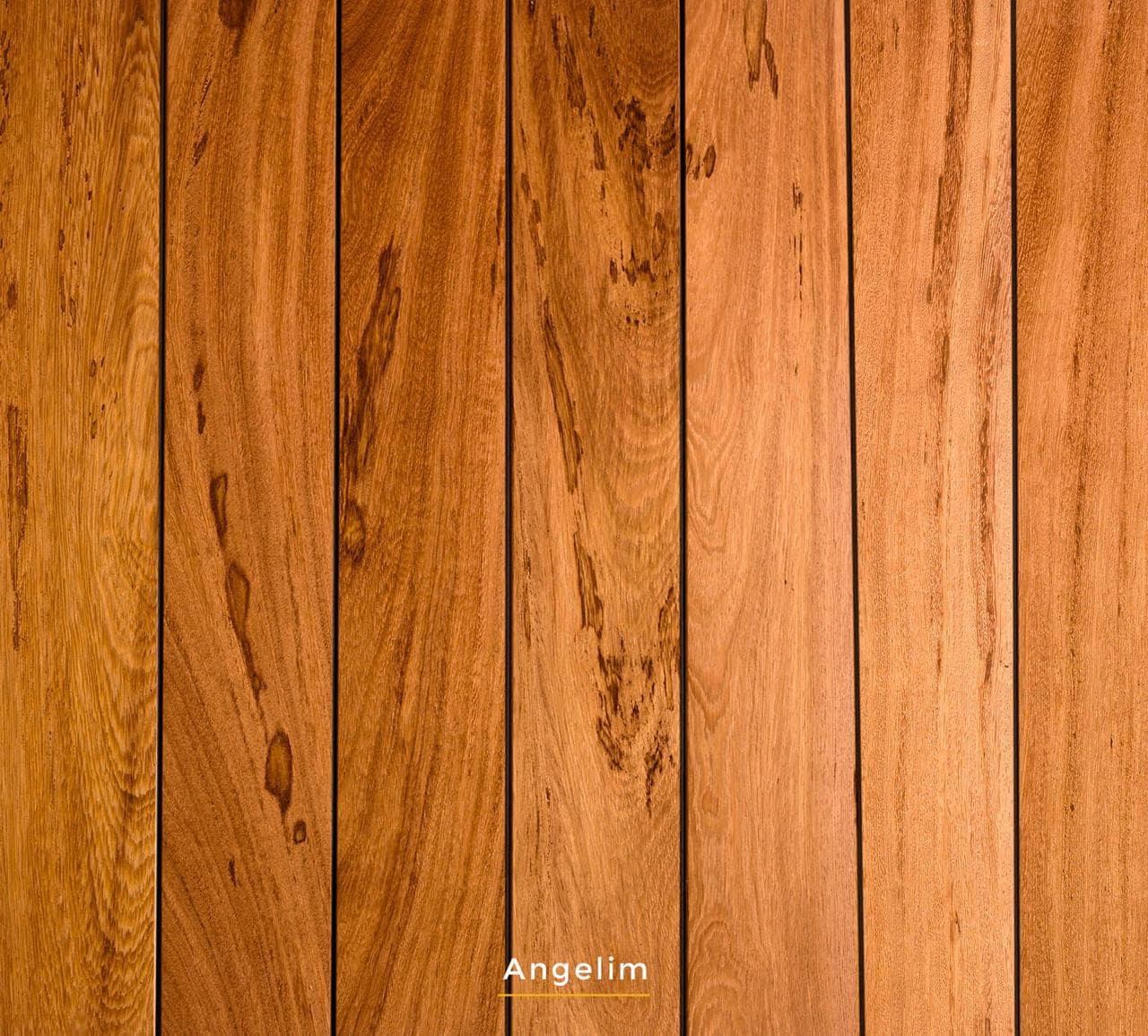
Understanding Angelim Decking Characteristics
Angelim is a hardwood species known for its density and stability, making it suitable for decking. Its natural resistance to insects, rot, and fungi further contributes to its suitability for outdoor use. The heartwood of Angelim is described as yellowish beige, with the potential to darken to a pinkish brown over time. The sapwood can range from white to grayish. These color variations are natural and contribute to the wood's distinctive appearance.
The wood is absorptive, which means it can be readily finished with stains and oils if you choose to alter its natural color or provide additional protection. This characteristic is important to consider when evaluating samples, as the application of a finish can significantly change the wood's final look. Angelim is available in various profiles and lengths, typically from 1x4 to 6x6, and lengths from 4 to 20 feet, depending on the specific profile.
When you receive Angelim samples, observe the grain and texture. Hardwoods like Angelim often have a visible grain pattern that adds character. The surface may feel smooth or have a slight texture depending on the milling process. These tactile qualities are part of the overall experience of the material.
Evaluating Samples Under Different Lighting Conditions
The appearance of Angelim decking can change significantly depending on the light source. A sample viewed indoors under artificial light will look different outdoors under natural sunlight, or even on an overcast day. To get an accurate sense of how your decking will appear, it is important to observe your samples in the exact location and at different times of day.
Take your Angelim samples outside to the proposed deck area. Observe them in direct sunlight, in shaded areas, and during dawn or dusk. Note how the yellowish beige and pinkish brown tones of the heartwood shift. Direct sunlight might highlight warmer undertones, while shade could emphasize deeper, richer hues. This exercise helps you understand the dynamic visual qualities of the wood throughout the day.
Consider the orientation of your deck. If it faces west, it will receive intense afternoon sun, which could make the wood appear lighter or more vibrant. A north-facing deck might retain a more consistent, subdued color. Documenting your observations can help you make an informed decision.
Comparing Angelim with Adjacent Finishes and Materials
Your new Angelim deck will not exist in isolation. Its appearance will be influenced by surrounding elements such as your home's siding, trim, windows, existing patio furniture, and landscaping. Bring your Angelim samples into direct contact with these adjacent finishes to assess how well they harmonize.
For example, if your home has a cool-toned gray siding, place an Angelim sample against it. Does the yellowish-beige and pinkish-brown heartwood complement or clash? If you have dark bronze window frames, how does the Angelim's natural color interact with that metallic tone? Pay attention to both color and texture. A smooth Angelim board might provide a pleasing contrast to a rough stone patio, or it might blend seamlessly with a finely textured stucco wall.
Also, consider any railings, planters, or outdoor kitchens you plan to incorporate. If these elements are already chosen, compare your Angelim samples against them. The goal is to create a cohesive outdoor living space where all materials work together visually. This step is critical for ensuring the overall aesthetic appeal of your project.
Evaluating Profiles and Textures
Angelim decking is available in various profiles, such as 1x4 and 5/4x6, and different surface textures. While the species itself is consistent, the milling and finishing can affect the final look and feel. Request samples of the specific profile and texture you are considering.
For instance, a smooth, planed board will reflect light differently than a subtly textured or grooved board. The chosen profile can also influence the shadow lines on your deck, affecting its perceived depth and visual interest. Lay out multiple samples if possible to see how the profile creates a pattern across a larger area.
Consider how the texture will feel underfoot, especially if the deck will be a barefoot area. While visual appeal is important, the tactile experience contributes to the overall enjoyment of your outdoor space. If different profiles are available, such as standard decking boards versus fascia or trim pieces, ensure your samples represent all planned components of your project.
A Hypothetical Sample Selection Scenario
Imagine you are planning a 12-foot by 16-foot Angelim deck for a home with light gray stucco siding and dark brown trim. You have requested two Angelim decking samples: one 1x4 board and one 5/4x6 board. Both samples are unfinished, showcasing the natural yellowish-beige to pinkish-brown heartwood.
First, you take the samples outside. In the morning sun, the 1x4 board appears slightly brighter, its narrower profile highlighting individual board lines. The 5/4x6 board, with its wider face, shows more of the wood's natural grain variation across its surface. You notice the pinkish-brown tones are more pronounced in the direct light.
Next, you place the samples against the light gray stucco. The Angelim provides a warm contrast, which you find appealing. Against the dark brown trim, the wood's natural color blends well, creating a sense of continuity. You also place the samples on the ground where the deck will be built. Observing them at different times of day, you confirm that the wider 5/4x6 board better showcases the unique color shifts of Angelim and feels more substantial underfoot, aligning with your desire for a robust, classic deck appearance. This detailed evaluation, comparing profiles and colors against your home, helps confirm the 5/4x6 profile as the preferred choice.
Before you order
- Obtain physical samples of Angelim decking in your preferred profile(s).
- Observe samples outdoors at the project site under varying natural light conditions (morning, midday, evening, sunny, overcast).
- Compare samples directly against your home's exterior siding, trim, and other existing outdoor finishes.
- Assess how the wood's color and grain interact with any planned furniture, railings, or landscaping materials.
- Consider the texture of the samples and how it feels underfoot.
- Note any natural color variations within and between samples, understanding that wood is a natural product.
- If considering a finish, apply a small, discreet test patch to a sample to see the effect.
- Document your observations with photos, noting the time of day and conditions, to aid in your final decision.
Confirm installation details, approved uses and warranty terms in the current instructions for the exact product and profile. Your installer should verify the substrate, structure and applicable project requirements.
Questions to help you decide
What should I look for in an Angelim decking sample?
When examining an Angelim decking sample, look for the natural color variations from yellowish beige to pinkish brown heartwood. Observe the grain pattern and texture. Consider the profile (e.g., 1x4 or 5/4x6) and how it might influence the overall look of your deck. Importantly, assess how the sample appears under various lighting conditions and against your home's existing exterior materials.
How do I account for Angelim's natural color changes when choosing a sample?
Angelim's heartwood naturally darkens from yellowish beige to pinkish brown over time. To account for this, evaluate your samples in different light conditions at the project site. Understand that the initial color may evolve. If you plan to apply a finish, note that this can influence how the wood ages and maintains its color. The wood is absorptive and can be finished with stains and oils.
Should I get more than one sample of Angelim decking?
Yes, it is beneficial to obtain multiple samples, especially if you are considering different profiles or anticipate significant natural variation in the wood. Having several samples allows you to see the range of color and grain within the species and visualize how a larger section of decking might appear. It also helps in comparing how different board widths might look on your specific project.
Ready to Plan Your Angelim Decking Project?
Request a material quote today with your project dimensions, desired Angelim profile, and ZIP code. We can confirm current availability and service options for your area. Explore our full range of decking options, including other hardwood varieties like Ipe, composite, and PVC decking, to find the perfect fit for your outdoor space.
Request a material quote →