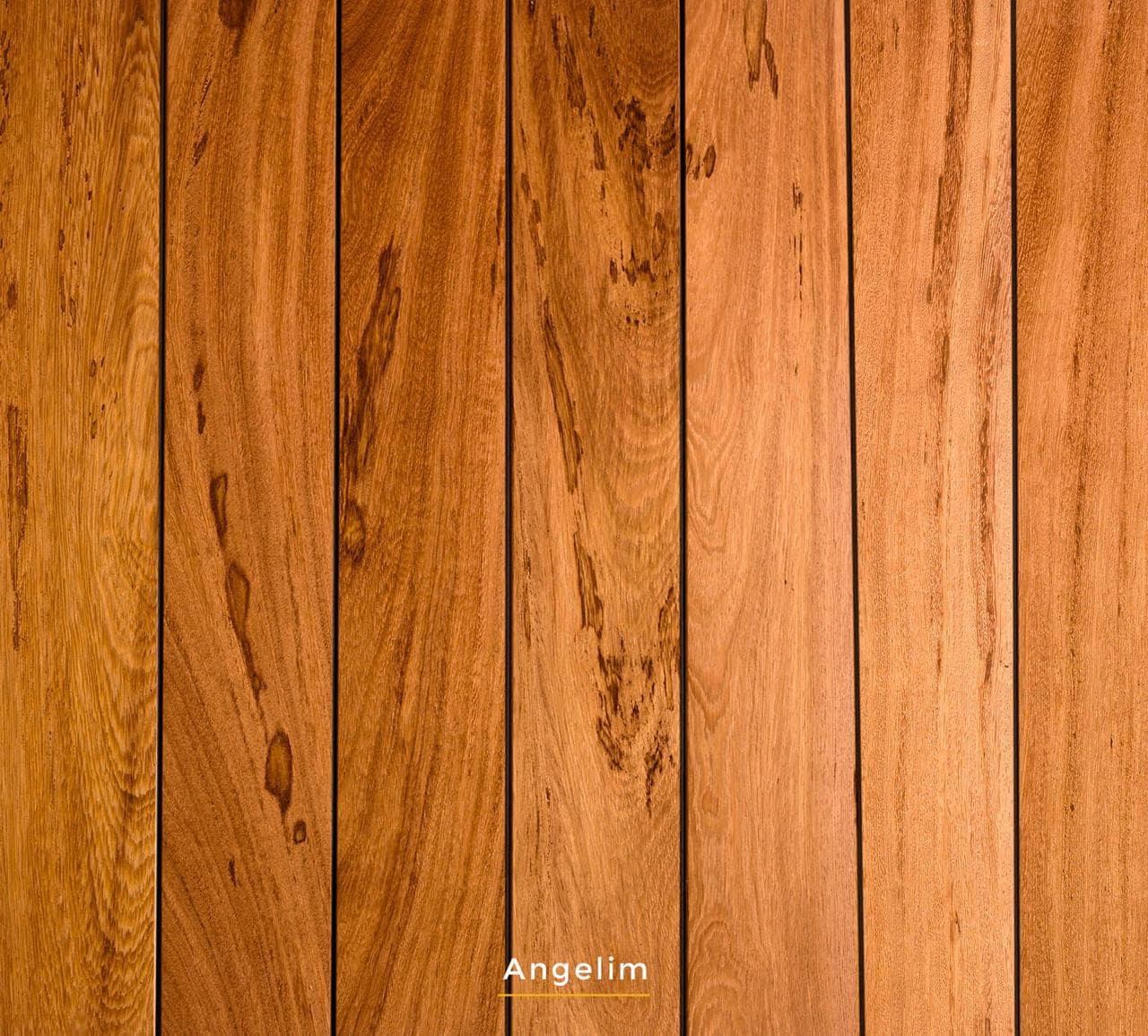
Understanding Angelim Decking Board Dimensions
Angelim decking is typically available in various profiles, such as 1x4 through 6x6, and in lengths ranging from 4 to 20 feet, depending on the specific profile. For decking applications, common board sizes like 1x4 (nominal 3/4 inch by 3 1/2 inch actual) or 5/4x6 (nominal 1 inch by 5 1/2 inch actual) are frequently used. Always confirm the exact actual dimensions of the boards you plan to order, as these will directly impact your calculations.
The 'board foot' is a common unit of measure for lumber, representing a volume equivalent to a piece of wood 1 inch thick, 12 inches wide, and 1 foot long. While useful for pricing, for decking, it's often more practical to calculate based on linear feet or square footage, then convert to board feet if needed for ordering. Knowing the actual width of your chosen board is crucial for covering your deck area efficiently.
Measuring Your Deck Area
Begin by sketching your deck layout and taking precise measurements. Use a tape measure to determine the length and width of each distinct section of your deck. For rectangular or square decks, multiply the length by the width to get the total square footage. For irregularly shaped decks, break the area down into smaller, manageable rectangles or triangles and calculate each section separately before summing them up.
Consider any non-decking areas within your overall footprint, such as planters, built-in benches, or hot tub cutouts. These areas should be subtracted from your total square footage to ensure you're only calculating for the actual decking surface. Accuracy at this stage prevents over-ordering or under-ordering.
Calculating Linear Feet for Your Project
Once you have the total square footage, you can determine the linear feet of decking required. This calculation depends on the actual width of the Angelim boards you've chosen. For example, if you are using 5/4x6 Angelim boards, the actual width is typically 5.5 inches.
To calculate: Divide the total square footage of your deck by the actual width of one board (in feet). For a 5.5-inch wide board, this would be 5.5 / 12 = 0.4583 feet. Remember to account for the spacing between boards, which is typically small but adds up over a large area. Consult manufacturer guidelines for recommended spacing.
Accounting for Cuts and Waste
It is essential to factor in waste when ordering decking materials. Cuts for ends, angles, and any mistakes during installation will result in unusable offcuts. A common waste factor for decking projects is between 5% and 15%, depending on the complexity of your deck design (e.g., straight lay vs. diagonal patterns, many angles). For a straightforward rectangular deck, a 5-10% waste factor might be sufficient. For more intricate designs, consider 10-15%.
Add your chosen waste percentage to your calculated linear footage. For instance, if you need 436.4 linear feet and apply a 10% waste factor, you would multiply 436.4 by 1.10, resulting in 480.04 linear feet. This adjusted total represents the minimum amount of material to purchase to ensure you have enough for your project.
Worked Example: A 12x16 Foot Angelim Deck
Let's assume you're planning a rectangular deck that measures 12 feet by 16 feet, and you've decided to use Angelim 5/4x6 boards, which have an actual width of 5.5 inches. You anticipate a standard straight-lay pattern.
1. **Calculate Total Square Footage:** 12 feet * 16 feet = 192 square feet.
2. **Convert Board Width to Feet:** 5.5 inches / 12 inches/foot = 0.4583 feet.
3. **Calculate Base Linear Feet Needed:** 192 square feet / 0.4583 feet/board = 418.9 linear feet.
4. **Apply Waste Factor:** For a straightforward deck, let's use a 7% waste factor. 418.9 linear feet * 1.07 = 448.22 linear feet.
5. **Determine Board Lengths and Quantities:** Angelim is available in lengths from 4 to 20 feet. To minimize cuts and waste, try to order boards that match your deck dimensions or allow for efficient cuts. For a 16-foot long deck, ordering 16-foot long boards would be ideal for the main runs. If 16-foot boards are not available or practical, consider 8-foot boards and staggering seams. Assuming 16-foot boards are chosen: 448.22 linear feet / 16 feet/board = 28.01 boards. You would round up to 29 boards of 16-foot length to cover the project. Always confirm available lengths with your supplier.
This example provides a concrete estimate. Your actual needs may vary based on specific design elements, board spacing, and the exact lengths available for purchase.
Before you order
- Confirm the exact actual dimensions (width and thickness) of the Angelim decking boards you intend to purchase.
- Measure the length and width of your deck area, breaking down complex shapes into simpler geometric forms.
- Subtract any non-decking areas (e.g., planters, stairs) from your total square footage.
- Calculate the total square footage of your decking surface.
- Convert the total square footage into linear feet based on your chosen board width.
- Determine an appropriate waste factor (5-15%) for your project's complexity.
- Apply the waste factor to your linear footage calculation.
- Consider available board lengths and plan for efficient cuts to minimize waste.
- Round up to the nearest whole board when calculating the final quantity to purchase.
Confirm installation details, approved uses and warranty terms in the current instructions for the exact product and profile. Your installer should verify the substrate, structure and applicable project requirements.
Questions to help you decide
Is Angelim decking resistant to insects and rot?
Yes, Angelim is known for its natural resistance to insects, rot, and fungi, making it well-suited for exterior applications like decking. It is specifically resistant to termites and moisture.
What color is Angelim decking?
The heartwood of Angelim is typically yellowish beige, which gradually darkens to a pinkish-brown hue over time. The sapwood can range from white to grayish.
Ready to Plan Your Angelim Deck?
Request a material quote with your project dimensions, desired Angelim profile, and ZIP code to confirm current availability and service options. Our team can assist with specific calculations and product information.
Request a material quote →