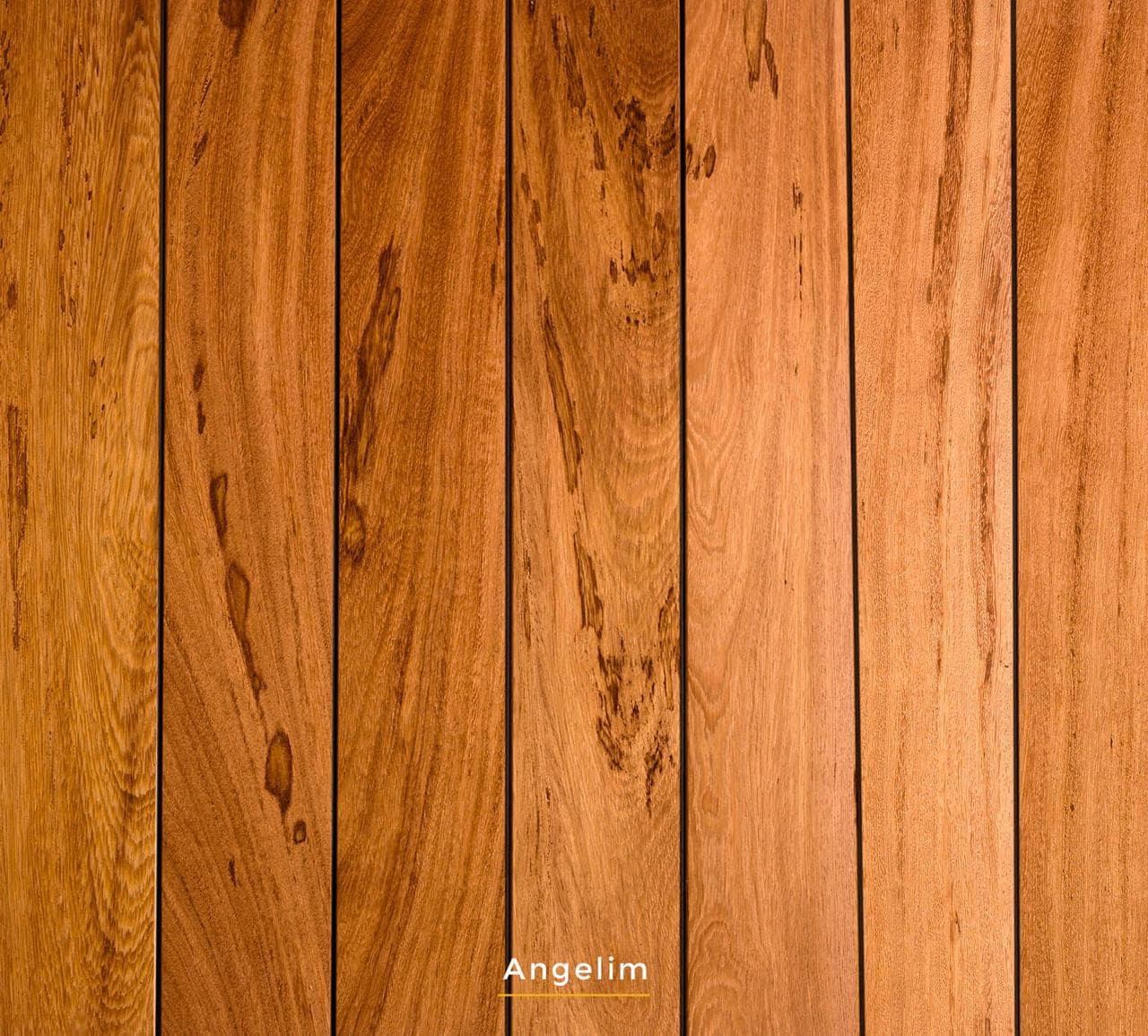
Understanding Angelim's Properties for Shaded Sites
Angelim is a dense and stable hardwood, with an air dry density of 5.58 lbs/bf and a specific gravity of 0.79. These properties contribute to its durability and resistance to various environmental factors. Its natural resistance to moisture, termites, rot, and fungi makes it a suitable candidate for outdoor use, including in areas that experience prolonged dampness.
The wood's heartwood is yellowish beige, which darkens to a pinkish brown over time, a characteristic that may be influenced by exposure to UV light and moisture cycles. For a shaded deck, this natural color evolution might occur differently than on a sun-drenched surface, potentially leading to a more consistent, darker tone if regularly maintained.
Angelim is also described as absorptive, which facilitates finishing with stains and oils. This characteristic is important for shaded decks, as proper sealing can help manage moisture absorption and enhance the wood's natural resistance to environmental stressors.
The Importance of Ventilation and Drainage
In a shaded environment, reduced sunlight means slower evaporation of moisture from the deck surface and the spaces beneath. Adequate ventilation beneath the deck is critical to prevent moisture buildup, which could lead to issues over time, even with a resistant material like Angelim. Proper airflow helps dry out the substructure and the underside of the decking boards.
Consider the design of your deck's substructure to promote air circulation. This might involve ensuring sufficient spacing between joists, avoiding enclosed perimeter designs that trap air, or even incorporating vents into any skirting. The goal is to create a pathway for air to move freely, carrying away moisture.
Effective drainage around and beneath the deck is equally important. Ensure that rainwater and irrigation runoff are directed away from the deck area. Sloping the ground away from the deck, installing French drains, or using permeable ground cover can help prevent water from pooling and contributing to a damp environment beneath the deck.
Deck Board Spacing and Moisture Management
While Angelim is resistant to moisture, proper spacing between deck boards is essential for any outdoor deck, especially in shaded areas. This spacing allows water to drain through the deck surface rather than pooling, and it facilitates air circulation between boards, promoting faster drying.
The exact spacing recommendations for Angelim decking boards should always be followed as provided by the manufacturer or supplier, as they account for wood movement due to changes in humidity and temperature. Generally, a small gap is necessary to allow for expansion and contraction, as well as drainage. For a shaded deck, ensuring these gaps remain clear of debris like leaves and dirt is even more important to maintain effective drainage and airflow.
Finishing and Maintenance for Shaded Conditions
Angelim is absorptive and takes stains and oils well. For a shaded deck, applying a penetrating oil finish can help protect the wood from moisture absorption while allowing it to breathe. A finish can also help maintain the wood's color, though natural graying can still occur over time, potentially at a slower or more even rate in shade due to less UV exposure.
Regular cleaning is particularly important for shaded decks. Accumulation of leaves, dirt, and organic debris can trap moisture, create a breeding ground for mold or mildew, and potentially stain the wood. Regular sweeping or blowing off debris, especially after rain, is a simple but effective preventative measure.
For deeper cleaning, use a deck cleaner specifically designed for hardwoods. Always test any cleaning product on an inconspicuous area first to ensure compatibility with your Angelim decking and its finish. Avoid harsh chemicals or high-pressure washers that can damage the wood fibers. After cleaning, ensure the deck has ample time to dry completely.
Hypothetical Project Example: Shaded Patio Deck
Consider a 10-foot by 12-foot patio deck situated beneath a large oak tree, providing significant shade throughout the day. The homeowner chooses Angelim decking (available in 1x4 and other profiles) for its durability and natural resistance. The existing ground is slightly sloped towards the house, requiring careful planning for drainage.
For this project, the contractor proposes a raised deck frame using pressure-treated lumber, elevated sufficiently to allow for cross-ventilation. Instead of solid skirting, decorative lattice panels are used on two sides to permit airflow, while the other two sides are open to a garden. A gravel bed is installed beneath the deck to improve drainage and prevent vegetation growth.
After installation, a penetrating oil finish is applied to enhance moisture resistance and bring out the wood's natural tones. The homeowner commits to weekly sweeping to remove leaves and monthly inspections for any signs of debris accumulation or moisture buildup, with a deeper cleaning planned quarterly or as needed. This proactive approach aims to mitigate the challenges of a shaded environment.
Before you order
- Assess the degree and duration of shade on your deck site.
- Evaluate existing drainage and plan improvements (e.g., ground slope, French drains).
- Design the deck substructure for optimal ventilation (e.g., raised frame, open skirting).
- Confirm appropriate board spacing for Angelim decking to allow drainage and airflow.
- Select a compatible penetrating oil finish for moisture protection.
- Plan a regular cleaning schedule to remove debris and prevent moisture buildup.
- Identify suitable deck cleaning products for hardwoods and test them.
- Consider the natural color evolution of Angelim in a shaded environment.
- Review local building codes for any specific ventilation or drainage requirements.
Confirm installation details, approved uses and warranty terms in the current instructions for the exact product and profile. Your installer should verify the substrate, structure and applicable project requirements.
Questions to help you decide
Is Angelim decking suitable for perpetually shaded areas?
Yes, Angelim is a durable hardwood with natural resistance to moisture, termites, rot, and fungi, making it a viable option for shaded areas. However, successful use in such environments depends heavily on careful planning for ventilation, drainage, and consistent maintenance to manage moisture effectively.
How does shade affect the appearance of Angelim decking?
In shaded areas, Angelim decking may experience a different rate of color change compared to sun-exposed decks. While UV light contributes to the wood's natural graying, less direct sun might result in a slower or more even aging process. Regular application of a penetrating oil finish can help preserve its original yellowish-beige to pinkish-brown heartwood color.
What specific maintenance is required for Angelim decking in a shaded location?
Maintenance for a shaded Angelim deck should focus on managing moisture and preventing organic growth. This includes frequent sweeping to remove leaves and debris, ensuring clear board spacing for drainage, and regular cleaning with a hardwood-specific deck cleaner. Applying a suitable oil finish periodically is also recommended to enhance moisture resistance.
Ready to Plan Your Shaded Angelim Deck?
Request a material quote with your project dimensions, desired Angelim profile, and ZIP code. We can help confirm current availability and service options for your project.
Request a material quote →