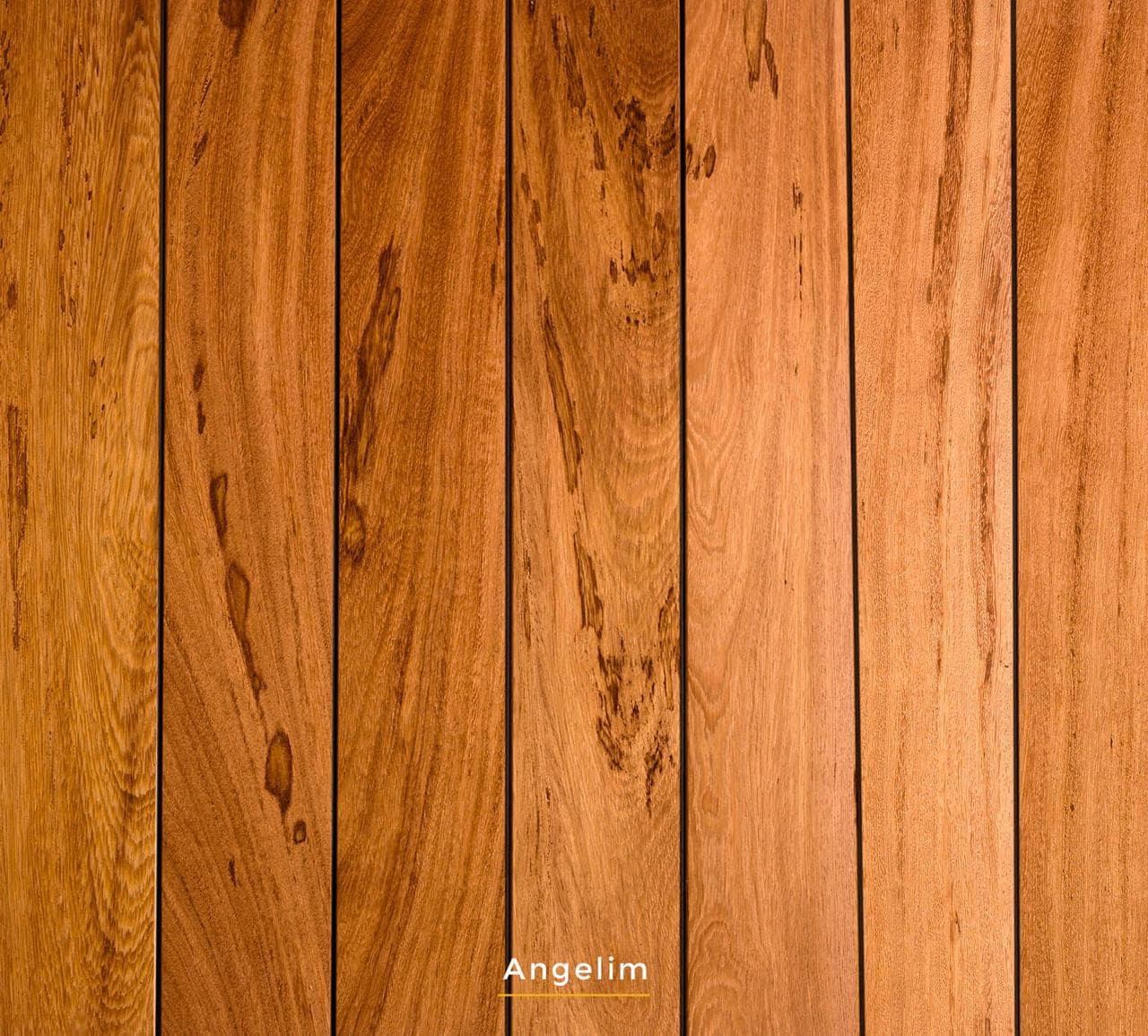
Understanding Angelim Decking for Elevated Applications
Angelim, also known as Angelim Pedra, is a dense and stable hardwood originating from Brazil. Its natural resistance to insects, rot, and moisture makes it a suitable material for outdoor use, including elevated structures like second-story decks. The heartwood typically presents a yellowish-beige hue that deepens to a pinkish-brown over time, offering a distinct aesthetic.
When considering Angelim for an elevated deck, its density contributes to its durability. However, this also means that pre-drilling is recommended for fastening, and proper ventilation is crucial for all hardwood decking to manage moisture and temperature fluctuations effectively, especially on a second story. Angelim is also absorptive, which allows it to take stains and oils well if you choose to finish it.
Angelim is available in various profiles, typically from 1x4 to 6x6, and lengths from 4 to 20 feet, depending on the profile. This range offers flexibility in design for your second-story deck. While the material is robust, its performance on an elevated structure is highly dependent on the underlying frame and installation practices.
Structural Framing for Second-Story Decks
The framing of a second-story deck is paramount, as it supports the entire structure and its occupants. Unlike ground-level decks, elevated decks must account for increased wind loads, seismic activity (where applicable), and the potential for greater deflection. The structural design should always be handled by a qualified engineer or architect to ensure compliance with local building codes.
For Angelim decking, a robust subframe is essential. Joist spacing should be carefully calculated based on the decking board thickness and expected loads. While Angelim is dense, appropriate spacing prevents sagging and ensures stability. Confirm the exact joist spacing requirements with your decking supplier and structural engineer.
Connection to the main house structure is another critical element. Ledger boards must be properly flashed and bolted to the house framing to prevent water intrusion and ensure a secure attachment. Freestanding second-story decks are also an option, requiring independent footings and columns, which may be preferred in certain scenarios or for larger spans.
Access and Safety Considerations
Access to a second-story deck typically involves stairs or, less commonly, ramps. The design of these access points must prioritize safety and adhere to local building codes regarding rise, run, handrail height, and guardrail requirements. For Angelim decking, consider how the material will be integrated into stair treads and risers for a cohesive look.
Guardrails are mandatory for elevated decks to prevent falls. These must be designed to withstand specific loads and prevent objects from passing through openings. When planning your Angelim deck, think about the guardrail material and style. Options include wood, metal, glass, or cable railings, each with its own aesthetic and maintenance considerations. Ensure the guardrail posts are securely anchored to the deck framing.
Drainage and Water Management for Elevated Decks
One of the most critical, yet often overlooked, aspects of a second-story deck is effective water management. Decking material, including Angelim, is not a waterproofing system. Rainwater will pass through the gaps between boards.
If the area beneath the second-story deck is a usable space (e.g., a patio, outdoor kitchen, or entry), an under-deck drainage system is necessary. These systems typically consist of troughs or panels installed below the joists to capture and divert water away from the structure. Without such a system, water dripping from above can damage finishes, outdoor furniture, or create an unpleasant environment below.
Ensure proper slope for the drainage system to allow water to run off effectively. Ventilation is also key for the longevity of both the decking and the substructure. Adequate airflow helps prevent moisture buildup, which can lead to rot or mildew on the joists and the underside of the decking. This is particularly important for dense hardwoods like Angelim.
Worked Example: Angelim Decking for a 12x16 Foot Second-Story Deck
Let's consider a hypothetical 12-foot by 16-foot second-story deck using Angelim decking. The total deck area is 192 square feet.
**Decking Board Selection:** Assume we select 1x6 (nominal size) Angelim decking boards. Actual dimensions may vary, so always confirm with the supplier. For calculation purposes, let's assume an actual width of 5.5 inches (0.458 feet) and a typical length of 12 feet.
**Board Quantity Estimate (Area-Equivalent):** To cover 192 square feet with 5.5-inch wide boards, we first calculate the linear footage needed: 192 sq ft / 0.458 ft width = approximately 419 linear feet. If boards are typically 12 feet long, you would need approximately 419 / 12 = 35 boards. However, this is a basic area-equivalent estimate.
**Accounting for Cuts and Waste:** In a real project, you'll need to account for cuts, waste, and specific board lengths. For a 12x16 deck, if running boards parallel to the 16-foot dimension, you would need 16-foot boards. If running parallel to the 12-foot dimension, you would need 12-foot boards. Let's assume a layout where boards run 12 feet in length.
So, you would purchase 35 full 12-foot long boards for the primary deck surface. This does not account for any picture framing or diagonal layouts.
These calculations are illustrative and must be verified by a structural engineer.
This system would be ordered separately and installed before the decking boards.
Before you order
- Confirm local building codes and obtain necessary permits for elevated structures.
- Engage a structural engineer for framing design, especially for ledger board attachment and joist sizing.
- Plan for safe access, including stairs and code-compliant guardrails.
- Determine if an under-deck drainage system is needed for the space below.
- Consider ventilation requirements for both the Angelim decking and the substructure.
- Select appropriate fasteners (hidden or face-fastened) compatible with Angelim and pre-drilling needs.
- Factor in potential finish treatments (oils, stains) for Angelim and their maintenance implications.
- Review available Angelim profiles and lengths to optimize your layout and minimize waste.
Confirm installation details, approved uses and warranty terms in the current instructions for the exact product and profile. Your installer should verify the substrate, structure and applicable project requirements.
Questions to help you decide
Can Angelim decking be used for a second-story deck?
Yes, Angelim is a durable hardwood with natural resistance to insects, rot, and moisture, making it suitable for outdoor applications, including second-story decks. However, proper structural framing, ventilation, and drainage are critical for its performance in an elevated setting.
Does Angelim decking require special fastening for elevated decks?
Angelim is a dense hardwood, so pre-drilling is recommended for all fasteners, whether you choose hidden fasteners or face-fastening. This prevents splitting and ensures a secure attachment to the subframe. Always follow the manufacturer's specific fastening guidelines.
Is an under-deck drainage system necessary with Angelim decking?
Angelim decking, like other decking materials, is not watertight. Water will pass through the gaps between boards. If the area beneath your second-story deck needs to remain dry, an under-deck drainage system is necessary to collect and divert water. This system is installed beneath the deck joists, independent of the decking itself.
Start Planning Your Angelim Second-Story Deck
Ready to elevate your outdoor living space with Angelim decking? Request a material quote with your project dimensions, desired Angelim profile, and ZIP code to confirm current availability and service options. Our team can assist with material estimates and product details for your second-story deck project.
Request a material quote →