Understanding Angelim for Commercial Applications
Angelim is a durable hardwood, often referred to as Angelim Pedra, that provides inherent resistance to insects, rot, and fungi, making it suitable for outdoor use. Its density and stability are key attributes for areas experiencing consistent foot traffic, such as a restaurant patio. This durability helps reduce the frequency of material replacement and associated labor costs.
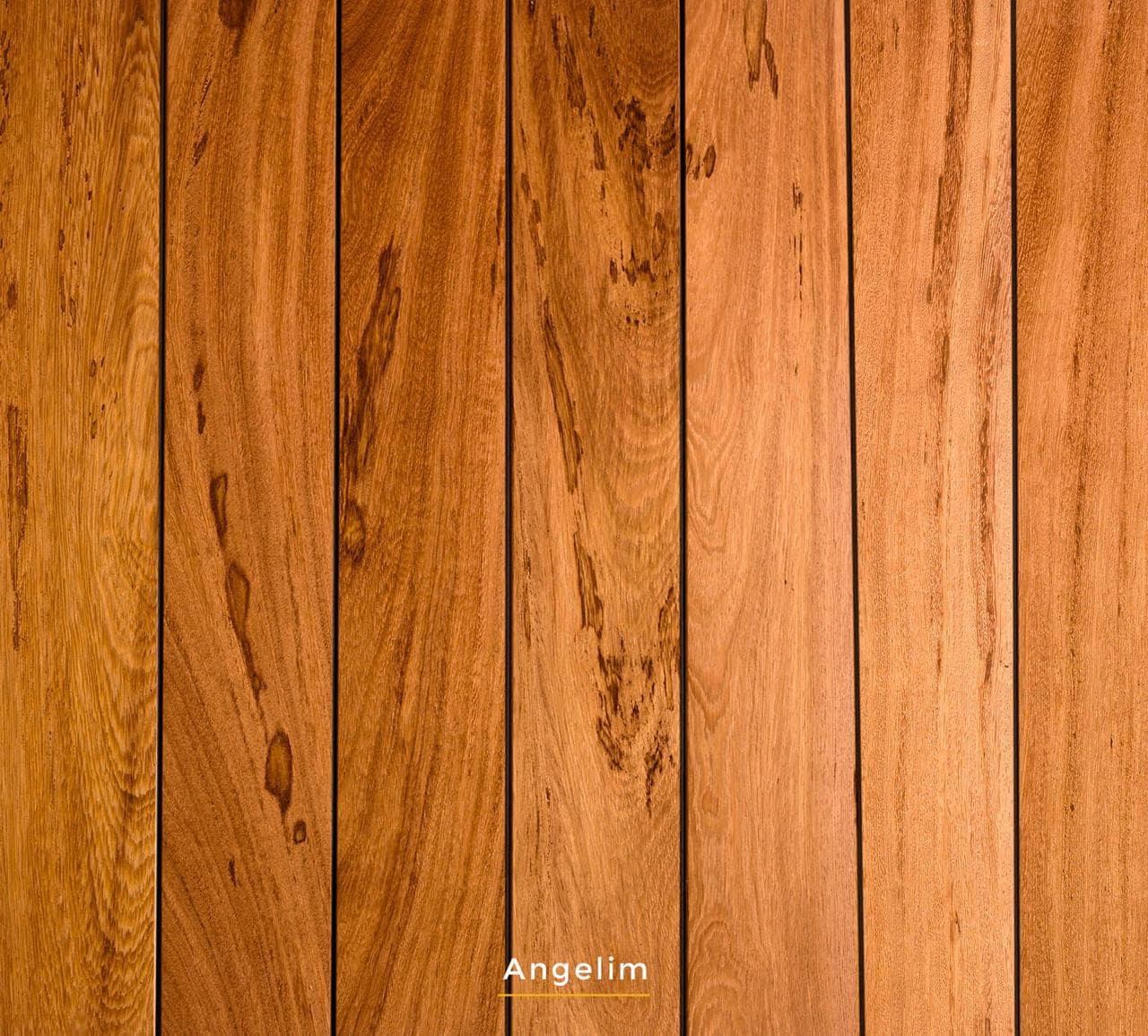
The wood's aesthetic, with its evolving color profile, can contribute to the ambiance of an outdoor dining area, transitioning from a yellowish beige to a deeper pinkish brown. This natural variation can create a warm and inviting atmosphere. Angelim is also described as absorptive, which facilitates finishing with stains and oils, allowing for customization to match a restaurant's specific design palette or to enhance its natural tones.
Designing for Commercial Foot Traffic and Seating Layouts
A restaurant patio must accommodate not only diners but also staff moving between tables, often carrying trays and equipment. The decking material needs to withstand this constant movement without excessive wear. Angelim's density and stability are well-suited for such demands. When planning the layout, consider how the decking boards will align with anticipated traffic paths and seating arrangements.
For a typical restaurant patio measuring 20 feet by 30 feet, creating distinct zones for dining and service can optimize flow. For instance, a central dining area might use a straight lay of 1x4 or 1x6 Angelim boards, while a perimeter service path could be defined by a contrasting border or a change in board direction. This approach helps manage wear and tear in high-traffic corridors and can also guide customers and staff intuitively through the space. Ensure that any seating or planters are distributed in a way that does not overload specific sections of the deck structure.
Specification Review for Commercial Projects
When specifying Angelim for a restaurant patio, it is important to review the available profiles and lengths. Angelim is available in profiles such as 1x4 through 6x6, with lengths ranging from 4 to 20 feet, depending on the specific profile. These options allow for flexibility in design and minimize waste. For a large patio, longer boards can reduce the number of seams, contributing to a more expansive and cleaner look.
Consider the drying method (Air Dried or Kiln Dried) as this can influence the wood's stability and how it acclimates on site. For commercial applications, consistent material quality is crucial. Always confirm the exact specifications with your supplier to ensure the material meets your project's structural and aesthetic requirements.
The natural resistance of Angelim to moisture and termites is a significant advantage for outdoor commercial settings, potentially reducing the need for certain chemical treatments or extensive pest control measures typically associated with less durable wood species. This inherent durability supports a more sustainable and lower-maintenance approach for the restaurant owner.
Maintenance Considerations for Restaurant Patios
Restaurant patios are exposed to spills, food debris, and heavy use, requiring regular cleaning. Angelim is absorptive, making it amenable to finishing with stains and oils. This characteristic allows for easier cleaning and maintenance, as a well-finished surface can resist spills and dirt more effectively. Regular cleaning with appropriate products compatible with the finish is recommended to maintain its appearance and prolong its life.
While Angelim is naturally resistant to rot and insects, a consistent maintenance schedule, including periodic cleaning and reapplication of finishes, will help preserve its aesthetic appeal and structural integrity under commercial use. This proactive approach can prevent the buildup of grime and extend the period before more intensive restoration might be needed. Always consult the finish manufacturer's guidelines for compatible cleaning solutions and application methods.
Worked Example: Quantifying Angelim for a Restaurant Patio
Let's consider a hypothetical restaurant patio that is 20 feet wide and 30 feet long, totaling 600 square feet. The design calls for 1x6 (nominal size) Angelim decking boards laid parallel to the 20-foot width, with a picture-frame border around the perimeter. We'll use actual dimensions for calculation: a 1x6 board is typically 5.5 inches wide.
First, calculate the number of boards needed for the main field. For a 30-foot length (360 inches), the number of board runs across the width will be 360 inches / 5.625 inches/board = 64 boards. Therefore, 64 boards of 20-foot length are needed for the main field.
For a picture-frame border, assume a single board width. This adds two 30-foot lengths and two 20-foot lengths. Since the main field already covers the 30-foot dimension, we primarily need to account for the additional material to create the border visually. If using 1x6 boards for the border, two 20-foot boards will be needed for the ends, and two 30-foot boards for the sides, with mitered corners. This example simplifies the border calculation for illustrative purposes; actual border layouts may require more complex cuts and waste factors. This calculation does not account for waste due to cuts, defects, or future repairs; always add an overage, typically 10-15%, for commercial projects.
Total linear footage for the main field: 64 boards * 20 feet/board = 1280 linear feet. For the border, assuming four 20-foot boards (to allow for cuts for the 30-foot sides), this would be 80 additional linear feet. Total hypothetical purchase quantity for this layout, before waste factor, would be approximately 1360 linear feet of 1x6 Angelim decking.
Before you order
- Confirm local building codes and commercial use requirements for outdoor decking materials.
- Evaluate anticipated foot traffic patterns and seating layouts to optimize board orientation and minimize wear.
- Specify Angelim board dimensions (e.g., 1x4, 1x6) and lengths to reduce waste and achieve desired aesthetic.
- Plan for proper deck ventilation and drainage, crucial for long-term hardwood performance.
- Select appropriate fasteners (hidden or face-fastened) compatible with Angelim and commercial use.
- Choose a compatible finish (stain or oil) to protect the wood and simplify cleaning.
- Establish a routine maintenance schedule for cleaning and re-finishing to preserve the patio's appearance and durability.
- Request a material quote with project dimensions, desired profiles, and your ZIP code for accurate pricing and availability.
Confirm installation details, approved uses and warranty terms in the current instructions for the exact product and profile. Your installer should verify the substrate, structure and applicable project requirements.
Questions to help you decide
Is Angelim suitable for high-traffic commercial areas like restaurant patios?
Yes, Angelim is described as a very durable hardwood with density and stability that make it suitable for areas with consistent foot traffic. Its natural resistance to insects, rot, and fungi further contributes to its suitability for demanding outdoor commercial applications.
How do I maintain Angelim decking on a restaurant patio?
Angelim is absorptive, making it easy to finish with stains and oils. For a restaurant patio, regular cleaning with products compatible with your chosen finish is recommended to manage spills and debris. Periodic reapplication of the finish will help protect the wood and maintain its appearance under commercial use. Consult the finish manufacturer for specific maintenance guidelines.
What colors does Angelim decking come in?
The heartwood of Angelim is naturally yellowish beige and darkens to a pinkish brown over time. The sapwood is typically white to grayish. This natural color evolution can contribute to the character of your patio. Finishes can be applied to enhance these natural tones or to achieve a different aesthetic.
Plan Your Restaurant Patio with Angelim Decking
Ready to enhance your restaurant's outdoor dining experience? Request a material quote for Angelim decking today. Provide your project dimensions, exact profile preferences, and ZIP code to confirm current availability and service options for your commercial project.
Request a material quote →