Understanding the Picture-Frame Concept
A picture-frame border, also known as a perimeter board, creates a finished edge around your deck. This design can hide the cut ends of the field boards, provide a clean transition, and add a custom touch to the deck's appearance. The contrast in board direction can also make the deck appear larger or more intentionally designed.
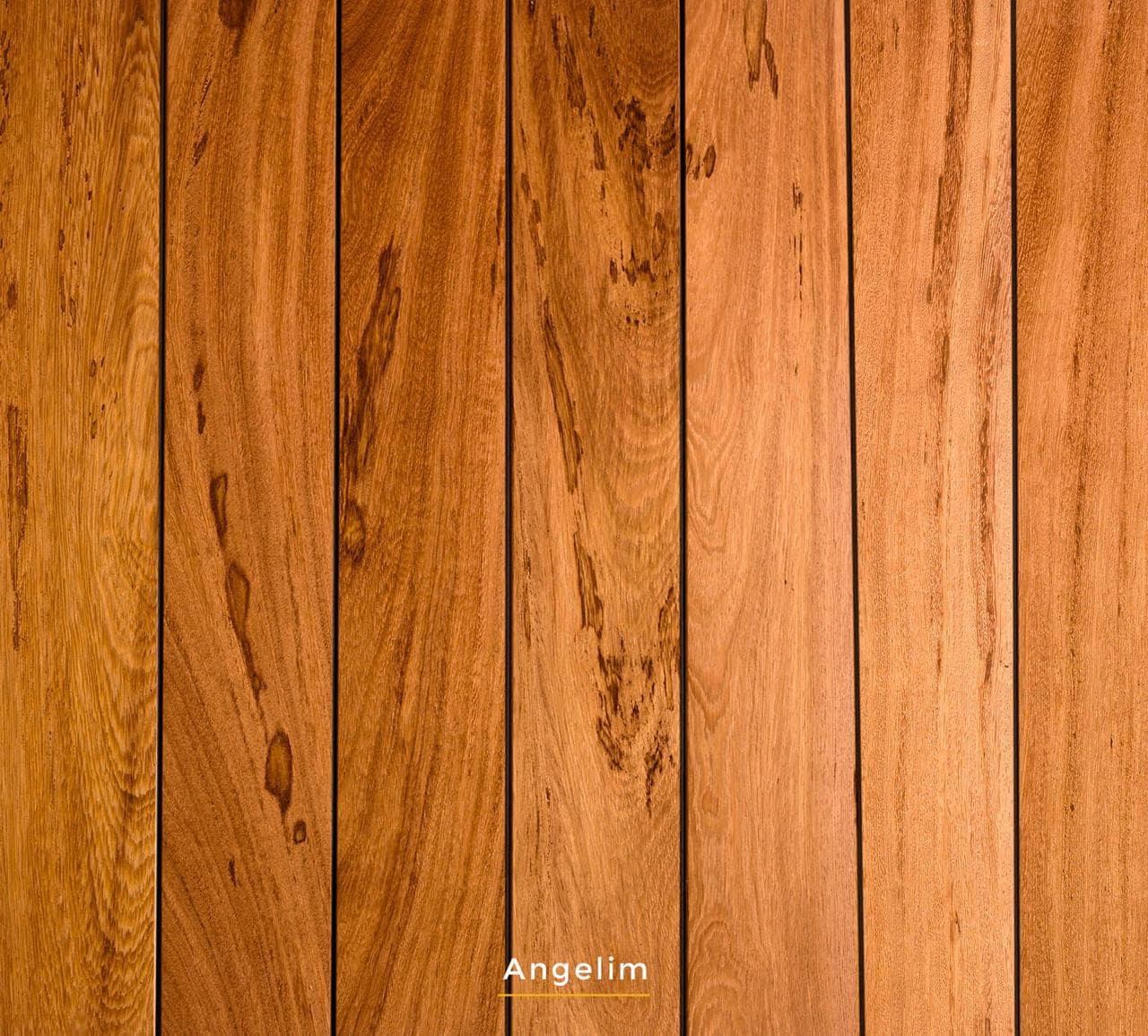
When using Angelim, the natural color of the heartwood, which ranges from yellowish-beige to pinkish-brown, can be enhanced by this framing technique. The visible grain patterns running in different directions can draw attention to the quality of the hardwood. Angelim is a very durable wood, resistant to insects, rot, and fungi, which makes it suitable for both the main deck surface and the exposed perimeter boards. (S1)
Structural Support: Blocking and Joist Considerations
Implementing a picture-frame border requires specific structural support, particularly for the boards running perpendicular to the main joists. The ends of these perimeter boards, as well as the ends of the field boards where they meet the perimeter, must be adequately supported. This typically involves installing additional blocking between the joists.
Blocking should be installed at every point where a board end will land. For a single picture-frame border, blocking is needed along the perimeter of the deck where the field boards terminate. If you plan a double or triple picture frame, additional blocking will be required to support the ends of each border board. These blocks provide a solid fastening surface and ensure the stability of the perimeter, preventing warping or movement over time. Proper fastening of these blocks to the main joists is crucial for the overall structural integrity of the deck.
Selecting Angelim Boards for the Border
Angelim decking is available in various profiles and lengths, typically from 1x4 through 6x6, and lengths from 4 to 20 feet, depending on the profile. For a picture-frame border, you will primarily use the same board profile as your main deck surface to maintain a consistent height and appearance. However, the choice of board length for the border can impact the number of seams and the overall aesthetic.
Consider using the longest possible Angelim boards for your perimeter to minimize butt joints. While Angelim's heartwood is yellowish-beige, darkening to pinkish-brown, and its sapwood is white to greyish, selecting boards with consistent color and grain for the border can create a more cohesive frame. Angelim's density and stability make it an excellent choice for decking, and its resistance to termites and moisture contributes to its durability in exposed applications. (S1)
Integrating Fascia Boards for a Finished Edge
Fascia boards are applied vertically to the rim joists and any exposed sides of the deck frame to conceal the substructure and create a clean, finished appearance. For an Angelim deck with a picture-frame border, matching the fascia material to the decking provides a cohesive look. Angelim is suitable for exterior joinery and cladding, making it a natural fit for fascia applications. (S1)
When planning fascia, consider the thickness and width needed to cover the rim joists and any blocking. Angelim boards, available in various dimensions, can be used for fascia. Ensure that the fascia is properly supported and fastened to the substructure, especially if it will be exposed to the elements. The natural resistance of Angelim to insects and rot makes it a durable choice for this exposed application.
Worked Example: Planning a 12x10 Foot Deck with a Single Picture Frame
Let's assume a hypothetical 12-foot by 10-foot rectangular deck. We'll use 1x6 (nominal) Angelim decking boards, which are approximately 5.5 inches wide. We aim for a single picture-frame border.
First, determine the interior dimensions for the field boards. For a single 5.5-inch wide border board on each side, the interior length will be 12 feet - (2 * 5.5 inches) = 12 feet - 11 inches = 11 feet 1 inch. The interior width will be 10 feet - (2 * 5.5 inches) = 10 feet - 11 inches = 9 feet 1 inch.
Next, calculate the board footage for the border. The two 12-foot sides each need one 12-foot board. The two 10-foot sides will have their border boards butt into the 12-foot side border boards. So, they will each need a board of 10 feet - (2 * 5.5 inches) = 9 feet 1 inch. In practice, you would likely purchase full 10-foot boards and cut them to fit, accounting for waste.
The field boards would run perpendicular to these joists. This means you will need to install blocking between the joists at the ends of all field boards and where the perimeter boards meet. For a 12x10 deck, you would need blocking along the entire 12-foot length on both sides of the main field area.
Always factor in extra material for cuts and potential waste. Angelim's workability, while dense, allows for clean cuts with proper tools, though pre-drilling is recommended for fasteners. (S1)
Before you order
- Determine the desired width of your picture-frame border (single, double, etc.).
- Calculate the adjusted interior dimensions for your main deck field.
- Plan for additional blocking between joists to support all perimeter board ends and field board ends.
- Select Angelim board lengths for the perimeter to minimize seams.
- Coordinate Angelim fascia board dimensions to match the border and cover the substructure.
- Account for potential waste in your material order, especially for cuts.
- Confirm fastening methods for both field boards and border boards, noting that pre-drilling is recommended for Angelim.
Confirm installation details, approved uses and warranty terms in the current instructions for the exact product and profile. Your installer should verify the substrate, structure and applicable project requirements.
Questions to help you decide
Why choose Angelim for a picture-frame deck border?
Angelim is a very durable hardwood, resistant to termites, moisture, insects, rot, and fungi, making it an excellent choice for exposed deck elements like a picture-frame border. Its distinct yellowish-beige to pinkish-brown heartwood can create an attractive, defined edge.
What kind of structural support is needed for a picture-frame border?
A picture-frame border requires additional blocking installed between the deck joists. This blocking provides a solid fastening surface for the ends of the perimeter boards and the field boards where they meet the border. Proper support ensures stability and prevents movement or warping of the border. (S1)
Can I use different width Angelim boards for the border than the main deck?
While it's common to use the same board width for consistency, you could theoretically use a wider Angelim board for a more prominent picture-frame effect. However, ensure that the chosen width is adequately supported by your framing and that the height remains consistent with the field boards for a smooth transition. Always plan your blocking accordingly. (S1)
Ready to Design Your Angelim Deck with a Picture Frame?
Request a material quote with your project dimensions, exact Angelim profile, and ZIP code to confirm current availability and service options. We can help you plan the details for a stunning and durable outdoor space.
Request a material quote →