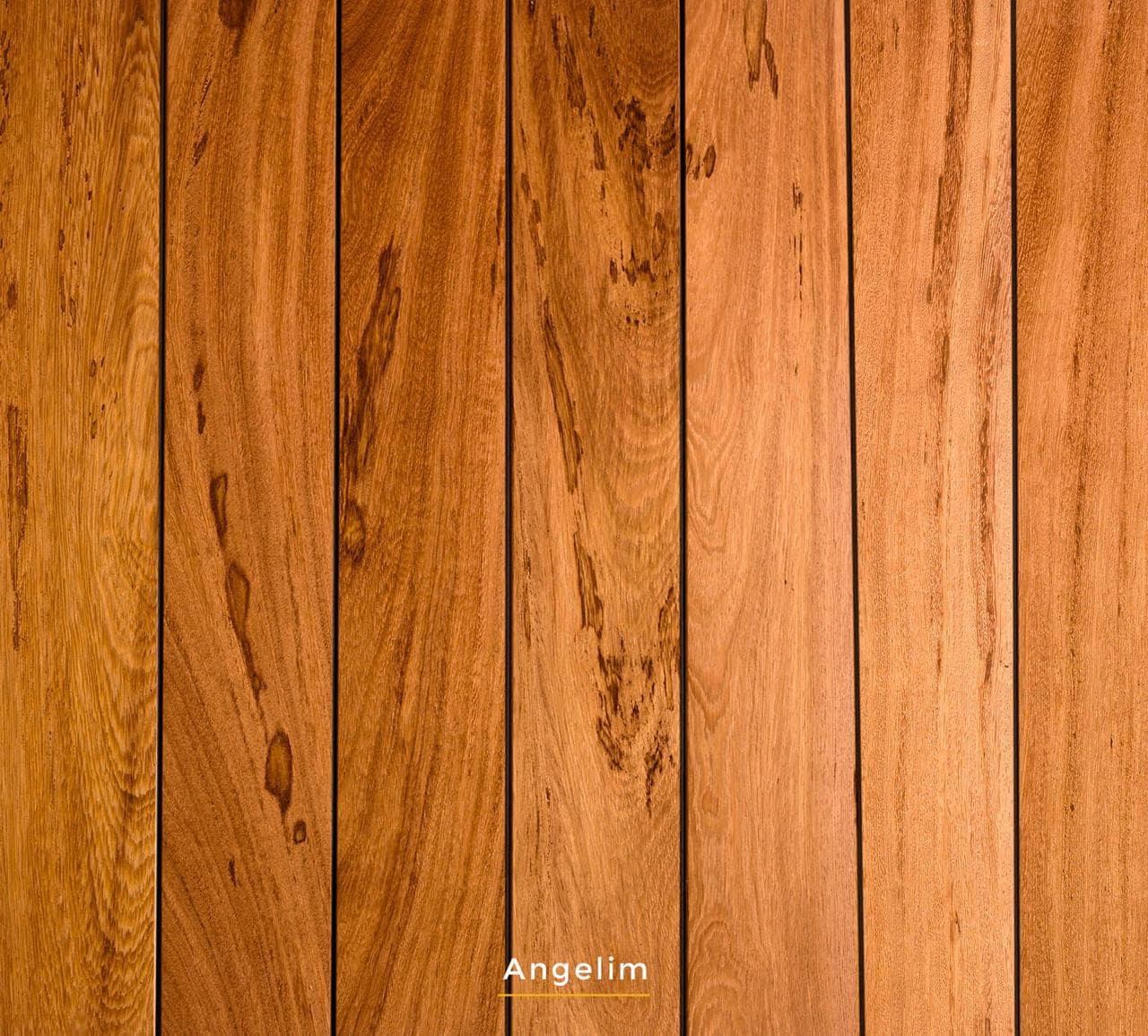
Angelim's Natural Resistance in Coastal Environments
Angelim is known for its natural resistance to insects, rot, and fungi, which makes it well-suited for outdoor use. Its density and stability contribute to its overall durability. These characteristics are beneficial in coastal areas where high humidity and moisture can accelerate decay in less resistant wood species.
The wood's inherent resistance to moisture is a significant advantage in a coastal setting, where salt-laden air and occasional splashing can be constant factors. While no material is entirely impervious to environmental effects, Angelim's properties suggest a robust performance against common forms of degradation that affect outdoor wood in damp conditions. However, direct, prolonged submersion or contact with standing saltwater is a different challenge that requires specific design considerations, such as elevated foundations and proper drainage.
Understanding Salt Exposure and Material Compatibility
One of the primary concerns for coastal decking is exposure to salt. Salt spray can be corrosive to certain metals and can accelerate the weathering process of some wood finishes. While Angelim itself is a durable wood, the hardware used for its installation, such as fasteners and connectors, must be chosen carefully to resist corrosion.
For coastal applications, it is generally recommended to use marine-grade stainless steel fasteners. These fasteners are designed to withstand the corrosive effects of saltwater and salt spray, preventing premature degradation and staining that can occur with lesser materials. Checking manufacturer specifications for both the decking and the fasteners is essential to ensure compatibility and long-term performance.
Installation Considerations for Coastal Climates
Angelim is described as easy to install, though pre-drilling is recommended due to its density. In a coastal environment, proper installation techniques become even more critical. Adequate ventilation beneath the deck is vital to prevent moisture buildup, which can lead to issues like warping or fungal growth, even in naturally resistant woods. Ensure there is sufficient airflow to allow the deck boards to dry evenly after rain or exposure to sea spray.
Board spacing is another important factor. Hardwood decking, including Angelim, requires specific spacing between boards to allow for natural expansion and contraction due to changes in humidity and temperature. This spacing also facilitates drainage and airflow. Always follow the manufacturer's recommended board spacing to avoid issues related to moisture retention and structural stress. For coastal areas, where humidity fluctuations can be significant, precise spacing is particularly important.
Maintenance and Finishing for Coastal Angelim Decks
Angelim heartwood is yellowish beige, darkening to pinkish brown, and is absorptive, making it easy to finish with stains and oils. For coastal decks, regular maintenance is crucial to preserve its appearance and extend its lifespan. While Angelim is naturally resistant, a quality finish can provide an additional layer of protection against UV radiation and moisture.
Regular cleaning to remove salt residue, sand, and other debris is recommended. Salt can accumulate on the surface and, over time, affect the wood and its finish. A mild, pH-neutral cleaner and soft brush can be used. Reapplying a protective oil or stain periodically, according to the product manufacturer's instructions, will help maintain the wood's color and protect it from the elements. Consider finishes specifically designed for marine or high-exposure environments.
Worked Example: Planning Angelim Decking for a Coastal Home
Consider a hypothetical coastal home deck measuring 12 feet by 20 feet, totaling 240 square feet. The homeowner wants to use Angelim decking in a 1x6 profile, which typically comes in lengths of 4 to 20 feet. For this example, we will assume 16-foot lengths are selected to minimize butt joints and optimize board usage.
First, calculate the number of boards needed. A 1x6 board is approximately 5.5 inches wide (actual dimension). For a 12-foot width (144 inches), you would need 144 / 5.5 = 26.18 boards. Round up to 27 boards. For the 20-foot length, using 16-foot boards means each run will require one full 16-foot board and a 4-foot cut. This means for each 12-foot width section, you would need 27 boards, and since the deck is 20 feet long, you'll have one full run of 16-foot boards and a 4-foot section. To cover the 20-foot length, you'd effectively need 20/16 = 1.25 board lengths per row. So, 27 boards * 1.25 = 33.75 total 16-foot board equivalents. This translates to roughly 34 individual 16-foot boards for the main deck surface, assuming minimal waste and efficient cutting for the 4-foot sections. Always add 10-15% for cuts, waste, and future repairs. So, 34 boards + 10% = 37.4, rounded up to 38 boards of 1x6x16 Angelim.
Selecting marine-grade stainless steel screws is critical for this coastal application. Lastly, ensure the deck design incorporates adequate ventilation, such as open lattice skirting, to promote airflow and prevent moisture accumulation under the deck structure.
Before you order
- Assess direct exposure to salt spray and wind for your specific location.
- Verify local building codes for deck construction in coastal zones.
- Confirm the availability of Angelim in the desired profiles (e.g., 1x4, 1x6).
- Select marine-grade stainless steel fasteners for corrosion resistance.
- Plan for proper deck ventilation and drainage to prevent moisture buildup.
- Budget for regular cleaning and reapplication of UV-protective finishes.
- Consider the aesthetic impact of natural weathering versus maintaining original color with finishes.
- Review warranty information regarding salt exposure and maintenance requirements.
Confirm installation details, approved uses and warranty terms in the current instructions for the exact product and profile. Your installer should verify the substrate, structure and applicable project requirements.
Questions to help you decide
Is Angelim resistant to saltwater corrosion?
Angelim itself is a dense, durable hardwood with natural resistance to moisture and decay. However, saltwater exposure primarily affects metal fasteners and can accelerate weathering of the wood's surface if not properly maintained. The wood itself is not 'corrosion-resistant' in the same way metal is, but its inherent durability helps it withstand the harsh coastal environment when paired with appropriate installation and maintenance.
What type of fasteners should I use for Angelim decking in a coastal area?
For coastal applications, marine-grade stainless steel fasteners are highly recommended. These fasteners are specifically designed to resist the corrosive effects of salt spray and moisture, ensuring the structural integrity and appearance of your deck over time. Avoid standard galvanized or coated screws, as they may corrode prematurely in a marine environment.
How often should I clean and re-seal my Angelim deck in a coastal environment?
The frequency of cleaning and re-sealing depends on the level of exposure to salt, sun, and other elements. Generally, a coastal Angelim deck should be cleaned regularly to remove salt residue and debris, perhaps monthly or quarterly. Re-sealing or re-oiling should typically occur annually or bi-annually, or as recommended by the specific finish manufacturer, to maintain its protective barrier against UV radiation and moisture.
Plan Your Angelim Coastal Decking Project
Ready to build a durable and beautiful Angelim deck for your coastal home? Request a material quote today by providing your project dimensions, desired Angelim profile, and ZIP code. We can also confirm current availability and service options to help you get started.
Request a material quote →