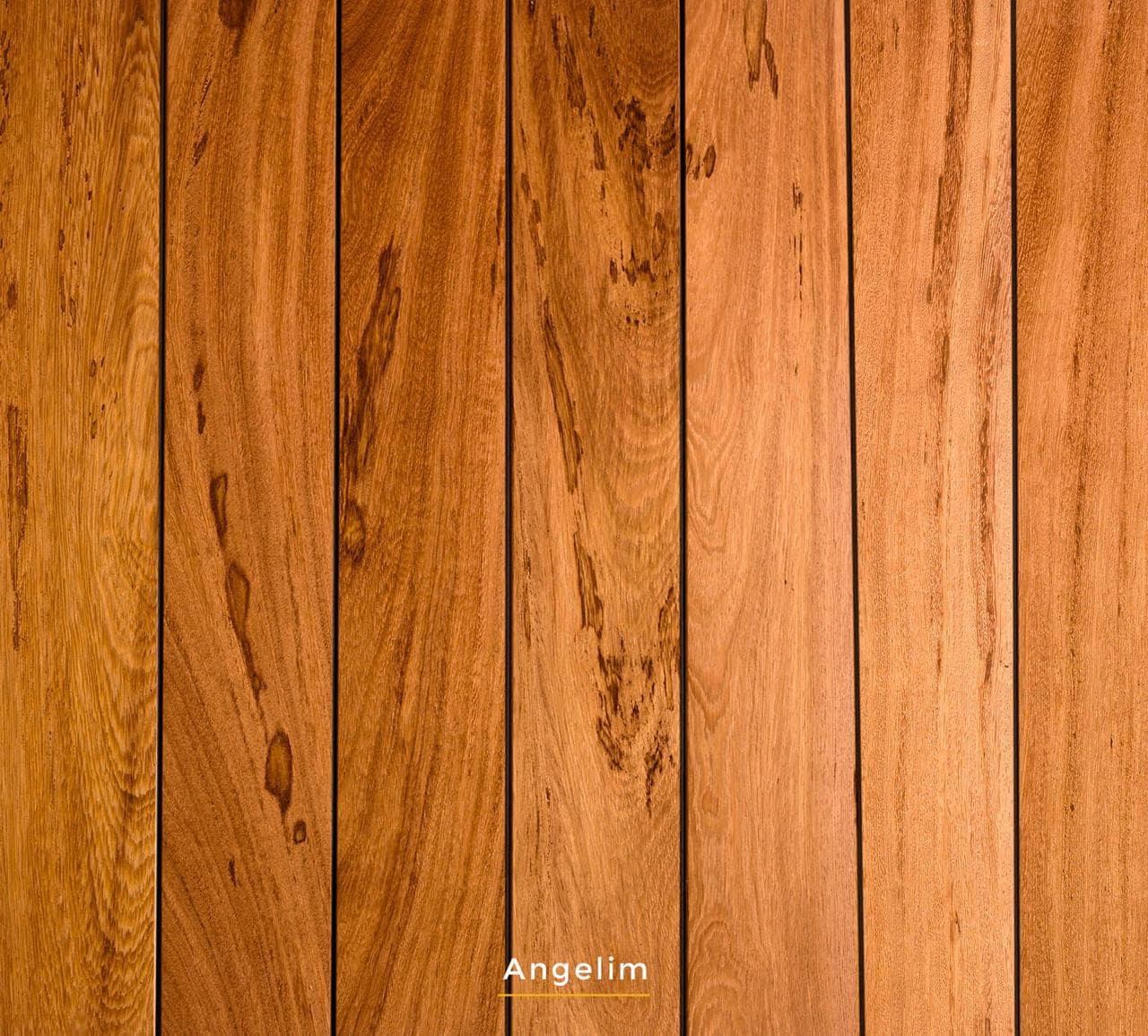
Understanding Angelim Decking Profiles
Angelim decking is typically available in a range of profiles, most commonly as 1x4 and 1x6 boards, but also in other dimensions up to 6x6. The "1x" designation generally refers to a nominal thickness, with the actual milled thickness often being closer to 3/4 inch. The width, such as 4 inches or 6 inches, also refers to a nominal dimension, with the actual width being slightly less for finished boards. These standard widths are designed to work with common framing dimensions and provide a consistent appearance.
The choice between a narrower board, like a 1x4, and a wider board, like a 1x6, affects the visual rhythm of your deck. Narrower boards can create a more intricate, detailed look with more visible seams, while wider boards offer a broader, more expansive appearance with fewer lines across the deck surface. The actual dimensions of available boards can vary, so always confirm the exact profile and finished size when planning your order.
Angelim is sourced from Brazil and is recognized for its strength and reliability. The wood is also noted for being absorptive, which allows for easy finishing with stains and oils if you choose to maintain its initial color or alter its hue.
Visual Impact: Narrow vs. Wide Boards
The width of your Angelim decking boards plays a significant role in the overall aesthetic of your deck. Narrower boards, such as those with a 4-inch face, tend to create a busier, more linear pattern. This can be desirable for smaller decks or intricate designs where you want to emphasize the lines and direction of the decking. The increased number of board edges and fastener points (if face-fastened) contributes to this detailed look.
Wider boards, like those with a 6-inch face, generally result in a more contemporary and expansive feel. They reduce the number of visible seams across the deck, creating a smoother, more unified surface. This can be particularly effective on larger decks where a less cluttered appearance is desired. The choice often comes down to personal preference and how you want the deck to integrate with the surrounding architecture and landscape.
Consider the scale of your project: a very large deck might benefit from wider boards to avoid a visually overwhelming number of lines, while a small balcony could use narrower boards to add a sense of detail and craftsmanship. The natural color variation of Angelim, from yellowish beige to pinkish brown, will also be more evident across wider boards, showcasing the wood's inherent beauty.
Calculating Material Needs for Different Widths
Accurately calculating the quantity of Angelim decking boards needed is crucial to avoid waste and ensure you have enough material. The key is to work with the actual finished width of the boards, not just the nominal size. Remember to account for the necessary spacing between boards, which is critical for drainage and wood movement.
Let's consider a hypothetical deck that is 12 feet wide by 10 feet deep, where boards will run along the 12-foot length. For a 10-foot depth, you would need 10 feet / 0.302 feet/board ≈ 33.11 boards. Rounding up, you would need 34 boards, each 12 feet long. Total linear footage would be 34 boards * 12 feet/board = 408 linear feet.
For the same 10-foot depth, you would need 10 feet / 0.469 feet/board ≈ 21.32 boards. Rounding up, you would need 22 boards, each 12 feet long. Total linear footage would be 22 boards * 12 feet/board = 264 linear feet.
This example demonstrates how different board widths significantly alter the total number of boards and linear footage required for the same area. Always add an allowance for cuts, waste, and potential board selection, typically 5-10% extra, depending on the complexity of your deck layout.
Installation Considerations for Board Widths
While Angelim is described as easy to install, pre-drilling is recommended, particularly for hardwoods. The width of the board can influence the fastening method and the number of fasteners required. Wider boards may require additional fasteners to ensure stability and prevent cupping, especially when face-fastening.
Hidden fastening systems are often compatible with various board widths, but it's crucial to verify the specific system's requirements for each board dimension. These systems typically rely on clips that fit into grooves on the board edges or attach to the sides, maintaining consistent spacing. When face-fastening, wider boards may benefit from an extra row of fasteners in the center, depending on the board's thickness and the joist spacing.
Regardless of the width chosen, proper joist spacing is essential for supporting the decking. Consult local building codes and manufacturer recommendations for joist spacing relevant to your chosen board thickness and expected load. Angelim's density and stability make it a reliable choice for decking, but correct installation practices are key to realizing its full lifespan and performance.
Complementary Materials and Design Elements
The choice of Angelim board width can also influence other design elements of your deck. For example, if you opt for wider boards for the main deck surface, you might consider using narrower boards for a picture-frame border or for deck stairs to create visual contrast or delineate different areas. This can add a custom touch to your project.
Angelim's heartwood color, which ranges from yellowish beige to pinkish brown, pairs well with a variety of railing materials, from metal to other hardwoods. Consider how your chosen board width will interact with the scale of your railing posts, balusters, and any built-in benches or planters. A wider board might visually balance a more robust railing system, while narrower boards could complement a lighter, more open railing design.
For additional outdoor materials, consider how Angelim decking integrates with other hardwood options like Ipe decking, which shares similar durability characteristics but offers a distinct color profile. For low-maintenance alternatives, composite decking or PVC decking provide different aesthetic and upkeep considerations that might influence your overall design approach.
Before you order
- Determine the desired visual rhythm for your deck: do you prefer a busy, linear look (narrow boards) or a broad, expansive surface (wide boards)?
- Measure your deck area accurately to calculate the total linear footage required for each board width option, factoring in board spacing.
- Add a waste factor (typically 5-10%) to your material calculations for cuts and selection.
- Confirm the actual finished dimensions of the Angelim decking boards you intend to purchase.
- Consider how board width will impact your chosen fastening method (hidden vs. face-fastening) and any additional fastener requirements.
- Think about how different board widths can be used for design elements like borders, stairs, or accent areas.
- Review local building codes and manufacturer guidelines for joist spacing and installation practices relevant to your chosen board thickness and width.
Confirm installation details, approved uses and warranty terms in the current instructions for the exact product and profile. Your installer should verify the substrate, structure and applicable project requirements.
Questions to help you decide
What are the common widths for Angelim decking boards?
Angelim decking boards are commonly available in nominal 1x4 (approximately 3.5 inches actual width) and 1x6 (approximately 5.5 inches actual width) profiles. Other widths may also be available, so it's best to confirm with your supplier for exact dimensions.
Does board width affect the durability or lifespan of Angelim decking?
However, proper installation, including correct fastening for the chosen width and adequate spacing, is crucial for the long-term performance and stability of any board width.
Should I use the same board width for the entire deck?
While using a single board width creates a uniform look, mixing widths or using different widths for specific areas like borders, stairs, or built-in features can add visual interest and a custom design touch. The choice depends on your aesthetic preference and design goals for the project.
Ready to Plan Your Angelim Decking Project?
Request a material quote today with your project dimensions, desired Angelim profile (e.g., 1x4 or 1x6), and your ZIP code. Our team can help confirm current availability and service options for your specific needs. Visit our website to get started: /contact-us
Request a material quote →