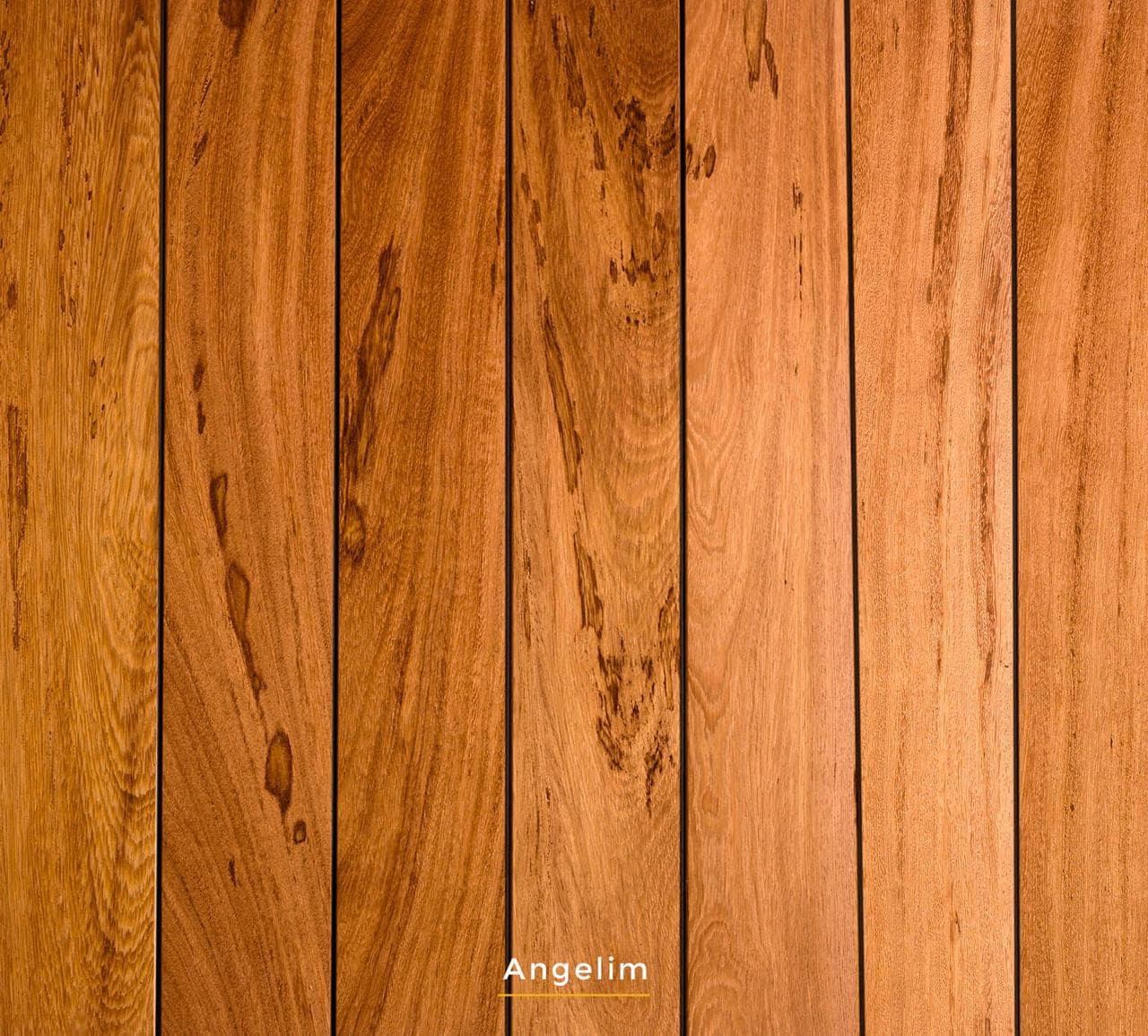
Understanding Angelim Decking Board Availability
Angelim decking boards are typically available in a range of lengths, often from 4 feet to 20 feet, depending on the specific profile (e.g., 1x4, 6x6). These lengths are provided as nominal measurements, and actual dimensions may vary slightly. Planning your deck layout around these standard lengths can help minimize waste and simplify installation.
Knowing the available lengths before you finalize your design allows you to optimize cuts and reduce the number of visible seams. For larger decks, it's often more economical and visually appealing to use longer boards where possible, reserving shorter lengths for areas that require cuts or smaller sections.
The Role of Joist Spacing in Board Length Decisions
The spacing of your deck joists is fundamental to planning board lengths and seam locations. Decking boards must be adequately supported to prevent sagging and ensure stability. Consult your local building codes and the manufacturer's specific installation guidelines for precise requirements.
When a board end meets a joist, it's crucial that the board is fully supported. This often requires wider joists or blocking to provide sufficient bearing surface for both board ends.
Minimizing Seams and Planning Butt Joints
While Angelim is available in longer lengths, it's often impractical or impossible to cover an entire deck surface with a single, continuous board. Therefore, planning for butt joints (seams where two board ends meet) is a necessary part of the design process. The goal is typically to minimize the number of seams and arrange them in a visually appealing, staggered pattern.
Avoid creating a straight line of seams across the deck, which can draw unwanted attention and potentially create a weak point. Instead, stagger your butt joints so they are not aligned in adjacent rows. This distributes stress more evenly and creates a more natural, cohesive look.
Worked Example: Planning Angelim Decking for a 12x18 Foot Deck
We will use 1x6 Angelim decking boards, available in lengths of 4, 8, 12, and 16 feet.
For the 18-foot length, we want to minimize cuts and seams. A 16-foot board combined with a 4-foot board (total 20 feet) would require a 2-foot cut. A 12-foot board combined with an 8-foot board (total 20 feet) would also require a 2-foot cut. A 12-foot board followed by a 6-foot section (cut from an 8-foot or 12-foot board) would be another option. To reduce waste, we aim for combinations that use full lengths or produce reusable offcuts.
One approach is to use a pattern of 12-foot and 6-foot sections. For each row, you could lay a 12-foot board, followed by a 6-foot section (cut from an 8-foot board, leaving a 2-foot offcut). In the next row, you could start with the 6-foot section (if a usable offcut from the previous row exists or cut from an 8-foot board) and then a 12-foot board. This staggers the seams. The butt joints must land on a joist.
For the first row, use a 12-foot board. For the next row, start with a 6-foot section, followed by a 12-foot board, staggering the seam. This strategy minimizes waste by using standard lengths and ensuring all butt joints are supported.
To calculate the total number of boards, we need to determine how many 1x6 boards fit across the 12-foot width. We would round up to 27 boards to ensure full coverage and account for potential cuts or waste. Each 18-foot row would consist of one 12-foot board and one 6-foot section. Therefore, for 27 rows, you'd need approximately 27 x 12-foot boards and 27 x 6-foot sections. The 6-foot sections would be cut from 8-foot or 12-foot boards, generating offcuts.
Considerations for Coastal and Winter Climates
Angelim is noted for its resistance to moisture, making it a robust choice for various climates, including those with coastal exposure or winter conditions. However, in such environments, careful planning of board lengths and seams becomes even more critical. Proper spacing between boards for drainage and ventilation is essential, particularly where moisture exposure is high. The natural resistance of Angelim to moisture helps it perform well, but maintaining good airflow beneath the deck is still important to prevent moisture buildup.
In areas with freeze-thaw cycles, ensuring that butt joints are tightly secured and properly supported on joists helps prevent movement and potential damage. While Angelim is a stable wood, all wood materials will experience some expansion and contraction with temperature and humidity changes. Planning for these environmental factors at the design stage can extend the life and appearance of your deck.
Complementary Products for Your Angelim Deck
Beyond the decking boards themselves, consider other products that will enhance your Angelim deck project. For structural support, ensure your joists and beams are robust and properly spaced. For fasteners, consider options that are compatible with hardwood and suitable for outdoor use. Hidden fastening systems can provide a clean, fastener-free surface, while face fasteners offer a traditional look and secure hold. Always verify the compatibility of any fastener system with Angelim hardwood.
For finishing, Angelim is described as absorptive and easy to finish with stains and oils. Choosing a high-quality deck oil or stain can help protect the wood from UV exposure and maintain its distinctive color. Regular application of a suitable finish can also help in managing the appearance and longevity of your deck. Explore options like our selection of [Hardwood Decking](https://lumberplus.com/decking/hardwood) for other species, or consider [Composite Decking](https://lumberplus.com/decking/composite) or [PVC Decking](https://lumberplus.com/decking/pvc) for alternative materials.
Before you order
- Verify exact available Angelim board lengths from your supplier.
- Confirm your deck joist spacing and adjust if necessary for board support.
- Calculate the total linear footage of decking needed for your project.
- Develop a cut list that minimizes waste and staggers butt joints effectively.
- Ensure all butt joints will land directly over a joist with adequate support.
- Consider the visual impact of seam placement on your deck's overall aesthetic.
- Account for potential expansion and contraction in your layout planning.
- Plan for proper ventilation and drainage, especially in high-moisture climates.
Confirm installation details, approved uses and warranty terms in the current instructions for the exact product and profile. Your installer should verify the substrate, structure and applicable project requirements.
Questions to help you decide
What is the typical lifespan of Angelim decking?
Its density, stability, and natural resistance to insects and moisture contribute to its durability in outdoor environments.
Does Angelim decking need to be pre-drilled for fasteners?
Yes, Angelim is a dense hardwood, and pre-drilling is recommended for fasteners to prevent splitting and ensure a secure installation. Always follow the specific fastener manufacturer's recommendations.
How do I calculate the number of Angelim boards I need?
To estimate the number of boards, calculate the total square footage of your deck. Then, divide this by the square footage of a single board (width x length). Add an allowance for cuts, waste, and error, typically 10-15%. For precise planning, create a detailed layout diagram with board lengths and cuts.
Ready to Plan Your Angelim Deck?
Request a material quote with your project dimensions, desired Angelim profile, and ZIP code. We can help you confirm current availability and service options for your decking project.
Request a material quote →