Defining Your Gathering Zones
A successful backyard gathering space often incorporates several distinct zones: a cooking area, a dining space, and one or more lounging or conversation areas. Each zone has unique requirements that influence the deck's layout and material choices.
For the cooking zone, often adjacent to an outdoor kitchen or grill, consider proximity to the house and ease of access. The dining area requires enough space for a table and chairs, allowing comfortable movement around them. Lounging zones can be more flexible, perhaps featuring built-in benches, comfortable seating, or even a fire pit. Mapping these zones on your project plan is the first step to a functional design.
Angelim Decking's Appearance and Durability for High-Traffic Areas
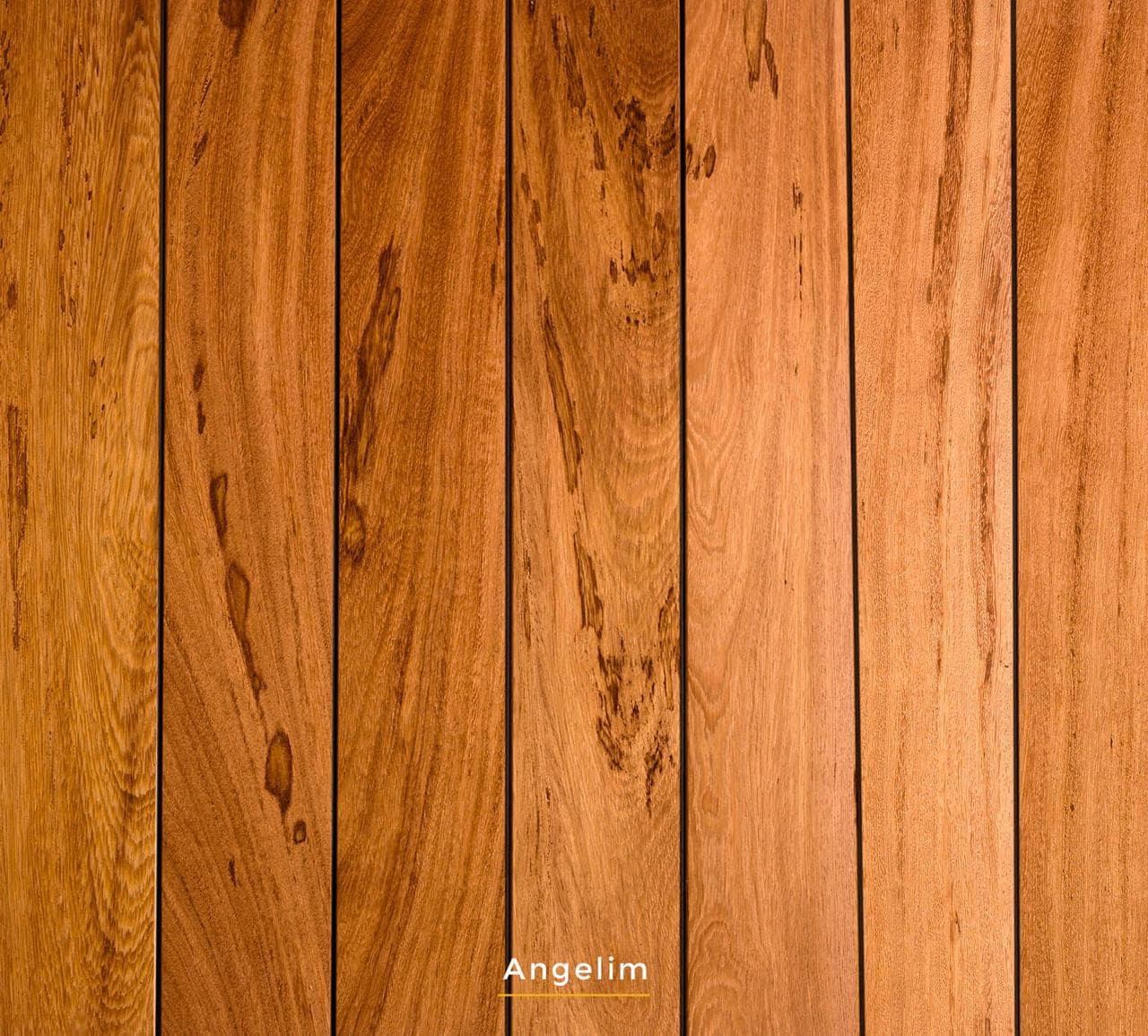
Angelim heartwood presents a yellowish-beige color that matures into a pinkish-brown hue, offering a rich and inviting base for your outdoor space. Its distinct grain patterns can add character without overwhelming other design elements. This natural aesthetic makes it adaptable to various styles, from rustic to contemporary.
Beyond its appearance, Angelim is recognized for its durability. It is resistant to termites and moisture, which is beneficial for a deck that will experience spills, foot traffic, and exposure to the elements. This natural resistance helps maintain the deck's integrity over time, making it a practical choice for areas that see frequent use during gatherings.
The density and stability of Angelim also contribute to its suitability for decking, allowing it to withstand the demands of an active outdoor living area. It is described as easy to install, which can be a consideration for project timelines and labor. For finishing, Angelim is absorptive, making it receptive to stains and oils if you choose to enhance or maintain its color.
Worked Example: A Multi-Zone Gathering Deck with Angelim
Consider a hypothetical backyard measuring 20 feet by 30 feet, where the goal is to create a deck with separate cooking, dining, and lounging areas using Angelim decking. The house wall runs along one 30-foot side.
First, define the zones: A 10-foot by 10-foot cooking zone near the house for a built-in grill and counter, a 10-foot by 12-foot dining zone adjacent to it for a large table, and a 10-foot by 18-foot lounging zone at the far end for seating and a fire pit. This leaves a 10-foot wide pathway along one side, connecting all zones and leading to the yard.
For the 10x10 cooking zone, which is 100 square feet, a continuous layout of 1x4 Angelim boards running parallel to the house would create a unified look. For the 10x12 dining area (120 square feet) and 10x18 lounging area (180 square feet), maintaining the same board direction can enhance flow. The 10-foot wide pathway (300 square feet) would also follow this direction. Total deck area is 700 square feet.
For a 30-foot length, this means 34 boards * 30 feet = 1020 linear feet for that section. Repeat this calculation for each zone based on its specific dimensions and board orientation to get a total linear footage. Always add a percentage for cuts and waste.
This example illustrates how Angelim's consistent appearance and robust nature can unify a multi-zone deck while standing up to varied uses across different areas.
Board Profiles and Layout for Visual Separation and Flow
Angelim decking is available in various profiles, such as 1x4 through 6x6, in lengths from 4 to 20 feet, depending on the specific profile. This range allows for flexibility in your deck design. For a gathering space, you might consider using different board widths or laying patterns to visually distinguish between zones without needing physical barriers.
For instance, a standard 1x4 board can be used for the main body of the deck, while a wider 1x6 board could create a subtle border around a dining area or define a pathway. Running boards in different directions for adjacent zones can also create visual interest and functional separation. For example, boards in the dining area might run perpendicular to those in the cooking area to delineate the space.
When planning your layout, consider how board lengths and seams will impact the overall aesthetic. Longer boards can reduce the number of visible seams, creating a more expansive feel, which can be desirable for larger gathering spaces. Ensure that any changes in board direction or width are supported by the underlying substructure and meet installation guidelines.
Finishing and Maintenance for an Entertaining Deck
Angelim is described as absorptive, making it easy to finish with stains and oils. This characteristic allows you to customize the deck's appearance to match your desired aesthetic or protect the wood. A good quality deck oil can enhance the natural color of Angelim and provide a layer of protection against the elements, which is important for a deck that will host frequent gatherings.
Regular cleaning and reapplication of finish, as recommended by the product manufacturer, will help maintain the deck's appearance and durability. For a deck used for entertaining, spills are inevitable. A well-maintained and finished surface can make cleaning easier and protect the wood from potential staining. Always test any cleaning or finishing product on an inconspicuous area first.
Before you order
- Identify specific activity zones: cooking, dining, lounging, pathways.
- Measure each zone's dimensions to inform material quantity.
- Consider Angelim's natural color (yellowish beige to pinkish brown) and how it complements your overall design.
- Evaluate if different Angelim board profiles (e.g., 1x4, 1x6) or laying patterns can visually define zones.
- Plan for board direction and seam placement to enhance flow or separation.
- Decide on a finish (stain or oil) to protect the wood and achieve your desired aesthetic.
- Factor in ongoing maintenance for spills and wear common in gathering spaces.
Confirm installation details, approved uses and warranty terms in the current instructions for the exact product and profile. Your installer should verify the substrate, structure and applicable project requirements.
Questions to help you decide
How does Angelim decking stand up to heavy foot traffic from gatherings?
Angelim is a dense and stable hardwood, making it a durable choice for decking. Its natural resistance to insects and moisture contributes to its ability to withstand the demands of outdoor use, including heavy foot traffic from entertaining. Proper installation and maintenance will further enhance its longevity.
Can I use different Angelim board widths to create a varied look on my deck?
Yes, Angelim is available in various profiles, offering flexibility for design. You can use different board widths, such as a mix of 1x4 and 1x6 boards, to create visual interest or to define specific zones within your deck layout. Ensure that any variations in board size are considered during the planning and installation phases to maintain structural integrity and a consistent appearance.
What kind of finish should I use on Angelim decking for an entertaining area?
Angelim is absorptive, making it suitable for stains and oils. For an entertaining area, a quality deck oil or stain can help protect the wood from spills, UV exposure, and general wear, while also enhancing its natural color. Always choose a product compatible with hardwood decking and follow the manufacturer's application and maintenance instructions.
Start Planning Your Angelim Deck for Gathering
Ready to design a backyard deck that brings people together? Request a material quote with your project dimensions, desired Angelim profile, and ZIP code to confirm current availability and service options. Explore our full range of Angelim decking and complementary products today.
Request a material quote →