Understanding Thermally Modified Wood for Wall Applications
Thermally modified wood undergoes a high-temperature treatment process that alters its cellular structure. This process typically involves heating wood in an oxygen-deprived environment. The result is a material with reduced moisture absorption, increased dimensional stability, and enhanced resistance to biological degradation compared to untreated wood. These characteristics are particularly advantageous for covered patio walls, where the material is protected from direct precipitation but still exposed to ambient humidity and temperature changes.
For wall applications, the suitability of thermally modified wood depends on the specific species and profile. While many thermally modified products are designed for decking or siding, certain profiles are well-suited for vertical cladding on covered structures. It's important to verify that the chosen product is approved for wall use and to understand any specific installation guidelines from the manufacturer for such applications.
Selecting Profiles and Visual Effects
The profile of the thermally modified wood planks significantly impacts the visual texture and shadow lines of your covered patio walls. Common profiles include tongue-and-groove, shiplap, and square-edge boards. Each offers a distinct aesthetic:
Tongue-and-groove profiles create a tight, seamless appearance, often used for a more contemporary or finished look. The interlocking edges help maintain alignment and can offer a cleaner visual.
Shiplap profiles feature an overlapping joint that creates a distinct shadow line between boards. This can add depth and character, often favored for a rustic or traditional aesthetic. The reveal can be varied depending on the specific shiplap cut.
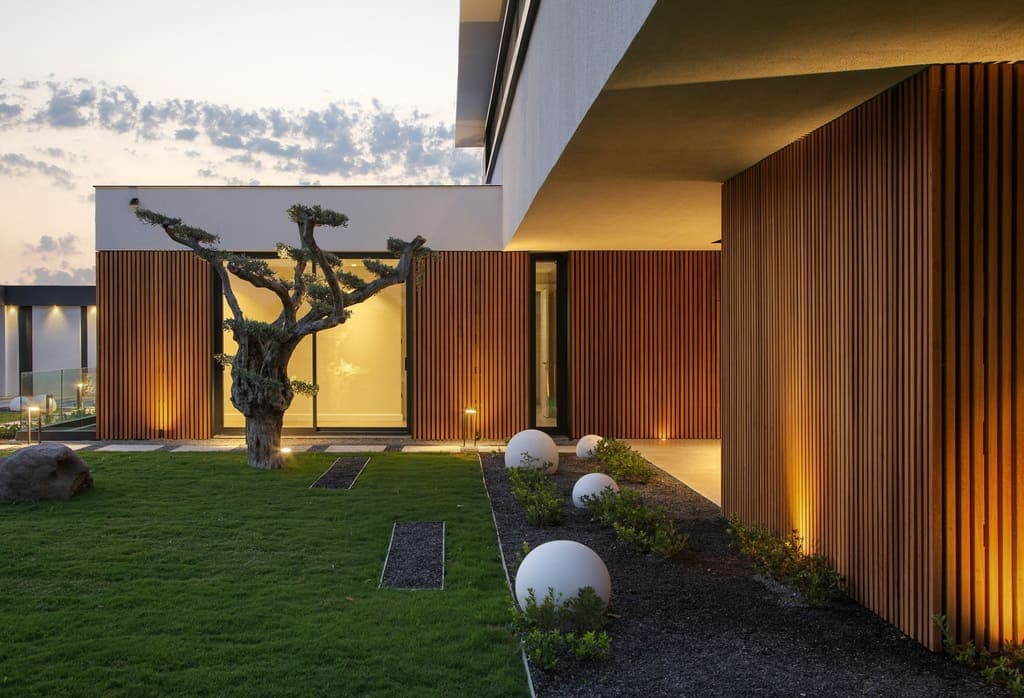
Square-edge boards, when installed with a consistent gap, can create a more open, slatted appearance. This profile requires careful attention to spacing for a uniform look and can be effective for modern designs that emphasize clean lines and negative space.
Consider the overall architectural style of your home and patio when selecting a profile. A consistent aesthetic across all outdoor elements can create a cohesive and inviting environment.
Finishing Options and Maintenance
Thermally modified wood can be left unfinished to weather naturally to a silver-gray patina, or it can be finished to maintain its original color or achieve a desired hue. For covered patio walls, the decision to finish often depends on aesthetic preference and the level of maintenance desired.
If left unfinished, the wood will naturally gray over time due to UV exposure, even in a covered area, although the process may be slower than for fully exposed surfaces. This weathering is purely cosmetic and does not typically affect the material's durability. Some homeowners appreciate this natural aging process.
To preserve the initial color or introduce a specific tone, a UV-protective finish can be applied. These finishes, such as stains or oils, help to mitigate the effects of sunlight and moisture, maintaining the wood's appearance. Regular reapplication, typically every 1-3 years depending on the product and exposure, will be necessary to sustain the finish. Always choose finishes compatible with thermally modified wood and follow the manufacturer's recommendations.
Even with a finish, periodic cleaning of the walls with a mild detergent and water can help remove dirt, pollen, and mildew, keeping the surface looking fresh.
Attachment Methods and Substructure
Proper attachment is crucial for the long-term performance and appearance of thermally modified wood on covered patio walls. The choice of fasteners and substructure will depend on the profile selected and the desired aesthetic.
For tongue-and-groove or shiplap profiles, concealed fastening systems are often preferred. These systems typically involve fasteners driven through the tongue or the overlapping lip, which are then hidden by the next board. This creates a clean, fastener-free surface. Stainless steel fasteners are recommended to prevent staining and ensure corrosion resistance.
For square-edge boards or when a visible fastener is acceptable, face fastening can be used. This involves driving fasteners directly through the face of the board into the substructure. Again, stainless steel fasteners are essential. Pre-drilling may be necessary to prevent splitting, especially near board ends.
The substructure behind the thermally modified wood cladding must be sound, plumb, and adequately spaced. Typically, vertical furring strips or battens are installed over the existing wall sheathing or framing. These battens provide an air gap, which aids in ventilation and moisture management, even in covered areas. The spacing of the battens should align with the recommended fastening points for the chosen wood profile.
Ensure adequate clearance at the base of the wall to prevent moisture wicking from the patio surface.
Worked Example: Covered Patio Wall in Worcester, MA
Imagine a covered patio in Worcester, MA, measuring 12 feet wide and 8 feet high, where the homeowner wants to clad one wall with thermally modified wood to create a warm, inviting backdrop. They prefer a shiplap profile for its distinct shadow lines and modern appeal. We'll use 5.5-inch wide (nominal) thermally modified wood shiplap planks.
First, calculate the wall area: 12 feet x 8 feet = 96 square feet.
Next, determine the linear footage needed. A 5.5-inch wide board typically has an effective coverage width of around 5 inches (0.417 feet) due to the overlap. So, for one square foot, you need 1 foot / 0.417 feet per board = approximately 2.4 linear feet. For 96 square feet, this is 96 sq ft * 2.4 LF/sq ft = 230.4 linear feet. To account for cuts, waste, and potential board defects, adding 10-15% is prudent. Let's add 15%: 230.4 LF * 1.15 = 264.96 linear feet. Round up to the nearest full board length. If boards are sold in 10-foot lengths, you would need 27 boards (264.96 / 10 = 26.5, rounded up).
The substructure would involve vertical furring strips, spaced according to the shiplap fastening recommendations, typically every 16 or 24 inches on center. For an 8-foot high wall, the planks would likely be installed horizontally, minimizing vertical joints and creating long, continuous lines. The planks would be fastened with concealed stainless steel screws through the overlapping lip.
Given Worcester's climate, where humidity can vary significantly through seasons, the dimensional stability of thermally modified wood is a benefit. The covered nature of the patio protects the wood from direct rain and snow, reducing moisture cycling. The homeowner decides to apply a natural oil finish to enhance the wood's inherent color and provide some UV protection, committing to reapplication every two years.
Before you order
- Verify if the chosen thermally modified wood product is approved for vertical cladding on covered walls.
- Select a wood profile (tongue-and-groove, shiplap, square-edge) that complements your patio's design.
- Decide on a finish (natural weathering, oil, stain) and plan for its long-term maintenance.
- Confirm the appropriate fastening method (concealed or face-fastened) and select stainless steel fasteners.
- Plan the substructure, including furring strips and an air gap, ensuring it is plumb and adequately spaced.
- Calculate the material quantities, including waste factor, based on your patio wall dimensions.
- Ensure adequate clearance at the base of the wall from grade or patio surface.
- Review manufacturer installation guidelines for specific product requirements.
Confirm installation details, approved uses and warranty terms in the current instructions for the exact product and profile. Your installer should verify the substrate, structure and applicable project requirements.
This is a planning guide for projects in Worcester, MA. Ask our team to confirm availability, delivery to your ZIP code and which branch can support your order.
Questions to help you decide
Can thermally modified wood be used on exterior walls that are not covered?
Yes, thermally modified wood is often used for exterior siding and cladding on fully exposed walls due to its enhanced durability and resistance to moisture and decay. However, the specific installation methods, detailing for moisture management, and finish maintenance may differ for fully exposed applications compared to covered patio walls. Always follow manufacturer guidelines for the specific exposure.
Does thermally modified wood require a specific type of finish?
While thermally modified wood can be left to weather naturally, if you choose to apply a finish, it's important to select one that is compatible with modified wood. Many oil-based or water-based penetrating finishes are suitable. Always check the finish manufacturer's recommendations for use on thermally modified wood to ensure proper adhesion and performance. Some finishes are specifically formulated to enhance the natural color or provide UV protection.
How do I clean thermally modified wood on covered patio walls?
Regular cleaning with a soft brush or cloth and a mild detergent solution (like dish soap and water) is usually sufficient. Rinse thoroughly with clean water. Avoid harsh chemicals or high-pressure washers, which can damage the wood fibers or finish. For stubborn mildew or stains, specialized wood cleaners designed for exterior use may be appropriate, but always test in an inconspicuous area first.
Ready to Transform Your Covered Patio Walls?
For a material quote and to confirm current availability for your project, provide your project dimensions, desired profile, and ZIP code. Our team can assist you with product selection and service options.
Request a material quote →