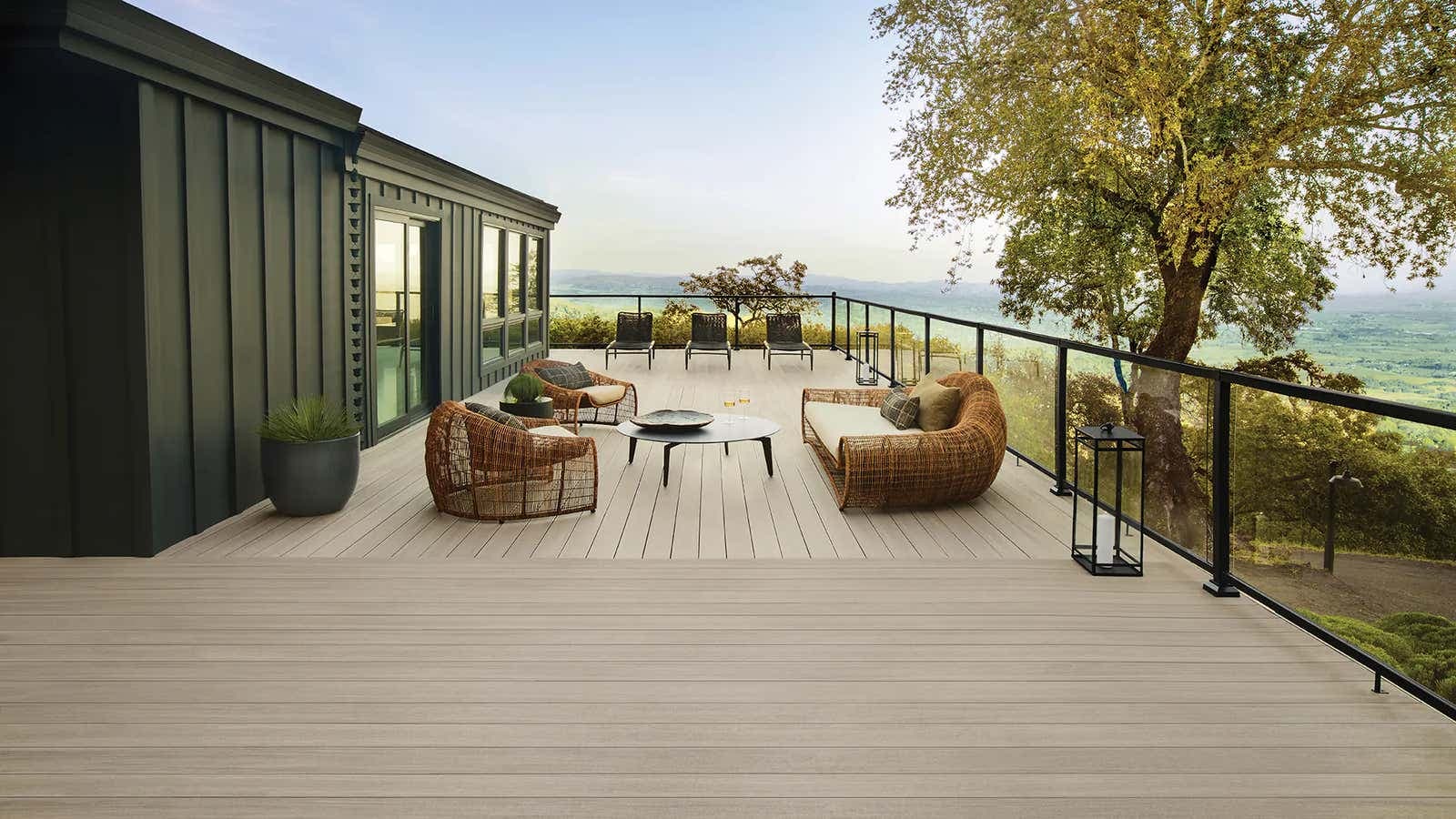
Understanding the Constraints of Compact Spaces
Compact outdoor spaces, whether they are small patios, narrow side yards, or urban balconies, present unique design challenges. Key considerations include limited footprint, potential for restricted access during construction, and the need for materials that perform well in potentially varied sun exposure or drainage conditions. The goal is to create a functional and appealing area without overwhelming it with bulky materials or complex designs.
Choosing materials that are easy to work with and require minimal cutting or specialized tools can simplify installation in tight quarters. Furthermore, the visual impact of the decking material can influence how large or small the space feels. Lighter colors or narrower board profiles might contribute to a more open aesthetic.
Why Composite Decking Suits Smaller Projects
Composite decking offers several benefits for compact outdoor areas. Its consistent dimensions and profiles can lead to less material waste when planning for precise cuts. The material's resistance to rot, splinters, and insect damage means it can withstand the elements without requiring extensive treatment, which is particularly useful in spaces where regular maintenance might be difficult.
Manufacturers like Trex, TimberTech, and Fiberon offer a range of composite decking options. These products typically feature a capped shell that resists stains and fading, providing a durable surface that requires only soap and water cleaning. This low-maintenance aspect is a significant advantage for smaller decks, freeing up time to enjoy the space rather than maintaining it.
Many composite decking lines also offer hidden fastening systems, which create a smooth, fastener-free surface. This can enhance safety and comfort, especially in a small space where every surface interaction matters.
Choosing the Right Composite Decking Profile and Color
For compact spaces, the choice of board profile and color can dramatically influence the final aesthetic. Narrower board widths can make a small deck appear longer or wider, while lighter colors tend to reflect light, creating a more open and expansive feeling. Conversely, darker colors can make a space feel cozier and more intimate, which might be desirable for certain design goals.
Consider the overall architectural style of your home and the surrounding landscape. A consistent color palette between your decking and other outdoor elements can create a cohesive look. Many composite decking collections offer a variety of colors and wood-grain patterns, allowing for customization to match your design preferences. Explore options from leading brands like Trex, TimberTech, and Fiberon to find a profile and color that complements your compact space.
Planning Your Layout for Efficiency
Efficient layout planning is crucial for compact decks. Start by accurately measuring your space, noting any existing structures, obstacles, or desired features like planters or seating areas. A simple, straightforward layout often works best, minimizing complex cuts and material waste. Consider running boards parallel to the longest dimension of the space to enhance the perception of length.
For a hypothetical 8-foot by 5-foot balcony, using standard 12-foot or 16-foot composite deck boards (assuming a common 5.5-inch width) would require careful cutting. If boards are laid parallel to the 8-foot dimension, you would need multiple 8-foot cuts. For a 5-foot width, this means approximately 11 boards (5 feet * 12 inches/foot / 5.5 inches/board = ~10.9 boards). If using 12-foot boards, each board yields one 8-foot piece and a 4-foot offcut. The 4-foot offcuts could potentially be used for a perpendicular border or another small section, but careful planning is needed to avoid waste. Always factor in manufacturer-specified gapping between boards.
For a small square space, a diagonal layout can add visual interest, but it typically results in more material waste due to increased cutting. Weigh the aesthetic benefit against the practical implications for your specific project.
Installation Considerations for Tight Access
Compact outdoor spaces often come with restricted access, which can impact material delivery and installation. Confirm that the chosen decking board lengths can be maneuvered into the project area. If access is very tight, shorter board lengths or even modular decking tiles might be a more practical option, though traditional composite decking boards offer greater design flexibility.
Ensure there's adequate space for tools and installers to work safely and efficiently. Proper ventilation under the deck is also important, even in small areas, to prevent moisture buildup. Follow manufacturer guidelines for joist spacing and ventilation to ensure the longevity of your deck. For example, some composite decking requires specific gapping and airflow to maintain structural integrity and prevent issues related to temperature fluctuations.
Before you order
- Measure your compact space accurately, noting all dimensions and obstructions.
- Consider the visual impact of board width and color on the perceived size of the space.
- Select a composite decking collection that offers the desired aesthetic and performance.
- Plan your board layout to minimize cuts and material waste, especially for tight spaces.
- Verify access for material delivery and installation personnel.
- Ensure proper ventilation is planned beneath the deck surface.
- Budget for all necessary components, including fasteners, fascia, and trim.
Confirm installation details, approved uses and warranty terms in the current instructions for the exact product and profile. Your installer should verify the substrate, structure and applicable project requirements.
This is a planning guide for projects in Worcester, MA. Ask our team to confirm availability, delivery to your ZIP code and which branch can support your order.
Questions to help you decide
Can composite decking be installed directly over an existing concrete patio?
Installing composite decking directly over concrete often requires a sleeper system to create a level surface, allow for drainage, and provide adequate ventilation. Consult the specific manufacturer's installation guidelines for their recommendations on installing over concrete or other solid surfaces. Proper ventilation is critical to prevent moisture issues.
How do I clean composite decking in a small space?
Composite decking generally requires minimal maintenance. For most composite decking, a simple wash with soap and water is sufficient to remove dirt and grime. Avoid using harsh chemicals or abrasive cleaners, as these can damage the surface. Always refer to the manufacturer's cleaning instructions for your specific decking product to ensure proper care.
Are there composite decking options that are cooler underfoot for sunny compact areas?
Yes, some manufacturers offer composite decking lines designed with technologies to reduce heat absorption, making them cooler underfoot. These often feature specific capped shell formulations or lighter colors. If your compact space receives significant sun exposure, inquire about these options from brands like Trex, TimberTech, or Fiberon. Lighter colors generally absorb less heat than darker ones.
Plan Your Compact Composite Deck Project
Ready to transform your compact outdoor space? Request a material quote today by providing your project dimensions, exact profile preferences, and ZIP code. We can help you confirm current availability and service options for your composite decking needs.
Request a material quote →