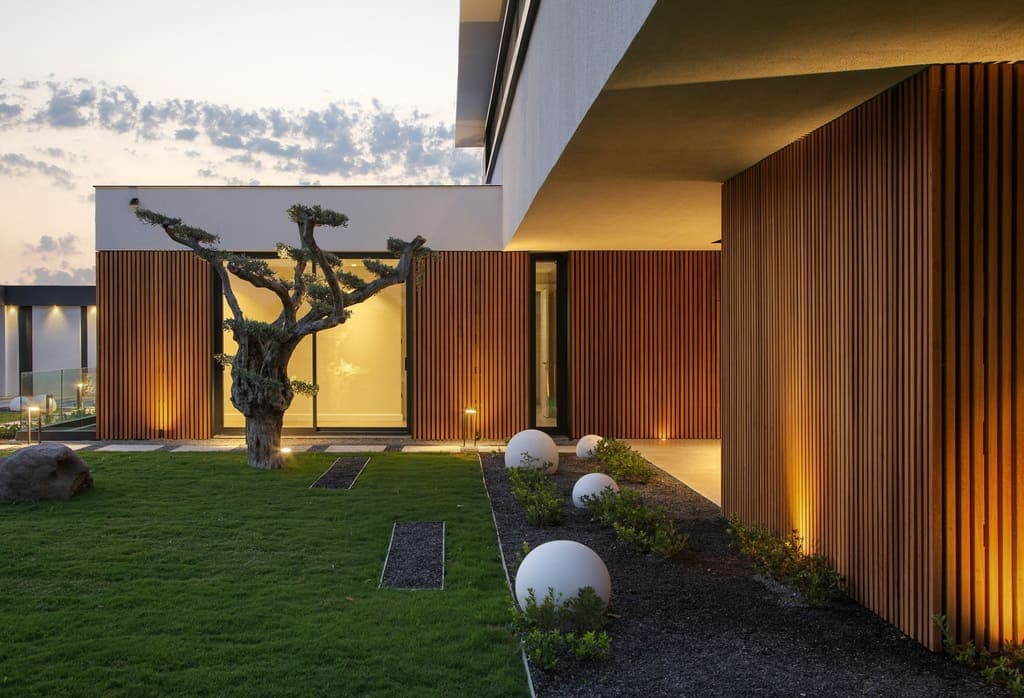
Understanding Thermally Modified Wood for Wall Applications
Thermally modified wood undergoes a high-temperature heat treatment process that alters its cellular structure. This process aims to enhance dimensional stability and reduce moisture absorption, making the wood less prone to expansion, contraction, and decay when exposed to varying environmental conditions.
While often considered for exterior siding, thermally modified wood is also suitable for covered wall applications where it benefits from protection against the most extreme weather. Its inherent properties can contribute to a stable and aesthetically pleasing surface for a covered patio, offering a natural wood appearance with enhanced performance characteristics.
Profiles available for thermally modified wood can range from traditional tongue-and-groove boards to various shiplap or rainscreen designs. For covered patio walls, where a rainscreen assembly might not be strictly necessary for drainage, the choice of profile often comes down to desired aesthetic and ease of installation. Flat, smooth profiles can create a contemporary look, while textured or V-groove options can add visual depth.
Selecting the Right Species and Profile
Thermally modified wood is available in various species, each offering unique grain patterns and color tones. Common species include ash and spruce. The choice of species will impact the final appearance of your covered patio wall, from the warmth of ash to the lighter tones of spruce. Consider how the wood's natural color and grain will complement existing elements of your home and patio.
For covered patio walls, a common choice is a tongue-and-groove (T&G) profile. This profile allows for a secure, interlocking fit, creating a continuous and visually appealing surface. Other options include shiplap, which provides distinct shadow lines, or square-edge boards for a more minimalist look. The specific profile chosen will influence both the installation method and the final aesthetic.
When selecting a profile, also consider the board width. Wider boards can create a sense of scale and reduce the number of visible joints, while narrower boards can offer a more intricate pattern. The length of the boards available should also factor into your planning to minimize waste and field cuts.
Finishing Options and Maintenance
Thermally modified wood can be left unfinished to weather naturally to a silver-gray patina, or it can be finished with oils, stains, or paints to maintain or alter its color. For covered patio walls in Topeka, KS, where the wood is somewhat protected, the choice of finish can be driven primarily by aesthetic preference.
If you choose to apply a finish, select products specifically designed for exterior wood applications. These finishes help protect the wood from UV degradation and can enhance its natural beauty. Regular cleaning and reapplication of finish, as recommended by the manufacturer, will be necessary to maintain the desired appearance.
Even in a covered setting, some maintenance will be beneficial. This typically involves periodic cleaning to remove dust, pollen, and any mildew that might accumulate. Inspecting the walls annually for any signs of wear or damage to the finish is also a good practice.
Planning for Attachment and Substructure
Proper attachment is crucial for a durable and stable covered patio wall. The thermally modified wood boards will need to be securely fastened to a suitable substructure. This substructure typically consists of furring strips or battens installed over the existing wall material, such as framing or masonry.
The spacing of the furring strips should correspond to the length of your chosen wood boards and the manufacturer's recommendations for fastening. Typically, boards are fastened at each stud or furring strip. For concealed fastening, clips or specific tongue-and-groove profiles designed for hidden fasteners can be used to create a clean, uninterrupted surface.
Ensure that the substructure is plumb and level to provide a flat surface for the wood boards. Using corrosion-resistant fasteners, such as stainless steel screws, is important to prevent staining of the wood and ensure long-term holding power, particularly in an outdoor environment where moisture can still be present.
Hypothetical Project Example: Covered Patio Wall
Consider a covered patio in Topeka, KS, with an existing exterior wall that is 10 feet wide and 8 feet tall, intended for a thermally modified wood accent. The homeowner selects 1x6 (nominal 5.5-inch actual width) thermally modified ash, tongue-and-groove profile, in 8-foot lengths.
The total area to cover is 10 feet x 8 feet = 80 square feet. With 5.5-inch wide boards, approximately 22 boards are needed for the 10-foot width (10 feet * 12 inches/foot / 5.5 inches/board = 21.8 boards). Therefore, 22 boards (each 1x6x8 feet) would provide coverage. It is always recommended to add 10-15% for cuts, waste, and future repairs, bringing the total to about 25 boards.
The substructure would involve attaching vertical furring strips to the existing wall, spaced at 16 or 24 inches on center, depending on the wall framing. The T&G boards would then be attached horizontally to these furring strips, using concealed fasteners through the tongue for a clean look. The homeowner plans to apply a clear UV-protective oil finish to maintain the natural ash color.
Before you order
- Determine the exact dimensions of your covered patio wall area.
- Select the thermally modified wood species (e.g., ash, spruce) based on desired appearance.
- Choose a suitable profile (e.g., T&G, shiplap) for your aesthetic and installation preferences.
- Decide on a finish: natural weathering or a protective oil/stain.
- Plan the substructure (furring strips) and fastening method (concealed or face-fastened).
- Calculate the required material quantity, adding waste factor.
- Consider complementary materials like trim or corner details.
Confirm installation details, approved uses and warranty terms in the current instructions for the exact product and profile. Your installer should verify the substrate, structure and applicable project requirements.
This is a planning guide for projects in Topeka, KS. Ask our team to confirm availability, delivery to your ZIP code and which branch can support your order.
Questions to help you decide
Can thermally modified wood be used near a grill on a covered patio?
While thermally modified wood offers enhanced stability, it is still wood and can be susceptible to heat and flame. If installing near a grill, ensure adequate clearance from heat sources and open flames as recommended by local building codes and grill manufacturers. Proper ventilation in the patio area is also important.
How does the Topeka, KS climate affect thermally modified wood on a covered patio?
Topeka experiences a range of temperatures and humidity throughout the year. While covered, patio walls will still be exposed to these fluctuations. Thermally modified wood's enhanced dimensional stability helps it resist warping and checking in these conditions. Protection from direct rain and intense sun under a cover further contributes to its longevity and appearance, but regular cleaning and finish maintenance are still beneficial.
Are there different grades of thermally modified wood?
Thermally modified wood is typically graded based on visual characteristics such as knots and grain patterns. These grades usually correspond to aesthetic preferences rather than structural performance for a wall application. Discuss available grades with your supplier to match your desired look and budget. The thermal modification process itself is consistent across all pieces of a given product line.
Ready to Enhance Your Topeka Covered Patio Walls?
Request a material quote for your project. Provide your project dimensions, desired thermally modified wood profile, and your ZIP code to confirm current availability and service options.
Request a material quote →