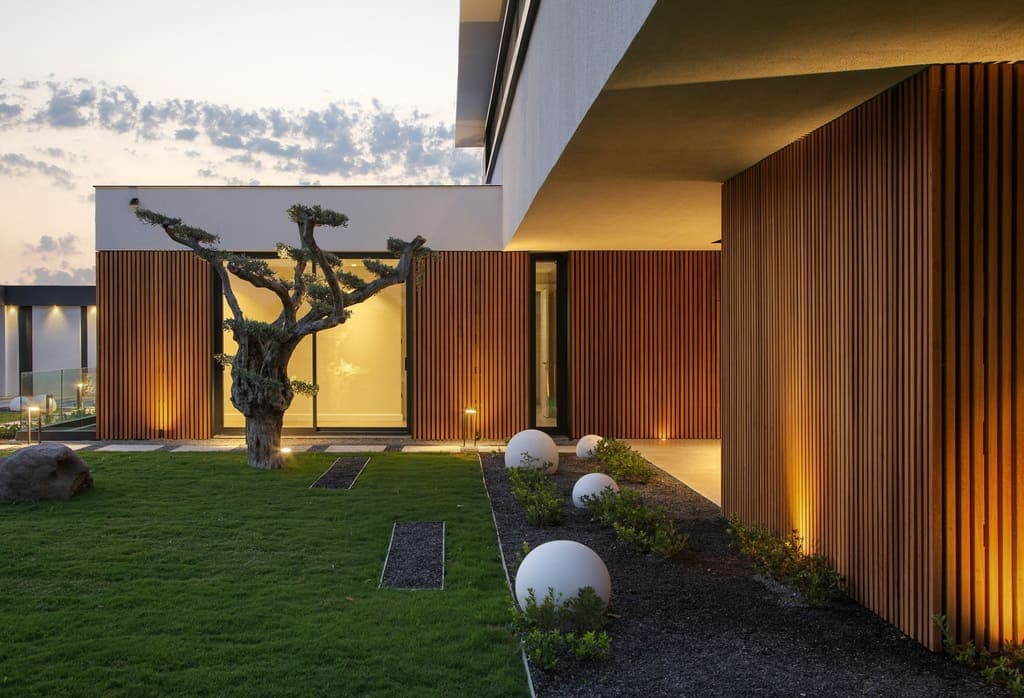
Understanding Thermally Modified Wood for Wall Applications
Thermally modified wood undergoes a high-temperature treatment process that alters its cellular structure. This process enhances the wood's dimensional stability, making it less prone to shrinking and swelling when exposed to changes in humidity, a key benefit in a humid climate like Tallahassee. The modification also improves the wood's resistance to decay and insect infestation.
For covered patio walls, this means a material that maintains its appearance and structural integrity over time, even in an outdoor, albeit sheltered, environment. While protected from direct weather, covered walls still experience significant ambient humidity and temperature shifts, which thermally modified wood is better equipped to handle compared to untreated timber.
Lumber Plus offers a range of thermally modified wood products, including various species and profiles suitable for wall cladding. You can explore options at our product page: /thermally-modified-wood
Selecting the Right Profile and Species for Aesthetic and Performance
The profile of your thermally modified wood planks will define the visual texture and shadow lines of your covered patio walls. Common profiles include tongue-and-groove, shiplap, and square-edge boards. Each creates a distinct look and offers different installation characteristics.
Tongue-and-groove profiles provide a tight, interlocked fit, often used for a clean, continuous surface. Shiplap offers a more defined shadow line and can allow for some expansion and contraction. Square-edge boards, when installed with a gap, create a slatted appearance. The choice depends on your desired aesthetic and the level of protection from moisture intrusion you need, even in a covered setting. For covered patio walls, where direct rain is minimal, a wider variety of profiles can be considered compared to fully exposed exterior walls.
NORX is a brand offering thermally modified wood suitable for various applications, including wall cladding. You can find more information about NORX products here: /brands/norx
Finishing Options: Natural Aging vs. Stains and Sealers
Thermally modified wood naturally weathers to a silver-gray patina when exposed to UV radiation. For covered patio walls in Tallahassee, which receive indirect sunlight, this natural aging process will occur more slowly and potentially unevenly compared to fully exposed surfaces. If you desire to maintain the original wood tone, or a specific color, applying a UV-protective finish is essential.
Stains and sealers can enhance the wood's natural color, introduce a new hue, and provide additional protection against moisture and UV degradation. It's important to choose finishes specifically formulated for exterior wood and to consider the maintenance schedule required. Regular reapplication will be necessary to preserve the finish's appearance and protective qualities. Always follow the manufacturer's recommendations for application and maintenance.
For a premium option with exceptional stability and finish retention, consider products like Maximo Accoya: /products/maximo-accoya
Attachment Methods for Covered Patio Walls
Proper attachment is crucial for the longevity and appearance of your thermally modified wood walls. Since these are covered walls, a rainscreen assembly, while beneficial, might not be as strictly necessary as for fully exposed facades, but it remains a best practice for ventilation and moisture management.
Common attachment methods include face fastening and hidden fastening systems. Face fastening uses screws or nails driven through the face of the board, typically countersunk and plugged, or left exposed for a rustic look. Hidden fastening systems, often clips or specialized fasteners, attach the boards from the back or edge, creating a clean, fastener-free surface.
Regardless of the method, ensure fasteners are corrosion-resistant, such as stainless steel, to prevent staining and degradation, especially in Tallahassee's humid environment. Substructure planning is also key; ensure adequate blocking or furring strips are in place to provide solid attachment points and promote airflow behind the cladding, even in a covered setting. Verify the specific fastener recommendations for your chosen thermally modified wood profile.
Hypothetical Project Example: Covered Patio Wall Cladding
Consider a hypothetical covered patio in Tallahassee with a main wall section measuring 12 feet wide by 8 feet high.
The wall area is 12 ft x 8 ft = 96 square feet. Assuming the shiplap has an effective coverage of 5.5 inches per board (after accounting for the overlap), each 8-foot long board covers 5.5 inches * 96 inches = 528 square inches, or approximately 3.67 square feet. To cover 96 square feet, roughly 96 / 3.67 = 26.16 boards are needed. Accounting for cuts, waste, and a 10% contingency, purchasing 30 boards would be a prudent estimate. For a hidden fastening system, the manufacturer's specific clips and screws would also need to be calculated based on the linear footage of boards.
The homeowner chooses a semi-transparent stain to enhance the wood's natural tone while offering UV protection. This finish will require reapplication every 2-3 years, depending on exposure to indirect sunlight and humidity. This setup allows for any incidental moisture to drain and promotes air circulation, contributing to the system's longevity.
Before you order
- Verify local building codes for covered patio wall materials and assembly.
- Determine the desired aesthetic: natural aging vs. stained finish.
- Select a thermally modified wood species and profile suitable for wall cladding.
- Choose an appropriate fastening system (face or hidden) and corrosion-resistant fasteners.
- Plan for the substructure: furring strips, blocking, and ventilation.
- Calculate material quantities, including waste factor and fasteners.
- Consider the long-term maintenance requirements for your chosen finish.
- Review manufacturer's installation guidelines for your specific product.
Confirm installation details, approved uses and warranty terms in the current instructions for the exact product and profile. Your installer should verify the substrate, structure and applicable project requirements.
This is a planning guide for projects in Tallahassee, FL. Ask our team to confirm availability, delivery to your ZIP code and which branch can support your order.
Questions to help you decide
Is thermally modified wood suitable for all parts of a patio in Tallahassee?
Thermally modified wood is well-suited for covered patio walls due to its enhanced stability and decay resistance. For fully exposed elements like decking or pergolas, it also performs well, but the finishing and maintenance considerations might differ due to direct sun and rain exposure. Always confirm the product's suitability for specific applications with the manufacturer's specifications.
How does Tallahassee's humidity affect thermally modified wood?
Tallahassee's high humidity is a key reason to consider thermally modified wood. The thermal modification process reduces the wood's hygroscopicity (its tendency to absorb and release moisture), making it more dimensionally stable. This means less warping, cupping, and checking compared to untreated wood, which is particularly beneficial in fluctuating humid conditions.
What kind of maintenance is required for thermally modified wood on covered patio walls?
Maintenance depends on your chosen finish. If left unfinished, the wood will naturally weather to a silver-gray and requires minimal maintenance beyond occasional cleaning. If a stain or sealer is applied, regular cleaning and periodic reapplication (typically every 2-5 years, depending on the product and exposure) will be necessary to maintain its color and protective properties. Always follow the finish manufacturer's instructions.
Ready to Plan Your Covered Patio Walls?
Request a material quote with your project dimensions, desired profile, and ZIP code to confirm current availability and service options for your Tallahassee project. Our team can help you select the right thermally modified wood for your covered patio.
Request a material quote →